Author: livserv

  • Why the Automobile Industry Is Rapidly Adopting AI Chatbots (And You Should Too)

    Why the Automobile Industry Is Rapidly Adopting AI Chatbots (And You Should Too)

    The automotive industry is not just evolving—it is being fundamentally reshaped by how customers discover, evaluate, and purchase vehicles. What was once a dealership-driven, in-person sales journey has now become a highly digital, always-on, and expectation-heavy experience. Today’s car buyer does not wait for business hours, does not tolerate delayed responses, and certainly does not follow a linear purchase path.

    In this new landscape, AI chatbot for automobile industry use cases are no longer experimental—they are becoming operational essentials. Automotive businesses, from large OEMs to local dealerships, are rapidly adopting automotive chatbots, conversational AI agents, and intelligent virtual assistants to handle customer interactions at scale.

    This shift is not driven by hype. It is driven by measurable impact—higher lead conversion rates, faster response times, improved customer satisfaction, and more efficient sales operations.


    The Shift in Automotive Customer Behavior

    The modern automotive buyer behaves very differently compared to buyers even five years ago. Before stepping into a showroom, most customers have already:

    • Compared multiple brands and models
    • Watched reviews and walkthrough videos
    • Checked pricing, variants, and financing options
    • Explored dealership ratings and service feedback

    This means that when a customer finally reaches out—whether through a website, WhatsApp, or social media—they expect instant, accurate, and personalized responses.

    However, traditional dealership setups struggle to meet these expectations. Sales teams are limited by working hours, manual processes, and inconsistent follow-ups. This is where AI chatbot for car sales systems start to play a transformative role.

    An automotive chatbot does not sleep, does not miss a lead, and does not forget to follow up. It ensures that every customer interaction is acknowledged and handled immediately, regardless of time or channel.


    What Is an Automotive Chatbot?

    An automotive chatbot is an AI-powered conversational system designed specifically for the automobile industry. It interacts with customers across digital channels such as:

    • Websites
    • WhatsApp
    • Facebook Messenger
    • Mobile apps

    Unlike basic chat widgets, modern AI agents for automotive industry are capable of:

    • Understanding customer intent
    • Asking contextual questions
    • Recommending vehicles based on preferences
    • Booking test drives
    • Providing pricing and EMI details
    • Integrating with CRM systems

    For example, when a user visits a dealership website and asks, “Which SUV is best under 15 lakhs?”, a traditional chatbot might fail or provide generic links. An advanced automotive AI chatbot can:

    • Ask follow-up questions (fuel type, seating preference, brand interest)
    • Suggest relevant models
    • Provide specifications
    • Offer to book a test drive instantly

    This creates a seamless, guided buying experience.


    Why the Automobile Industry Is Rapidly Adopting AI Chatbots

    1. The Need for Instant Lead Response

    Speed has become one of the most critical factors in automotive sales. Studies consistently show that the probability of converting a lead drops drastically if there is a delay in response.

    In a typical dealership scenario, leads come from multiple sources:

    • Website forms
    • Third-party listing platforms
    • Social media campaigns
    • Walk-in inquiries

    Managing these leads manually often leads to delays, missed opportunities, and poor customer experiences.

    An AI chatbot for automobile industry ensures that:

    • Every inquiry is answered instantly
    • Customers receive relevant information without waiting
    • Leads are captured and qualified in real time

    For instance, if a customer submits an inquiry at 11:30 PM, the chatbot can immediately respond, collect details, and even schedule a callback or test drive for the next day.


    2. Increasing Complexity in Car Buying Decisions

    Car buying is no longer a simple decision based on brand preference. Customers now consider multiple factors:

    • Budget range
    • Fuel type (petrol, diesel, electric)
    • Features (sunroof, ADAS, infotainment systems)
    • Maintenance costs
    • Financing options

    Handling such multi-layered queries manually requires highly trained sales staff and significant time.

    An AI chatbot for car dealerships simplifies this by acting as a guided assistant. It can break down the decision process into conversational steps.

    Example:

    A customer starts with:
    “I want a family car.”

    The chatbot responds by narrowing down preferences:

    • “How many seats are you looking for?”
    • “What is your budget range?”
    • “Do you prefer petrol, diesel, or electric?”

    Based on the responses, it recommends suitable models and continues the conversation naturally. This reduces confusion and accelerates decision-making.


    3. High Volume of Repetitive Queries

    Automotive businesses receive a large number of repetitive questions daily:

    • “What is the price of this car?”
    • “Is this model available in automatic?”
    • “Can I book a test drive?”
    • “What is the mileage?”

    Handling these queries manually consumes valuable time that sales teams could otherwise spend on high-intent customers.

    An automotive chatbot automates these repetitive interactions with high accuracy and consistency.

    For example, a chatbot integrated with inventory data can instantly answer:

    • Variant availability
    • On-road pricing
    • Waiting periods

    This not only improves efficiency but also ensures that customers receive consistent information every time.


    4. Rise of Omnichannel Communication

    Customers no longer interact with automotive brands through a single channel. A typical journey may include:

    • Discovering a car on Instagram
    • Clicking through to the website
    • Asking questions on WhatsApp
    • Visiting the showroom

    Managing conversations across these channels manually leads to fragmented experiences.

    Conversational AI agents for automotive unify these interactions by providing a consistent experience across all touchpoints.

    For instance, if a customer starts a conversation on the website and later continues on WhatsApp, the AI agent can retain context and continue the conversation seamlessly.

    This level of continuity significantly enhances customer experience and builds trust.


    5. Improved Lead Qualification

    Not all leads are equal. Some customers are just exploring options, while others are ready to buy.

    Manual qualification often depends on the availability and expertise of sales representatives. This can lead to inefficiencies and missed high-value opportunities.

    An AI chatbot for car sales can qualify leads automatically by:

    • Asking structured questions
    • Identifying intent
    • Scoring leads based on responses

    Example:

    A chatbot asks:

    • “When are you planning to purchase a car?”
    • “Have you shortlisted any models?”
    • “Would you like to explore financing options?”

    Based on the answers, it categorizes leads into:

    • Hot (ready to buy)
    • Warm (considering options)
    • Cold (early research stage)

    This allows sales teams to focus their efforts on high-intent prospects.


    6. Automation of Test Drive Bookings

    Test drives are a critical step in the automotive sales funnel. However, coordinating them manually can be inefficient.

    An AI chatbot for automobile industry can automate the entire process:

    • Check available slots
    • Suggest time options
    • Capture customer details
    • Confirm bookings instantly

    For example, a user browsing a car model page can be prompted:

    “Would you like to schedule a test drive this weekend?”

    With just a few responses, the booking is confirmed—without any human intervention.

    This reduces friction and increases the likelihood of conversion.


    7. Personalized Customer Experience at Scale

    Personalization has become a key differentiator in modern sales. Customers expect recommendations tailored to their preferences.

    However, delivering personalization manually at scale is nearly impossible.

    AI agents for automotive industry analyze user behavior and inputs to deliver highly personalized interactions.

    Example:

    A returning visitor who previously explored SUVs may see:

    • SUV recommendations
    • Relevant offers
    • Personalized follow-up messages

    The chatbot can even reference past interactions:

    “Last time you were looking at mid-size SUVs. Would you like to explore updated offers?”

    This creates a more engaging and relevant experience.


    8. Integration with CRM and Sales Systems

    Modern automotive chatbots are not standalone tools. They integrate deeply with CRM platforms such as Salesforce, HubSpot, and Zoho CRM.

    This integration enables:

    • Automatic lead capture
    • Real-time data syncing
    • Unified customer profiles
    • Better tracking of interactions

    For example, when a chatbot captures a lead, the data is instantly pushed to the CRM, where sales teams can view:

    • Conversation history
    • Customer preferences
    • Lead score

    This ensures that follow-ups are more informed and effective.


    9. Cost Efficiency and Scalability

    Hiring and training large sales and support teams is expensive and time-consuming. Even then, human teams have limitations in handling high volumes of inquiries simultaneously.

    An AI chatbot for automobile industry offers a scalable solution:

    • Handles thousands of conversations simultaneously
    • Reduces dependency on large teams
    • Operates 24/7 without additional cost

    For growing dealerships and automotive brands, this scalability is a major advantage.


    10. Data-Driven Insights and Continuous Improvement

    Every interaction handled by an automotive AI chatbot generates valuable data.

    This data can be used to understand:

    • Common customer queries
    • Popular models and variants
    • Drop-off points in the sales funnel
    • Customer preferences and trends

    For example, if a large number of users are asking about electric vehicles, dealerships can adjust their marketing strategies accordingly.

    Over time, the chatbot itself improves through learning and optimization, making interactions more accurate and effective.


    Real-World Example: From Inquiry to Conversion

    Consider a user visiting a dealership website late at night.

    They type:
    “I’m looking for a compact SUV under 12 lakhs.”

    The AI chatbot for car sales responds instantly:

    • Asks about fuel preference
    • Suggests 2–3 suitable models
    • Shares key features and pricing
    • Offers to calculate EMI
    • Prompts for test drive booking

    Within minutes, the user has:

    • Explored options
    • Shortlisted a model
    • Booked a test drive

    All of this happens without human intervention.

    The next day, the sales team receives a qualified, high-intent lead with complete context, making the follow-up far more effective.


    The Transition from Chatbots to AI Agents

    While traditional chatbots focus on answering queries, the industry is now moving towards AI agents for automotive that can handle end-to-end workflows.

    These AI agents are capable of:

    • Multi-step conversations
    • Decision-making based on context
    • Triggering actions (bookings, notifications, CRM updates)
    • Managing entire customer journeys

    This shift represents a move from reactive support to proactive engagement.

    For automotive businesses, adopting AI agents means not just responding to customers, but actively guiding them through the buying journey.

  • Top 10 Automotive Chatbot Use Cases Every Dealership Must Know

    Top 10 Automotive Chatbot Use Cases Every Dealership Must Know

    The automotive industry has entered a phase where speed, personalization, and availability are no longer competitive advantages—they are baseline expectations. Today’s car buyers don’t wait for showroom visits or business hours. They browse, compare, ask questions, and make decisions across websites, WhatsApp, and social platforms, often within minutes.

    This shift has created a massive gap between customer expectations and dealership response capabilities. Traditional processes—manual follow-ups, delayed responses, and fragmented communication—simply cannot keep up.

    This is exactly where an automotive chatbot or, more precisely, an AI chatbot for the automobile industry, is transforming how dealerships operate. More advanced implementations—often referred to as AI agents for automotive—go beyond simple question-answering and actively participate in sales, support, and engagement workflows.

    For platforms like Livserv.ai, this is not just about automation. It’s about enabling dealerships to create always-on, intelligent, revenue-generating conversations that move prospects from curiosity to conversion.

    This article explores the top 10 automotive chatbot use cases that every dealership must understand and implement to stay competitive in 2026 and beyond.


    1. AI-Powered Lead Qualification for Car Sales

    One of the biggest inefficiencies in dealerships is handling unqualified or low-intent leads. Sales teams often spend hours calling prospects who are either casually browsing or not ready to purchase.

    An automotive chatbot changes this dynamic by acting as the first layer of intelligent filtering.

    Instead of collecting just basic contact details, the chatbot engages users in a structured conversation:

    • What type of car are you looking for?
    • Budget range?
    • Preferred fuel type?
    • Timeline to purchase?

    Based on responses, the system can classify leads into:

    • Hot (ready to buy soon)
    • Warm (research phase)
    • Cold (early exploration)

    Example:
    A visitor lands on a dealership website at 11:30 PM and starts browsing SUVs. The chatbot initiates a conversation and identifies that the user is planning to buy within 30 days with a budget of ₹12–15 lakhs. Instead of waiting until the next day, the chatbot instantly marks this as a high-intent lead and schedules a callback or test drive.

    This use case alone can significantly improve:

    • Sales team efficiency
    • Conversion rates
    • Response speed

    For dealerships implementing an AI chatbot for car sales, this becomes the foundation of a more predictable pipeline.


    2. 24/7 Lead Capture Across Website and WhatsApp

    Car buyers don’t follow business hours. A large percentage of automotive queries happen during evenings, late nights, and weekends.

    Without an automated system, these leads are either:

    • Lost
    • Delayed
    • Poorly handled

    An AI chatbot for the automobile industry ensures that every visitor is engaged instantly, regardless of when they arrive.

    The chatbot can:

    • Greet users
    • Capture contact details
    • Understand intent
    • Offer relevant next steps

    Example:
    A user clicks on a Facebook ad at midnight and lands on your website. Instead of seeing a static form, they interact with a chatbot that asks what model they are interested in and offers to share pricing details instantly via WhatsApp.

    This creates a seamless experience and ensures that:

    • No lead is missed
    • Engagement starts immediately
    • The user stays within your ecosystem

    For dealerships using AI agents for automotive, this goes a step further, where conversations continue across channels like WhatsApp, SMS, and email without disruption.


    3. Automated Test Drive Booking

    Test drives are one of the most critical conversion points in the automotive sales funnel. However, booking them often involves:

    • Back-and-forth calls
    • Manual scheduling
    • Coordination delays

    An automotive chatbot simplifies this entire process by enabling instant booking.

    The chatbot can:

    • Show available time slots
    • Capture preferred location
    • Confirm booking instantly
    • Send reminders

    Example:
    A customer browsing a sedan model clicks on “Book Test Drive.” Instead of filling out a form and waiting for a callback, the chatbot asks for preferred date, time, and location, and confirms the booking within seconds.

    This reduces friction and increases the likelihood of:

    • Higher test drive bookings
    • Faster conversions
    • Better customer experience

    When powered by advanced AI chatbot for car sales systems, these bookings can also sync with CRM and dealership calendars automatically.


    4. Personalized Car Recommendations Based on User Preferences

    Modern buyers expect personalization similar to what they experience on platforms like e-commerce or streaming services.

    An AI chatbot for the automobile industry can act as a digital sales advisor by recommending vehicles based on user input.

    Instead of overwhelming users with multiple options, the chatbot narrows down choices using:

    • Budget
    • Usage (city, highway, family)
    • Fuel preference
    • Brand interest

    Example:
    A user says they need a car for daily city commute with occasional long drives and a budget under ₹10 lakhs. The chatbot suggests 2–3 models that match these criteria and explains why they are suitable.

    This approach:

    • Reduces decision fatigue
    • Builds trust
    • Increases engagement time

    For dealerships, this means guiding customers more effectively without requiring a human sales rep at every step.


    5. Instant Price, EMI, and Financing Assistance

    Pricing transparency plays a huge role in automotive decision-making. Customers often leave websites because they cannot easily find:

    • On-road prices
    • EMI breakdowns
    • Financing options

    An automotive chatbot can provide this information instantly.

    The chatbot can:

    • Share model-wise pricing
    • Calculate EMI based on down payment and tenure
    • Offer finance partner details

    Example:
    A user asks, “What is the EMI for this SUV?” The chatbot asks for a few inputs like down payment and tenure, then instantly provides a monthly EMI estimate along with financing options.

    This eliminates friction and keeps the user engaged within the dealership’s ecosystem.

    For an AI chatbot for car sales, this feature directly impacts conversion by addressing one of the biggest buyer concerns—affordability.


    6. Handling FAQs and Reducing Support Load

    Dealerships receive a high volume of repetitive queries:

    • Mileage
    • Features
    • Service intervals
    • Warranty details

    Handling these manually consumes valuable time and resources.

    An AI chatbot for the automobile industry can instantly respond to these frequently asked questions with high accuracy.

    Example:
    A user asks about the mileage of a particular car model. Instead of waiting for a response, the chatbot instantly provides accurate information along with additional context such as driving conditions.

    This leads to:

    • Reduced support workload
    • Faster response times
    • Improved customer satisfaction

    When implemented correctly, this use case can significantly reduce dependency on human support teams for basic queries.


    7. Automated Follow-Ups and Lead Nurturing

    A large percentage of automotive leads do not convert immediately. They require:

    • Multiple touchpoints
    • Reminders
    • Information sharing

    An AI agent for automotive can automate this entire nurturing process.

    The system can:

    • Send follow-up messages
    • Share brochures and offers
    • Remind users about test drives
    • Re-engage inactive leads

    Example:
    A user showed interest in a hatchback but did not book a test drive. After two days, the chatbot sends a WhatsApp message with a limited-time offer and a quick booking link.

    This ensures continuous engagement without manual effort.

    For dealerships, this translates to:

    • Higher conversion rates
    • Better lead utilization
    • Consistent communication

    8. Service Booking and After-Sales Engagement

    The relationship with the customer doesn’t end after the sale. In fact, after-sales service is a major revenue stream for dealerships.

    An automotive chatbot can handle:

    • Service bookings
    • Maintenance reminders
    • Complaint registration

    Example:
    A customer receives a WhatsApp reminder that their vehicle is due for servicing. They click on the link and the chatbot helps them book a service appointment within seconds.

    This improves:

    • Service retention
    • Customer satisfaction
    • Operational efficiency

    An AI chatbot for the automobile industry ensures that after-sales engagement becomes proactive rather than reactive.


    9. Omnichannel Engagement Across Platforms

    Customers interact with dealerships across multiple channels:

    • Website
    • WhatsApp
    • Facebook
    • Instagram

    Managing these channels separately leads to fragmented communication.

    An AI chatbot for car sales can unify these interactions into a single conversational flow.

    Example:
    A user starts a conversation on Instagram, continues on WhatsApp, and later visits the website. The chatbot remembers previous interactions and continues the conversation seamlessly.

    This creates a consistent experience and ensures that:

    • Context is not lost
    • Conversations are continuous
    • Engagement is personalized

    For dealerships adopting AI agents for automotive, this omnichannel capability becomes a critical differentiator.


    10. Recovering Lost Leads and Re-Engaging Visitors

    Not every visitor converts on the first visit. Many leave without taking any action.

    An automotive chatbot can identify and re-engage these users.

    The system can:

    • Trigger exit-intent messages
    • Offer incentives
    • Capture contact details before users leave

    Example:
    A user is about to exit the website after browsing multiple car models. The chatbot offers a limited-time discount or invites them to book a test drive with a small incentive.

    Additionally, for users who have already interacted, the chatbot can send follow-up messages to bring them back.

    This use case helps:

    • Recover lost opportunities
    • Increase conversion rates
    • Maximize marketing ROI

    The Shift from Chatbots to AI Agents in Automotive

    While traditional chatbots focus on answering queries, modern AI agents for automotive are designed to:

    • Understand intent
    • Take actions
    • Manage end-to-end workflows

    Platforms like Livserv.ai are enabling dealerships to move beyond static automation into intelligent, adaptive conversational systems that actively drive sales and engagement.

    These systems are not just tools—they function as:

    • Digital sales assistants
    • Customer support executives
    • Engagement engines

    Why These Use Cases Matter for Dealership Growth

    Each of these automotive chatbot use cases addresses a specific gap in the dealership funnel:

    • Lead capture
    • Qualification
    • Engagement
    • Conversion
    • Retention

    When combined, they create a fully connected, automated, and intelligent customer journey.

    Dealerships that adopt these capabilities are able to:

    • Respond faster
    • Engage better
    • Convert more
    • Operate efficiently

    Final Thoughts

    The automotive industry is rapidly evolving, and customer expectations are rising just as quickly. Dealerships that rely solely on traditional processes will find it increasingly difficult to compete.

    Implementing an automotive chatbot, especially one powered by advanced AI chatbot for automobile industry capabilities, is no longer optional. It is a strategic move toward building a more responsive, scalable, and customer-centric business.

    From lead qualification to after-sales engagement, the use cases discussed above highlight how conversational AI is reshaping the entire automotive customer journey.

    As AI agents for automotive continue to evolve, the dealerships that adopt them early will not only improve efficiency but also gain a significant edge in delivering seamless, personalized, and high-converting customer experiences.


  • AI Agents vs AI Chatbots: What Educational Institutions Must Adopt in 2026

    AI Agents vs AI Chatbots: What Educational Institutions Must Adopt in 2026

    The conversation around AI in education has fundamentally shifted.

    For years, educational institutions have invested in chatbots to automate student enquiries, reduce manual workload, and improve response times. On paper, this seemed like a major step forward.

    And initially, it was.

    But in 2026, a clear pattern has emerged across schools, colleges, and universities:

    Institutions that rely only on chatbots are still struggling with low conversion rates.
    Institutions adopting AI agents are seeing measurable improvements in admissions.

    This is not a minor technological upgrade.

    It is a shift from conversation-based automation to outcome-driven systems.

    If you’re still evaluating whether to implement a chatbot or an AI agent, you’re asking the wrong question.

    The real question is:

    Do you want to respond to student enquiries — or convert them?

    Because that is the difference between AI chatbots and AI agents.


    The Hidden Gap in Modern Admission Systems

    Most institutions today are not failing at generating demand.

    They are failing at capturing and converting that demand efficiently.

    Let’s break down the typical journey:

    A student discovers your institution through Google, ads, or social media.
    They land on your website.
    They show intent — browsing courses, checking fees, exploring details.

    Then one of two things happens:

    • They fill out an enquiry form
    • They leave without interacting

    In both cases, the majority of institutions lose control of the journey.

    Why?

    Because the system is not designed to engage in real time, guide decisions, and drive action.

    Instead, it is built to:

    • Collect information
    • Wait for human follow-up
    • React when prompted

    This reactive model is fundamentally broken in a world where:

    • Students compare multiple institutions simultaneously
    • Decision cycles are shorter
    • Expectations for instant interaction are higher than ever

    This is where traditional chatbots also fall short.


    What AI Chatbots Solved — And Where They Failed

    To understand why AI agents are gaining traction, it’s important to first acknowledge what chatbots actually achieved.

    Chatbots solved three major problems:

    1. They improved response speed
      Students no longer had to wait hours or days for basic answers.
    2. They reduced repetitive workload
      Admission teams no longer had to answer the same questions repeatedly.
    3. They enabled 24/7 availability
      Institutions could engage students outside working hours.

    These were meaningful improvements.

    But they introduced a new limitation:

    Chatbots optimized communication — not conversion.

    Most chatbots:

    • Answer questions
    • Provide information
    • Follow predefined flows

    But they do not:

    • Drive decisions
    • Execute multi-step processes
    • Adapt deeply to individual student intent

    In other words:

    Chatbots make your system faster.
    They don’t make it smarter.


    What Is an AI Agent? 

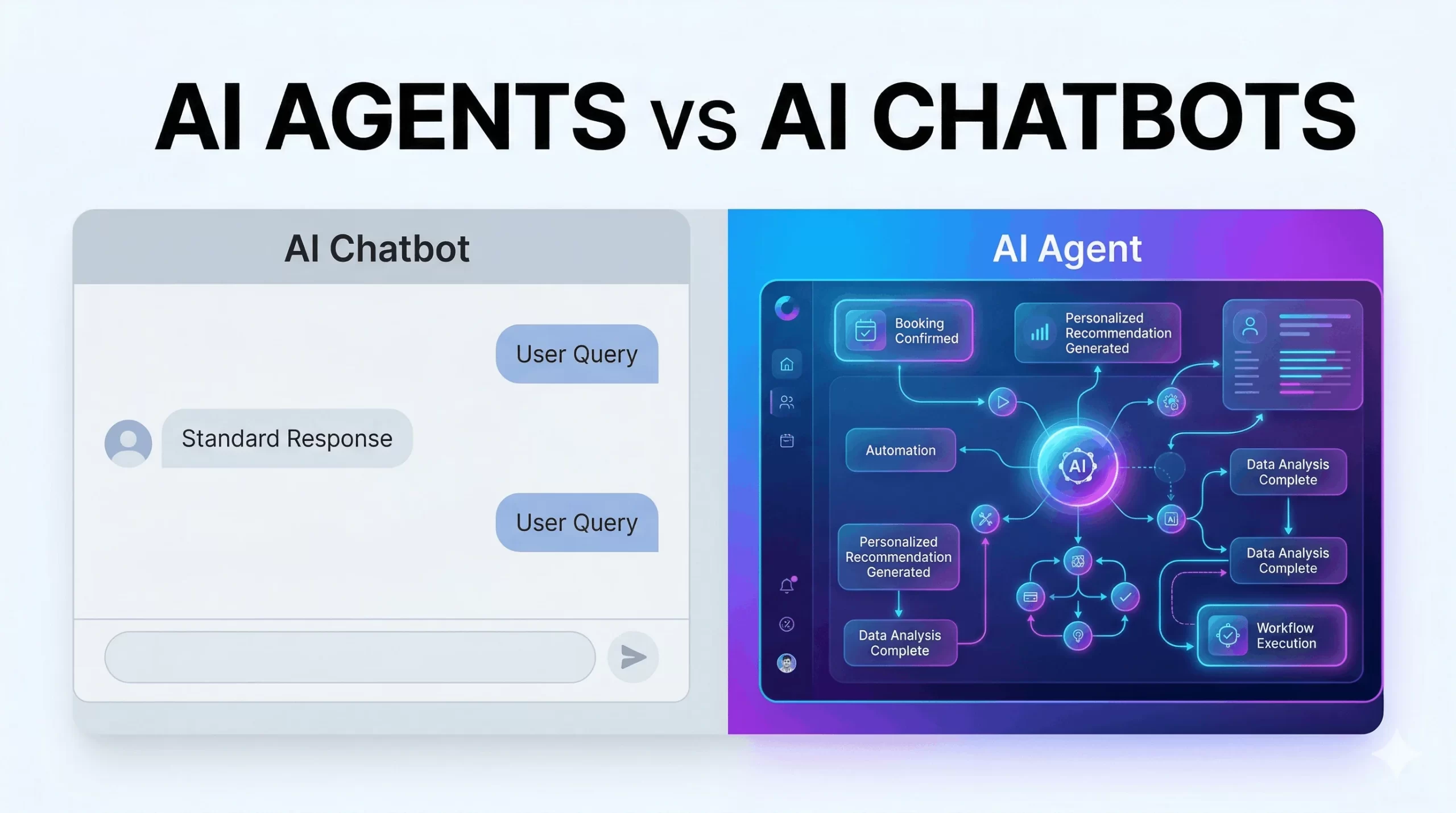
    An AI agent is not just a more advanced chatbot.

    It is a fundamentally different system.

    An AI agent is a goal-oriented, autonomous system that can:

    • Understand user intent
    • Make decisions
    • Execute tasks across systems
    • Continuously optimize outcomes

    In the context of educational institutions, an AI agent doesn’t just interact with students.

    It actively works toward a goal:

    Converting a prospective student into an enrolled one.

    This shift — from interaction to outcome — is what makes AI agents transformative.


    AI Chatbot vs AI Agent: A Strategic Comparison

    The difference between AI chatbots and AI agents is not just technical. It is strategic.

    1. Reactive vs Proactive Systems

    Chatbots operate on a reactive model.

    They wait for a student to ask a question and then respond.

    AI agents operate proactively.

    They initiate engagement, guide the conversation, and move the student toward a defined outcome.


    2. Information Delivery vs Decision Enablement

    Chatbots provide answers.

    AI agents help students make decisions.

    For example:

    • A chatbot lists available courses
    • An AI agent recommends the best-fit course based on goals, budget, and background

    3. Conversation Handling vs Journey Management

    Chatbots manage conversations.

    AI agents manage the entire student journey:

    • Discovery
    • Evaluation
    • Decision
    • Conversion

    4. Static Logic vs Adaptive Intelligence

    Chatbots often rely on predefined logic.

    AI agents adapt dynamically based on:

    • Student behavior
    • Engagement patterns
    • Historical data

    5. Task Limitation vs Workflow Execution

    Chatbots handle single interactions.

    AI agents execute workflows:

    • Lead qualification
    • Counseling scheduling
    • Follow-ups
    • Application progression

    Why Educational Institutions Must Move Beyond Chatbots

    The admission process today is no longer linear.

    Students don’t follow a simple path from enquiry to enrollment.

    They:

    • Research extensively
    • Compare multiple institutions
    • Delay decisions
    • Drop off and return

    Handling this complexity requires more than automated responses.

    It requires:

    • Continuous engagement
    • Context awareness
    • Multi-step decision support

    Chatbots are not built for this.

    AI agents are.


    How AI Agents Transform the Admission Funnel

    To understand the real impact of AI agents, you need to look at the entire funnel.

    Top of Funnel: Engagement

    AI agents engage instantly.

    But more importantly, they:

    • Ask intelligent questions
    • Capture intent
    • Personalize interactions

    This increases the quality of engagement.


    Mid Funnel: Consideration

    This is where most institutions lose students.

    AI agents:

    • Recommend courses
    • Address objections
    • Provide tailored information

    They don’t just inform — they influence decisions.


    Bottom of Funnel: Conversion

    AI agents remove friction.

    They:

    • Schedule counseling sessions
    • Guide application processes
    • Send timely reminders

    This significantly improves conversion rates.


    Real-World Use Cases of AI Agents in Education

    AI agents are not theoretical.

    They are already transforming operations across institutions.

    Intelligent Lead Qualification

    AI agents identify high-intent students early and prioritize them.


    Personalized Course Matching

    Instead of generic lists, students receive curated recommendations.


    Automated Counseling Workflows

    Scheduling, reminders, and follow-ups happen without manual effort.


    Continuous Nurturing

    Students who are not ready immediately are nurtured over time.


    Parent Engagement

    AI agents provide consistent, accurate communication to parents — a critical factor in decision-making.


    Business Impact: What Actually Changes

    This is where most content stays vague.

    Let’s be clear.

    Institutions adopting AI agents typically see:

    • Higher enquiry-to-admission conversion rates
    • Faster response times across all channels
    • Reduced dependency on large admission teams
    • More consistent student experience
    • Better utilization of marketing spend

    In simple terms:

    More admissions without proportionally increasing cost.


    AI Agents for Website and Omnichannel Strategy

    Modern student journeys are not confined to one channel.

    Students interact across:

    • Websites
    • WhatsApp
    • Social media
    • Email

    AI agents unify this experience.

    They maintain context across channels, ensuring:

    • No repeated conversations
    • No lost data
    • Seamless transitions

    This creates a cohesive and professional experience.


    SEO and Growth Implications

    This is an overlooked advantage.

    AI agents improve:

    • Time on site
    • Engagement depth
    • Interaction quality

    These are strong behavioral signals for search engines.

    Additionally, AI-driven experiences increase:

    • Conversion rates from organic traffic
    • User satisfaction

    This creates a compounding growth effect.


    The Future: AI Agents as the Core Admission System

    Looking ahead, AI agents will not be an add-on.

    They will become the core operating layer for admissions.

    We are moving toward systems that:

    • Predict student intent
    • Personalize journeys at scale
    • Automate decision-making processes

    In this future:

    Manual systems will not just be inefficient.

    They will be uncompetitive.


    The Strategic Shift Institutions Must Make

    The decision is not between chatbot and AI agent.

    It is between:

    Incremental improvement vs transformational growth.

    Chatbots improve existing systems.

    AI agents redefine them.


    Conclusion: From Conversations to Conversions

    Educational institutions are entering a new phase of digital transformation.

    The question is no longer whether to adopt AI.

    It is how deeply you integrate it into your core processes.

    Chatbots were the first step.

    AI agents are the next.

    If your goal is to:

    • Capture every enquiry
    • Engage every student
    • Maximize every opportunity

    Then the path is clear.


    Final Takeaway

    Chatbots help you respond.

    AI agents help you win.

    And in a competitive admission landscape, that difference defines who grows — and who gets left behind.

  • Why Educational Institutions Are Losing Student Enquiries And How Livserv AI Chatbots Fix It

    Why Educational Institutions Are Losing Student Enquiries And How Livserv AI Chatbots Fix It

    Educational institutions today are not struggling to generate student enquiries.

    In fact, with Google Ads, SEO, social media, and education platforms, most schools and colleges are getting consistent traffic and leads.

    But here’s the real problem:

    They are not converting those enquiries into admissions.

    Students visit your website.
    They explore courses.
    They fill out forms or send messages.

    And then… they disappear.

    This is not a traffic issue.
    This is an enquiry handling failure.

    And this is exactly where an education AI chatbot changes everything.


    The Real Problem: Where Institutions Lose Students

    Most institutions think they need more leads.

    They don’t.

    They need to handle existing leads better.

    Here’s where things break:

    Slow Response Time

    Students expect instant replies.

    If you respond after hours, they’ve already moved to another college.

    Speed is no longer an advantage — it’s the baseline.


    Fragmented Communication

    Enquiries come from everywhere:

    • Website
    • WhatsApp
    • Social media
    • Calls

    Without a system, conversations get lost.


    Manual Follow-Ups

    Admission teams rely on:

    • Excel sheets
    • Reminders
    • Memory

    This leads to:

    • Missed follow-ups
    • Delays
    • Inconsistent communication

    No Lead Qualification

    Not every enquiry is serious.

    But most institutions treat them equally.

    Result:
    High-quality students are ignored.
    Low-quality leads waste time.


    Limited Working Hours

    Students enquire anytime:

    • Late night
    • Early morning
    • Weekends

    Your team doesn’t.

    Every missed message = lost admission.


    How Student Behavior Has Changed

    If you don’t understand this, nothing will improve.

    Students Want Instant Answers

    No one waits anymore.

    Delay = drop-off.


    Students Compare Multiple Institutions

    You are not the only option.

    The fastest responder often wins.


    Students Expect Personalization

    They don’t want information.

    They want guidance:

    • Which course suits them
    • What fits their budget
    • What matches their goals

    Students Prefer Chat Over Calls

    WhatsApp and chat dominate.

    Calls and emails are secondary.


    This is why a chatbot for schools or chatbot for educational institutions is no longer optional.


    What Is an Education AI Chatbot?

    An education AI chatbot is a smart virtual assistant that:

    • Engages students instantly
    • Answers queries automatically
    • Qualifies leads
    • Guides students through admissions

    It works across:

    • Websites
    • WhatsApp
    • Social media

    Unlike basic bots, modern AI chatbots for colleges understand context and respond like humans.


    How an AI Chatbot for Educational Institutions Works

    Think of it as a 24/7 admission counselor.

    Step 1: Instant Engagement

    The moment a student visits or messages — the chatbot responds.

    No delay.


    Step 2: Smart Conversation

    It asks relevant questions:

    • Course interest
    • Budget
    • Location

    Step 3: Lead Qualification

    It identifies:

    • Serious students
    • Casual enquiries

    Step 4: Personalized Guidance

    It suggests the right courses.

    Not generic info — actual guidance.


    Step 5: Automated Follow-Ups

    No lead goes cold.

    Reminders, updates, nudges — all automated.


    Step 6: Conversion Actions

    Students can:

    • Book counselling
    • Apply
    • Schedule visits

    Directly inside the chat.


    How AI Chatbots Increase Admissions

    This is where real impact happens.

    Instant Response = Higher Conversion

    Speed directly improves engagement.


    Continuous Engagement

    No missed leads.
    No forgotten follow-ups.


    Better Lead Quality

    Chatbots filter serious students.


    Consistent Communication

    No human errors.
    Same experience for every student.


    Reduced Drop-Off

    Automation keeps students engaged till decision.


    Real Use Cases of Chatbots for Schools and Colleges

    Admission Enquiries

    Instant answers to all queries.


    Course Guidance

    Help students choose the right program.


    Fee & Eligibility Queries

    Answer common questions instantly.


    Counselling Booking

    Students book slots without manual effort.


    Parent Engagement

    Clear and consistent communication.


    What Makes the Best Chatbot for Educational Institutions

    Not all chatbots are equal.

    Look for:

    Omnichannel Support

    Website + WhatsApp + social platforms.


    AI-Driven Conversations

    Not rule-based bots.


    CRM Integration

    Track every lead properly.


    Analytics

    Understand what’s working.


    Scalability

    Handle thousands of conversations.


    SEO Impact of Education AI Chatbots

    This is underrated.

    Chatbots improve:

    • Time on site
    • Engagement
    • User experience

    All of which boost rankings.


    Search demand is rising for:

    • education AI chatbot
    • chatbot for schools
    • chatbot for educational institutions
    • AI chatbot for colleges

    Early adopters are already winning.


    Future of AI Chatbots in Education

    This is just the beginning.

    Hyper-Personalization

    Every student gets tailored guidance.


    Voice-Based Chatbots

    Voice interactions will grow.


    Predictive Admissions

    AI will predict who is likely to enroll.


    Conclusion

    Institutions are not losing students due to lack of interest.

    They are losing them due to slow and inefficient enquiry handling.

    An AI chatbot for educational institutions fixes this completely.

    It turns your system into:

    • Faster
    • Smarter
    • Always active

    Final Takeaway

    If you’re still handling enquiries manually:

    You are losing students every single day.

    An education AI chatbot is not a tool anymore.

    It’s your admission growth engine.

    Stop losing enquiries.

    Start converting them.

    With a powerful AI chatbot for educational institutions.

    Because the difference is not traffic — it’s how you handle it.

  • Automotive Chatbot: Fix Variant & Pricing Confusion to Increase Car Sales

    Automotive Chatbot: Fix Variant & Pricing Confusion to Increase Car Sales

    The Buyer You Almost Converted

    A buyer lands on your website looking for a new car.

    They already have intent. They’ve done their research. They’ve shortlisted a model.

    Now they open the variant page.

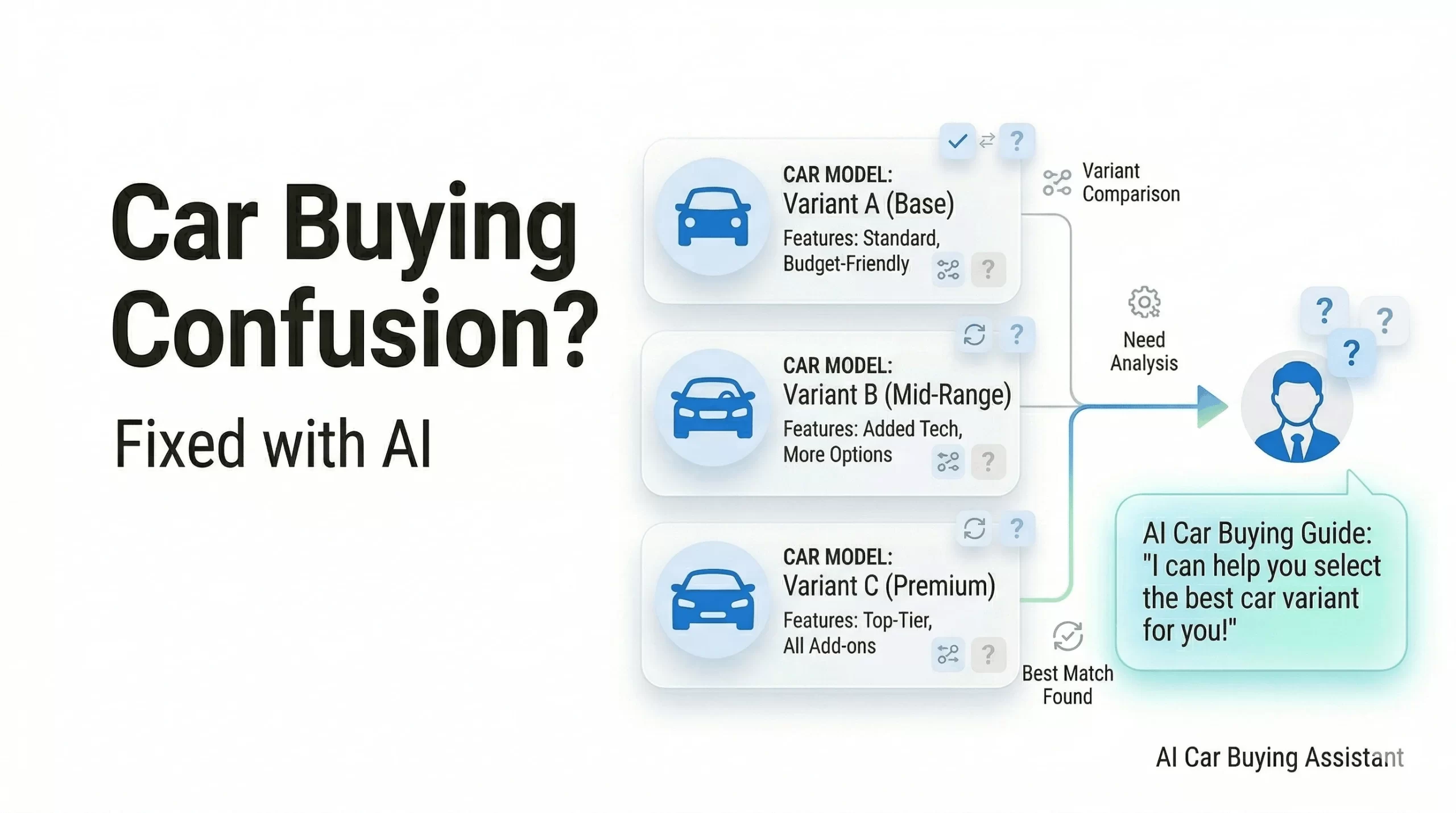
    They see multiple options — base, mid, top — each with different features, pricing, and offers.

    They start comparing.

    Within minutes, confusion sets in.

    They hesitate.

    They leave.

    This is where most automotive businesses lose high-intent buyers — not at awareness, but at decision.


    The Hidden Drop-Off in the Automotive Sales Funnel

    The modern car buying journey looks structured, but conversion is fragile:

    Awareness → Model Selection → Variant Comparison → Pricing → Test Drive → Purchase

    The biggest drop-off happens at the variant and pricing stage.

    This is the moment when:

    • The buyer is closest to booking a test drive
    • Intent is high, but clarity is low
    • Decision complexity peaks

    If businesses fail to guide the buyer here, conversion drops sharply.


    Why Buyers Drop During Variant & Pricing Decisions

    1. Too Many Variants, Too Little Clarity

    Car brands offer multiple variants to cater to different segments.

    But for buyers, this creates confusion.

    • What’s the difference between base, mid, and top?
    • Which features actually matter?
    • Is the higher variant worth the price?

    Too many choices without guidance lead to decision paralysis.


    2. Lack of Transparent Pricing

    Buyers don’t just want ex-showroom prices.

    They want the real cost.

    • On-road price
    • Insurance
    • Registration
    • Add-ons

    When pricing is unclear:

    • Trust drops
    • Hesitation increases

    Confusion around pricing delays decisions.


    3. No Instant EMI Understanding

    For most buyers, affordability matters more than total price.

    The key question is:

    “How much will I pay monthly?”

    If EMI is not instantly visible:

    • Buyers postpone decisions
    • They explore other options

    Lack of EMI clarity creates buying friction.


    4. No Guided Recommendation

    Most dealership websites act like catalogs.

    They show options but don’t guide decisions.

    There is no system to:

    • Understand buyer needs
    • Recommend the best variant

    Without guidance, buyers feel lost.


    5. Slow or No Response from Dealership

    Some buyers try to connect.

    But:

    • Responses are delayed
    • Calls go unanswered
    • Follow-ups are inconsistent

    Speed directly impacts conversions in automotive sales.


    Impact of Variant & Pricing Drop-Off on Dealerships

    This drop-off is not just a UX problem — it is a revenue problem.

    Dealerships lose:

    • High-intent buyers who were ready to act
    • Test drive bookings, the most critical conversion step
    • Sales opportunities already paid for through marketing

    You are not losing traffic — you are losing decision-stage buyers.


    How AI Chatbots Solve This Problem

    An automotive chatbot acts as a digital sales advisor.

    It helps buyers make decisions faster and with confidence.


    1. Smart Variant Recommendation Engine

    The chatbot asks simple questions:

    • What is your budget?
    • What features matter most?
    • City or highway usage?

    Based on answers, it:

    • Suggests the best-fit variant

    This removes confusion and speeds up decisions.


    2. Instant Feature Comparison

    Instead of manual comparison, the chatbot:

    • Highlights key differences
    • Simplifies complex information

    Clarity improves confidence.


    3. Real-Time Pricing Clarity

    The chatbot provides:

    • On-road price breakdown
    • Additional charges

    Transparency builds trust.


    4. EMI Calculation & Guidance

    Buyers can instantly see:

    • Monthly EMI
    • Loan options

    This answers the most critical buying question.


    5. Instant Test Drive Booking

    Instead of forms and delays:

    • Select date
    • Choose location
    • Confirm instantly

    No friction. Faster action.


    6. 24/7 Engagement

    The chatbot works all the time.

    No matter when the buyer visits:

    • They get instant answers

    No missed opportunities.


    Real-World Scenario: Before vs After AI

    StageWithout AIWith AI
    Variant SelectionConfusingGuided
    PricingUnclearTransparent
    EMINot availableInstant
    BookingManualAutomated
    ConversionLowHigh

    How Livserv.ai Helps Automotive Businesses

    Livserv.ai is an AI chatbot platform that helps automotive businesses convert leads faster through intelligent engagement.

    It enables:

    • Lead qualification based on buyer intent
    • Automated conversations
    • Variant recommendations
    • Integration with website and WhatsApp

    It bridges the gap between interest and action.


    Benefits for Dealerships

    • Faster conversions: Buyers move quickly through the funnel
    • Better experience: Guided and simplified journey
    • Reduced sales effort: Automation handles repetitive queries
    • Higher ROI: Better utilization of existing traffic

    FAQs

    Why do buyers get confused between car variants?

    Multiple options with unclear differences create decision overload.

    What is an automotive chatbot?

    An automotive chatbot is an AI-powered tool that helps buyers compare cars, understand pricing, and book test drives.

    How can dealerships increase conversions?

    By providing instant guidance, transparent pricing, and reducing friction using AI chatbots.

    Do chatbots help in car sales?

    Yes, they improve engagement, reduce confusion, and accelerate buying decisions.

    Can chatbots calculate EMI?

    Yes, modern AI chatbots provide instant EMI calculations and loan insights.

    Do chatbots work on WhatsApp?

    Yes, they can engage customers directly on WhatsApp for better conversions.


    Conclusion: The Decision Stage That Drives Sales

    Buyers don’t drop because they are not interested.

    They drop because they are confused.

    The variant and pricing stage is where:

    • decisions slow down
    • uncertainty increases
    • buyers leave

    AI chatbots remove confusion and guide buyers toward action.

    When you simplify decisions, you don’t just improve experience.

    You increase test drives, conversions, and revenue.

    The opportunity is already there.

    The question is whether you are capturing it.

  • Patients Dropping Off During Doctor Selection? Fixing the Specialty & Availability Gap with AI

    Patients Dropping Off During Doctor Selection? Fixing the Specialty & Availability Gap with AI

    A Patient You’re Losing Right Now

    A patient visits your hospital website late at night.

    They are searching for help. Maybe it’s a persistent headache. Maybe something more serious.

    They land on your “Find a Doctor” page.

    They see multiple specialties. Neurology. General Medicine. ENT.

    Then they see multiple doctors under each category.

    Different names. Different experience levels. No clear guidance.

    They pause.

    They hesitate.

    They leave.

    No appointment booked.

    This is not a traffic problem. This is a decision-stage drop-off.


    The Hidden Drop-Off in Healthcare Funnels

    The typical patient journey looks simple:

    Symptom → Search → Doctor Selection → Appointment Booking → Visit

    But the biggest drop-off happens here:

    Doctor Selection → Appointment Booking

    This stage is critical because:

    • The patient has intent
    • They are actively looking for care
    • They are close to booking

    Yet, most hospitals fail at this exact moment.


    Why Patients Drop During Doctor Selection

    1. Specialty Confusion

    Patients are not medical experts.

    They don’t always know whether their problem requires a cardiologist, neurologist, or general physician.

    When presented with multiple departments, they feel uncertain.

    Uncertainty leads to inaction.

    Instead of choosing the wrong doctor, patients choose nothing.


    2. Lack of Real-Time Availability

    Even if a patient selects a doctor, the next question is immediate:

    “When can I get an appointment?”

    If availability is not visible:

    • Patients assume delays
    • They postpone booking
    • They look for alternatives

    Delay kills intent.


    3. No Guided Decision Support

    Most hospital websites are static.

    They list doctors but don’t guide patients.

    There is no system to:

    • Understand symptoms
    • Recommend the right doctor
    • Simplify decision-making

    Without guidance, patients feel lost.


    4. Slow Response from Hospital Staff

    Some patients try to call.

    Others fill out forms.

    But:

    • Calls go unanswered
    • Responses are delayed
    • Follow-ups are inconsistent

    In healthcare, speed builds trust. Delay breaks it.


    5. Friction in Appointment Booking

    Booking often involves:

    • Filling long forms
    • Waiting for confirmation
    • Manual coordination

    For a patient already anxious, this is too much effort.

    Friction reduces conversions.


    Impact on Hospitals

    These gaps are not small problems.

    They directly affect business outcomes:

    • Lost patients: High-intent users leave without booking
    • Lower appointment rates: Funnel leakage increases
    • Operational inefficiency: Staff handles repetitive queries
    • Revenue loss: Fewer consultations mean lower revenue

    You are not losing traffic. You are losing ready-to-book patients.


    How AI Chatbots Solve This Problem

    An AI chatbot for healthcare acts as a real-time patient assistant.

    It guides, informs, and converts patients at the exact moment they need help.


    1. Smart Doctor Recommendations

    Instead of showing a static list, the chatbot asks simple questions:

    • What symptoms are you experiencing?
    • How long have you had them?

    Based on responses, it:

    • Identifies the right specialty
    • Recommends suitable doctors

    This removes confusion and builds confidence.


    2. Real-Time Availability Display

    The chatbot shows:

    • Available time slots
    • Next available appointments

    Instant visibility removes uncertainty.

    Patients can act immediately.


    3. Instant Appointment Booking

    Patients can:

    • Select a doctor
    • Choose a time slot
    • Confirm booking instantly

    No forms. No waiting. No friction.


    4. 24/7 Patient Engagement

    The chatbot works round the clock.

    Whether it’s midnight or early morning:

    • Patients get instant responses
    • No query goes unanswered

    This ensures no patient is lost due to timing.


    5. Personalized Patient Journey

    The chatbot remembers:

    • Patient preferences
    • Previous interactions

    It delivers:

    • Personalized recommendations
    • Relevant follow-ups

    This creates a guided, human-like experience.


    Real-World Scenario: Before vs After AI

    Before AI Chatbot

    Patient visits website → sees multiple doctors → gets confused → leaves

    Result: No booking

    After AI Chatbot

    Patient visits website → chatbot asks symptoms → recommends doctor → shows availability → books instantly

    Result: Appointment confirmed


    How Livserv.ai Helps Healthcare Providers

    Livserv.ai is an AI chatbot platform that helps healthcare providers automate patient engagement and appointment booking.

    It enables:

    • Real-time patient interaction
    • Automated appointment scheduling
    • Smart doctor recommendations
    • Integration with website and WhatsApp

    It bridges the gap between patient intent and conversion.


    Benefits for Hospitals

    • Increased appointments: More patients complete booking
    • Improved patient experience: Faster, guided journeys
    • Reduced workload: Automation handles repetitive queries
    • Higher conversion rates: Better funnel efficiency

    FAQs

    Why do patients drop during doctor selection?

    Patients face confusion, lack of guidance, and delayed responses, leading to hesitation and drop-offs.

    What is a healthcare chatbot?

    A healthcare chatbot is an AI-powered system that helps patients with queries, doctor selection, and appointment booking.

    How can hospitals improve appointment booking?

    By reducing friction, offering real-time availability, and guiding patients using AI chatbots.

    Are AI chatbots safe for healthcare?

    Yes, when implemented with proper compliance and data security standards.

    Can chatbots replace hospital staff?

    No, they assist staff by handling repetitive tasks and improving efficiency.

    Do chatbots work on WhatsApp?

    Yes, many healthcare chatbots integrate with WhatsApp for better patient engagement.


    Conclusion: The Moment That Defines Conversion

    Patients don’t drop because they are not interested.

    They drop because they are not guided.

    The doctor selection stage is where:

    • confusion peaks
    • decisions slow down
    • patients leave

    AI chatbots solve this by guiding patients instantly and intelligently.

    When you remove confusion and friction, you don’t just improve experience.

    You increase appointments, conversions, and revenue.

    The question is not whether patients are coming.

    The question is whether you are ready to convert them.