The conversation around AI in education has fundamentally shifted.
For years, educational institutions have invested in chatbots to automate student enquiries, reduce manual workload, and improve response times. On paper, this seemed like a major step forward.
And initially, it was.
But in 2026, a clear pattern has emerged across schools, colleges, and universities:
Institutions that rely only on chatbots are still struggling with low conversion rates.
Institutions adopting AI agents are seeing measurable improvements in admissions.
This is not a minor technological upgrade.
It is a shift from conversation-based automation to outcome-driven systems.
If you’re still evaluating whether to implement a chatbot or an AI agent, you’re asking the wrong question.
The real question is:
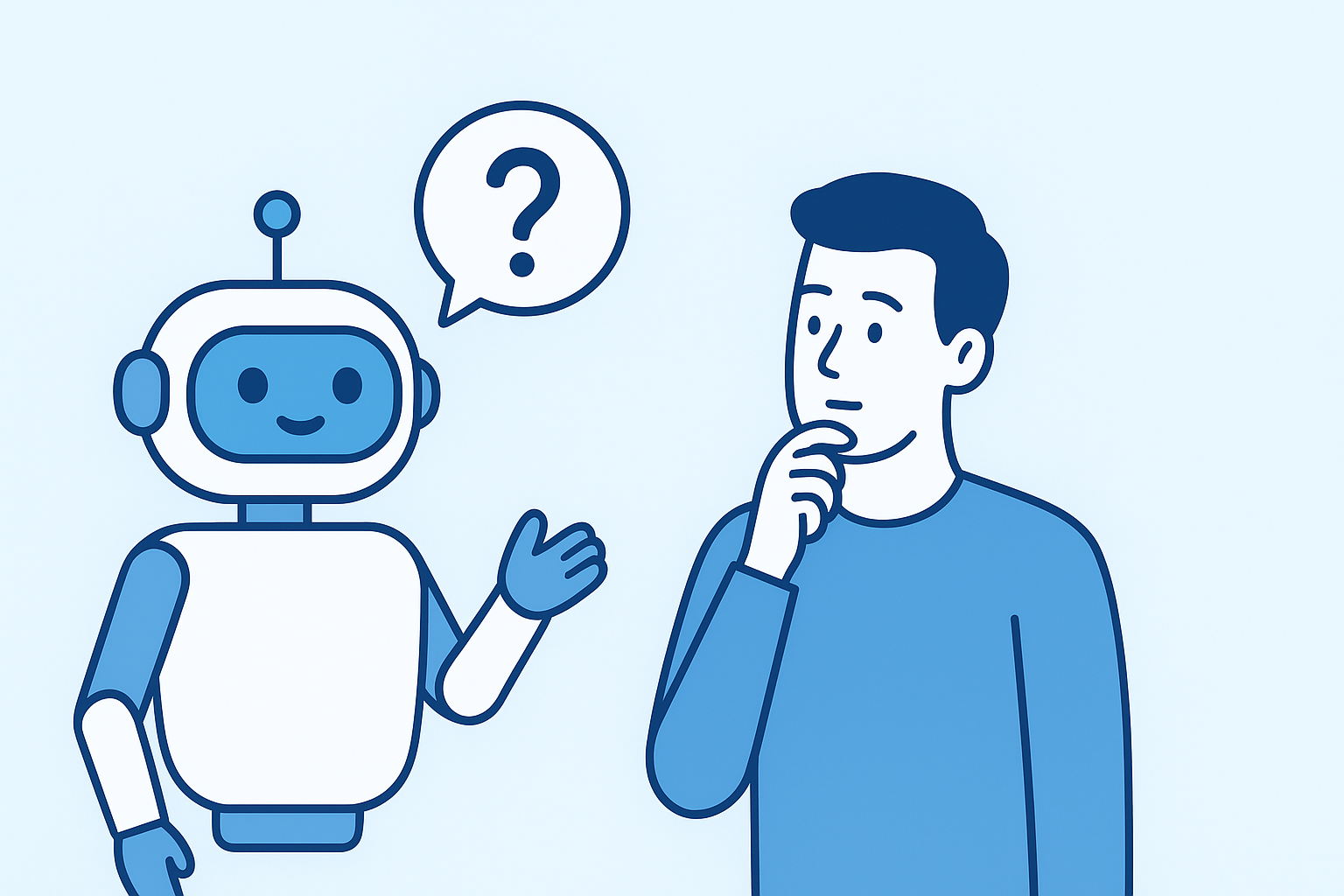
Do you want to respond to student enquiries — or convert them?
Because that is the difference between AI chatbots and AI agents.
The Hidden Gap in Modern Admission Systems
Most institutions today are not failing at generating demand.
They are failing at capturing and converting that demand efficiently.
Let’s break down the typical journey:
A student discovers your institution through Google, ads, or social media.
They land on your website.
They show intent — browsing courses, checking fees, exploring details.
Then one of two things happens:
- They fill out an enquiry form
- They leave without interacting
In both cases, the majority of institutions lose control of the journey.
Why?
Because the system is not designed to engage in real time, guide decisions, and drive action.
Instead, it is built to:
- Collect information
- Wait for human follow-up
- React when prompted
This reactive model is fundamentally broken in a world where:
- Students compare multiple institutions simultaneously
- Decision cycles are shorter
- Expectations for instant interaction are higher than ever
This is where traditional chatbots also fall short.
What AI Chatbots Solved — And Where They Failed
To understand why AI agents are gaining traction, it’s important to first acknowledge what chatbots actually achieved.
Chatbots solved three major problems:
- They improved response speed
Students no longer had to wait hours or days for basic answers. - They reduced repetitive workload
Admission teams no longer had to answer the same questions repeatedly. - They enabled 24/7 availability
Institutions could engage students outside working hours.
These were meaningful improvements.
But they introduced a new limitation:
Chatbots optimized communication — not conversion.
Most chatbots:
- Answer questions
- Provide information
- Follow predefined flows
But they do not:
- Drive decisions
- Execute multi-step processes
- Adapt deeply to individual student intent
In other words:
Chatbots make your system faster.
They don’t make it smarter.
What Is an AI Agent?
An AI agent is not just a more advanced chatbot.
It is a fundamentally different system.
An AI agent is a goal-oriented, autonomous system that can:
- Understand user intent
- Make decisions
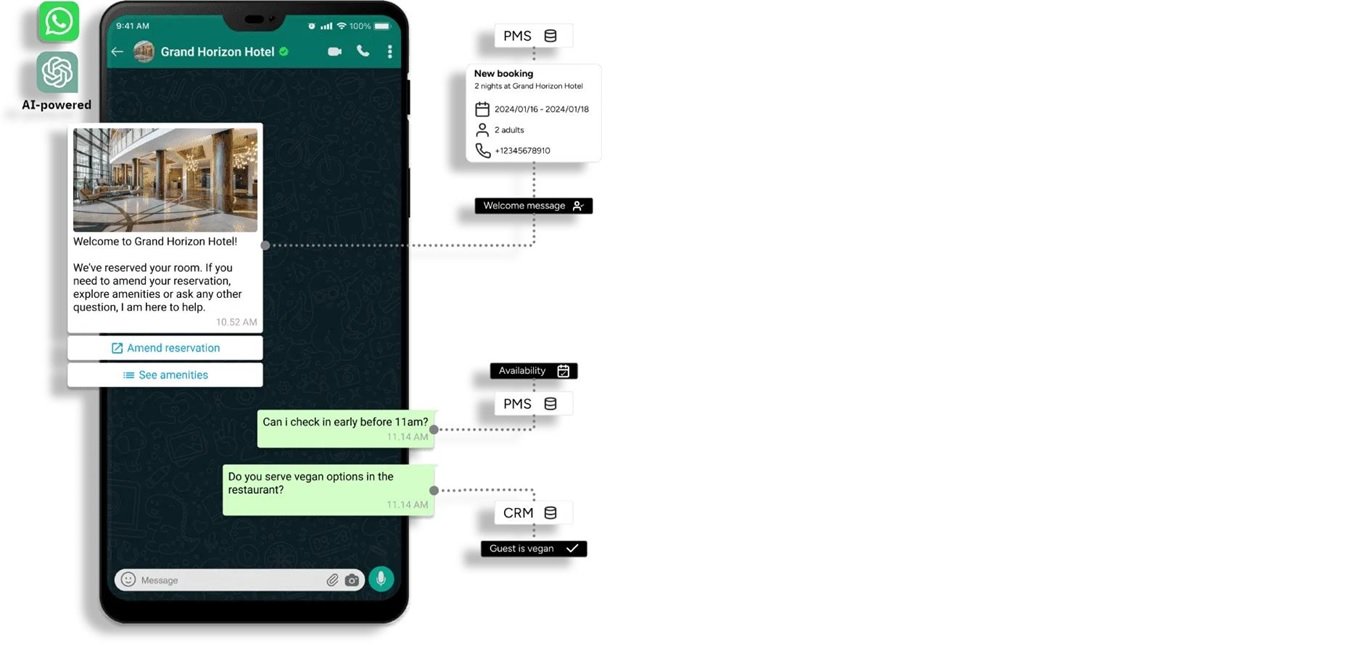
- Execute tasks across systems
- Continuously optimize outcomes
In the context of educational institutions, an AI agent doesn’t just interact with students.
It actively works toward a goal:
Converting a prospective student into an enrolled one.
This shift — from interaction to outcome — is what makes AI agents transformative.
AI Chatbot vs AI Agent: A Strategic Comparison
The difference between AI chatbots and AI agents is not just technical. It is strategic.
1. Reactive vs Proactive Systems
Chatbots operate on a reactive model.
They wait for a student to ask a question and then respond.
AI agents operate proactively.
They initiate engagement, guide the conversation, and move the student toward a defined outcome.
2. Information Delivery vs Decision Enablement
Chatbots provide answers.
AI agents help students make decisions.
For example:
- A chatbot lists available courses
- An AI agent recommends the best-fit course based on goals, budget, and background
3. Conversation Handling vs Journey Management
Chatbots manage conversations.
AI agents manage the entire student journey:
- Discovery
- Evaluation
- Decision
- Conversion
4. Static Logic vs Adaptive Intelligence
Chatbots often rely on predefined logic.
AI agents adapt dynamically based on:
- Student behavior
- Engagement patterns
- Historical data
5. Task Limitation vs Workflow Execution
Chatbots handle single interactions.
AI agents execute workflows:
- Lead qualification
- Counseling scheduling
- Follow-ups
- Application progression
Why Educational Institutions Must Move Beyond Chatbots
The admission process today is no longer linear.
Students don’t follow a simple path from enquiry to enrollment.
They:
- Research extensively
- Compare multiple institutions
- Delay decisions
- Drop off and return
Handling this complexity requires more than automated responses.
It requires:
- Continuous engagement
- Context awareness
- Multi-step decision support
Chatbots are not built for this.
AI agents are.
How AI Agents Transform the Admission Funnel
To understand the real impact of AI agents, you need to look at the entire funnel.
Top of Funnel: Engagement
AI agents engage instantly.
But more importantly, they:
- Ask intelligent questions
- Capture intent
- Personalize interactions
This increases the quality of engagement.
Mid Funnel: Consideration
This is where most institutions lose students.
AI agents:
- Recommend courses
- Address objections
- Provide tailored information
They don’t just inform — they influence decisions.
Bottom of Funnel: Conversion
AI agents remove friction.
They:
- Schedule counseling sessions
- Guide application processes
- Send timely reminders
This significantly improves conversion rates.
Real-World Use Cases of AI Agents in Education
AI agents are not theoretical.
They are already transforming operations across institutions.
Intelligent Lead Qualification
AI agents identify high-intent students early and prioritize them.
Personalized Course Matching
Instead of generic lists, students receive curated recommendations.
Automated Counseling Workflows
Scheduling, reminders, and follow-ups happen without manual effort.
Continuous Nurturing
Students who are not ready immediately are nurtured over time.
Parent Engagement
AI agents provide consistent, accurate communication to parents — a critical factor in decision-making.
Business Impact: What Actually Changes
This is where most content stays vague.
Let’s be clear.
Institutions adopting AI agents typically see:
- Higher enquiry-to-admission conversion rates
- Faster response times across all channels
- Reduced dependency on large admission teams
- More consistent student experience
- Better utilization of marketing spend
In simple terms:
More admissions without proportionally increasing cost.
AI Agents for Website and Omnichannel Strategy
Modern student journeys are not confined to one channel.
Students interact across:
- Websites
- Social media
AI agents unify this experience.
They maintain context across channels, ensuring:
- No repeated conversations
- No lost data
- Seamless transitions
This creates a cohesive and professional experience.
SEO and Growth Implications
This is an overlooked advantage.
AI agents improve:
- Time on site
- Engagement depth
- Interaction quality
These are strong behavioral signals for search engines.
Additionally, AI-driven experiences increase:
- Conversion rates from organic traffic
- User satisfaction
This creates a compounding growth effect.
The Future: AI Agents as the Core Admission System
Looking ahead, AI agents will not be an add-on.
They will become the core operating layer for admissions.
We are moving toward systems that:
- Predict student intent
- Personalize journeys at scale
- Automate decision-making processes
In this future:
Manual systems will not just be inefficient.
They will be uncompetitive.
The Strategic Shift Institutions Must Make
The decision is not between chatbot and AI agent.
It is between:
Incremental improvement vs transformational growth.
Chatbots improve existing systems.
AI agents redefine them.
Conclusion: From Conversations to Conversions
Educational institutions are entering a new phase of digital transformation.
The question is no longer whether to adopt AI.
It is how deeply you integrate it into your core processes.
Chatbots were the first step.
AI agents are the next.
If your goal is to:
- Capture every enquiry
- Engage every student
- Maximize every opportunity
Then the path is clear.
Final Takeaway
Chatbots help you respond.
AI agents help you win.
And in a competitive admission landscape, that difference defines who grows — and who gets left behind.