The healthcare industry is undergoing a structural shift driven by rising patient expectations, operational inefficiencies, and the increasing complexity of care delivery. Hospitals are no longer evaluated solely on clinical outcomes; they are judged on responsiveness, accessibility, transparency, and overall patient experience. In this evolving landscape, the role of AI chatbot for healthcare, healthcare conversational AI, and AI agents for hospitals is expanding from a support tool into a foundational layer of digital healthcare infrastructure.
Patients today expect the same level of convenience from hospitals that they receive from digital-first industries. They want to discover doctors, check availability, book appointments, access reports, and communicate with providers instantly and seamlessly. However, traditional hospital systems are often fragmented, manual, and dependent on human availability. This gap between expectation and reality creates friction, delays, and lost opportunities.
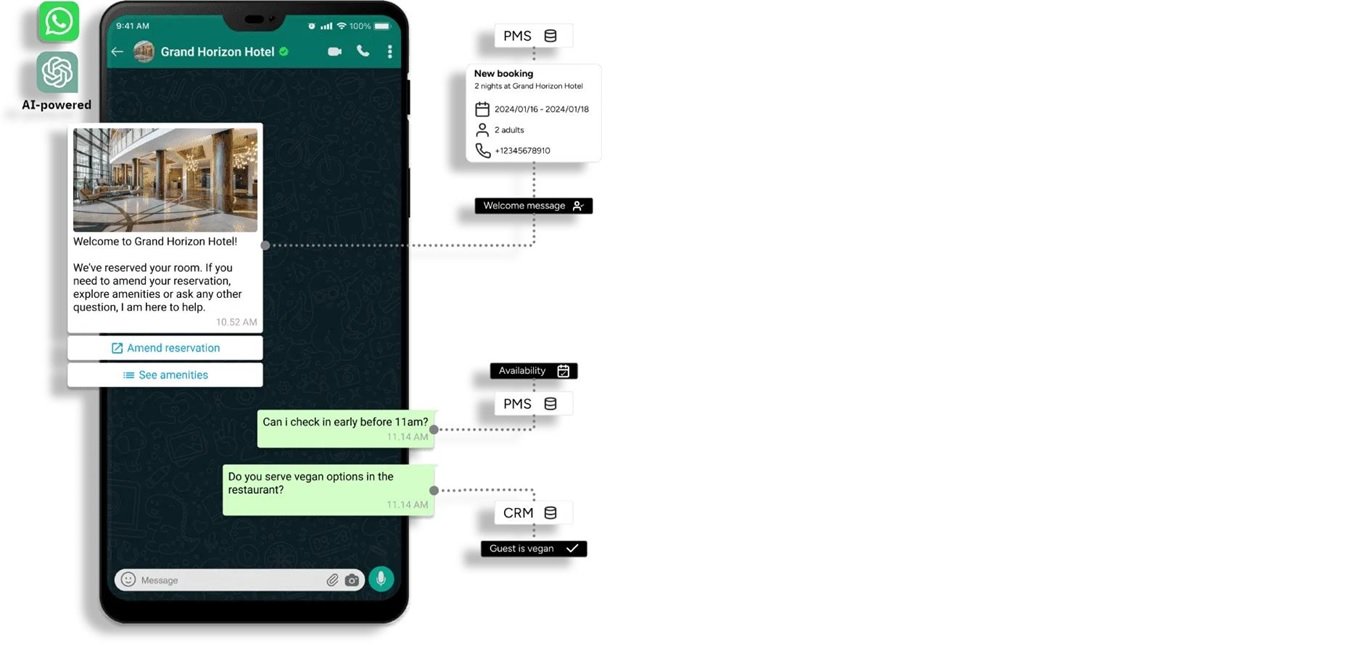
An AI chatbot for hospital systems, when integrated deeply with CRM and backend systems, begins to close this gap. It does not merely respond to queries; it orchestrates patient journeys, automates workflows, and enables real-time interactions across the entire care lifecycle.
Understanding the Role of AI Chatbots in Healthcare
An AI chatbot in healthcare is an intelligent conversational interface that interacts with patients across channels such as websites, mobile apps, WhatsApp, and voice platforms. Unlike rule-based chatbots that follow predefined scripts, modern healthcare AI chatbots use natural language processing and contextual understanding to manage complex, multi-step interactions.
These systems are designed to handle a wide range of hospital use cases, including:
- Patient onboarding and registration
- Doctor discovery and appointment scheduling
- Symptom collection and triage
- Payment processing
- Medical record access
- Post-treatment follow-ups
For example, when a patient visits a hospital website and asks, “Is a cardiologist available tomorrow?”, a traditional system might require form filling or manual callbacks. An advanced AI chatbot for hospitals can immediately:
- Check real-time doctor availability
- Suggest suitable time slots
- Capture patient details
- Confirm the appointment within the same conversation
This shift from passive interaction to active workflow execution defines the true value of AI agents for healthcare.
The Growing Need for AI Chatbots in Hospitals
Healthcare systems are inherently complex, with multiple departments, stakeholders, and processes involved in delivering care. Patients often experience this complexity as confusion, delays, and lack of coordination.
Hospitals face several recurring challenges:
- High volume of repetitive queries
- Missed or delayed patient interactions
- Inefficient appointment scheduling
- Lack of real-time data access
- Fragmented patient records
- Limited staff availability
An AI chatbot for healthcare industry applications addresses these challenges by acting as a unified interface between patients and hospital systems.
Consider a scenario where a patient wants to book an appointment. Without automation, the process may involve:
- Calling the hospital
- Waiting for a response
- Checking availability manually
- Confirming the booking
With a healthcare chatbot, the same process becomes instantaneous and frictionless. The chatbot manages the interaction end-to-end, reducing effort for both patients and hospital staff.
Core Use Cases of AI Chatbots in Healthcare
1. Intelligent Appointment Scheduling and Real-Time Availability
Appointment booking is one of the most common and critical interactions in healthcare. An AI chatbot for hospital appointment booking transforms this process by integrating directly with hospital scheduling systems.
Patients can:
- Check doctor availability in real time
- Compare multiple specialists
- Select preferred time slots
- Book appointments instantly
For example, a patient searching for a dermatologist can interact with the chatbot, which retrieves real-time schedules and offers options such as:
“Dr. Mehta is available tomorrow at 11:30 AM and 4:00 PM. Would you like to confirm a slot?”
This eliminates delays and significantly improves booking conversion rates.
2. Smart Symptom Collection and Pre-Consultation Data Capture
Before a consultation, doctors often spend valuable time gathering basic information. An AI chatbot for healthcare streamlines this process by collecting structured patient data in advance.
The chatbot can:
- Ask symptom-related questions
- Capture medical history
- Record allergies and medications
- Store data in the hospital CRM
For instance, a patient reporting fever may be asked about duration, severity, and associated symptoms. This information is then made available to the doctor before the consultation begins.
This approach improves diagnostic efficiency and reduces consultation time.
3. Doctor Discovery and AI-Powered Matching
Choosing the right doctor is a key concern for patients. A simple directory listing often leads to confusion. An advanced AI chatbot for hospitals can act as a recommendation engine.
Based on patient inputs, the chatbot can:
- Identify relevant specialists
- Recommend doctors based on expertise
- Provide availability and ratings
For example, a patient with knee pain may be guided toward an orthopedic specialist, with the chatbot suggesting specific doctors based on availability and past patient outcomes.
This creates a more personalized and confidence-driven decision-making process.
4. Real-Time Payment Collection and Billing Assistance
Healthcare transactions often involve multiple steps, including consultation fees, diagnostic charges, and insurance processing. An AI chatbot in healthcare can simplify these interactions.
Capabilities include:
- Collecting consultation payments during booking
- Providing cost estimates for procedures
- Explaining billing breakdowns
- Integrating with payment gateways
For example, during appointment booking, the chatbot can prompt:
“The consultation fee is ₹800. Would you like to proceed with payment?”
This reduces friction and ensures commitment from patients.
5. Access to Medical Records and Reports
Patients frequently need access to their reports, prescriptions, and medical history. Traditional systems require logins, downloads, or physical visits.
A healthcare AI chatbot can provide instant access by retrieving data from hospital CRM systems.
Patients can:
- Request lab reports
- Download prescriptions
- View past consultation details
For example, a patient can simply ask:
“Show my last blood test report”
The chatbot retrieves and shares the document instantly, enhancing convenience and transparency.
6. Digital Prescription and Documentation Access
Prescriptions are often lost, misplaced, or difficult to interpret. An AI chatbot for healthcare industry solutions enables patients to access prescriptions digitally at any time.
The chatbot can:
- Store prescriptions securely
- Provide downloadable formats
- Offer simplified explanations
For instance, a patient can request:
“Download my prescription from last visit”
This ensures continuity of care and reduces dependency on physical documents.
7. Post-Consultation Follow-Ups and Recovery Tracking
Healthcare does not end with a consultation. Follow-ups are critical for recovery and long-term outcomes.
An AI chatbot for hospitals can automate follow-up interactions by:
- Checking patient recovery status
- Asking condition-specific questions
- Reminding patients about medications
For example, after a surgery, the chatbot may ask:
“Are you experiencing any pain or discomfort today?”
If the response indicates a problem, the system can alert the doctor or schedule a follow-up consultation.
8. Emergency Detection and Response Assistance
In critical situations, timely response is essential. An advanced AI chatbot in healthcare can identify emergency scenarios based on patient inputs.
Capabilities include:
- Detecting keywords indicating urgency
- Providing immediate guidance
- Sharing emergency contact details
- Initiating ambulance requests
For instance, if a patient reports severe chest pain, the chatbot can recommend immediate emergency care and guide the patient accordingly.
9. Multilingual Patient Interaction
In diverse regions, language can be a barrier to healthcare access. A healthcare chatbot can support multiple languages, enabling patients to communicate in their preferred language.
This is particularly valuable in regions like India, where patients may prefer Telugu, Hindi, Tamil, or other regional languages.
By simplifying communication, hospitals can reach a broader audience and improve patient engagement.
10. Preventive Healthcare and Patient Engagement
Preventive care is a growing focus in healthcare systems. An AI chatbot for healthcare can proactively engage patients by:
- Sending reminders for routine check-ups
- Suggesting diagnostic tests
- Providing health tips
For example, a chatbot can notify a patient:
“You are due for your annual health check-up. Would you like to book an appointment?”
This approach encourages early detection and continuous engagement.
Integration with CRM and Hospital Systems
The true power of an AI chatbot for hospitals lies in its integration with backend systems such as CRM, EMR, and hospital management software.
When integrated effectively, the chatbot can:
- Store and retrieve patient data
- Maintain conversation history
- Enable personalized interactions
- Provide real-time insights to hospital staff
For example, when a returning patient interacts with the chatbot, it can recognize the patient, recall previous visits, and tailor responses accordingly.
This creates a seamless and consistent experience across all interactions.
Enhancing Patient Experience Through Conversational AI
Patient experience is influenced by multiple factors, including responsiveness, clarity, and convenience. A healthcare AI chatbot enhances these aspects by providing:
- Instant responses
- 24/7 availability
- Personalized interactions
- Simplified processes
For instance, a patient seeking information about a procedure can receive clear, structured explanations without waiting for a staff member.
This level of accessibility improves trust and satisfaction.
Operational Efficiency and Cost Optimization
Hospitals often operate under resource constraints. Managing large volumes of patient interactions manually can be inefficient and costly.
An AI chatbot for healthcare industry applications reduces operational burden by:
- Automating repetitive tasks
- Handling multiple conversations simultaneously
- Reducing dependency on large support teams
For example, instead of hiring additional staff to manage appointment bookings, a chatbot can handle the workload efficiently.
This allows hospitals to allocate resources more effectively.
Data-Driven Insights and Decision Making
Every interaction handled by a healthcare chatbot generates valuable data. This data can be analyzed to identify trends and improve decision-making.
Hospitals can gain insights into:
- Common patient queries
- Popular departments and services
- Peak interaction times
- Patient behavior patterns
For example, if a large number of patients are inquiring about a specific treatment, hospitals can adjust their marketing and resource allocation accordingly.
The Evolution Toward AI Agents in Healthcare
The next phase in healthcare technology is the emergence of AI agents for healthcare, which go beyond traditional chatbots.
These agents are capable of:
- Managing entire patient journeys
- Coordinating between departments
- Automating complex workflows
- Delivering proactive care
For instance, an AI agent can guide a patient from initial inquiry to consultation, diagnostics, treatment, and follow-up, all within a unified system.
This represents a shift from reactive support to proactive healthcare management.
Real-World Scenario: End-to-End Patient Journey
Consider a patient experiencing persistent headaches.
The journey with an AI chatbot for healthcare may unfold as follows:
- The patient initiates a conversation on the hospital website
- The chatbot collects symptoms and medical history
- It recommends a neurologist and shows available slots
- The patient books an appointment and completes payment
- Before the consultation, the doctor receives a summary of the patient’s condition
- After the consultation, the patient receives a digital prescription
- The chatbot follows up to track recovery and remind about medication
This seamless journey demonstrates how AI chatbots for hospitals can transform patient experiences and operational workflows.
Strategic Importance for Healthcare Providers
For hospitals, adopting an AI chatbot for healthcare industry solutions is not just about technology; it is about staying competitive in a rapidly evolving market.
Patients increasingly prefer hospitals that offer:
- Digital convenience
- Instant communication
- Transparent processes
By implementing conversational AI, hospitals can align with these expectations and deliver superior experiences.