Day: April 15, 2026

  • AI Chatbot for Banking: Use Cases, Benefits & Real-World Examples (2026)

    AI Chatbot for Banking: Use Cases, Benefits & Real-World Examples (2026)

    The banking industry has always been defined by trust, accuracy, and responsiveness. Over the past decade, however, customer expectations have shifted dramatically. Banking customers now expect the same level of speed, convenience, and personalization that they experience in digital-first platforms. They want instant answers, seamless transactions, and round-the-clock support across multiple channels.

    This shift has created a gap between traditional banking operations and modern customer expectations. Manual processes, limited working hours, and fragmented systems often result in delayed responses and inconsistent experiences. To address these challenges, banks are increasingly adopting AI chatbot for banking, conversational AI in banking, and AI agents for financial services.

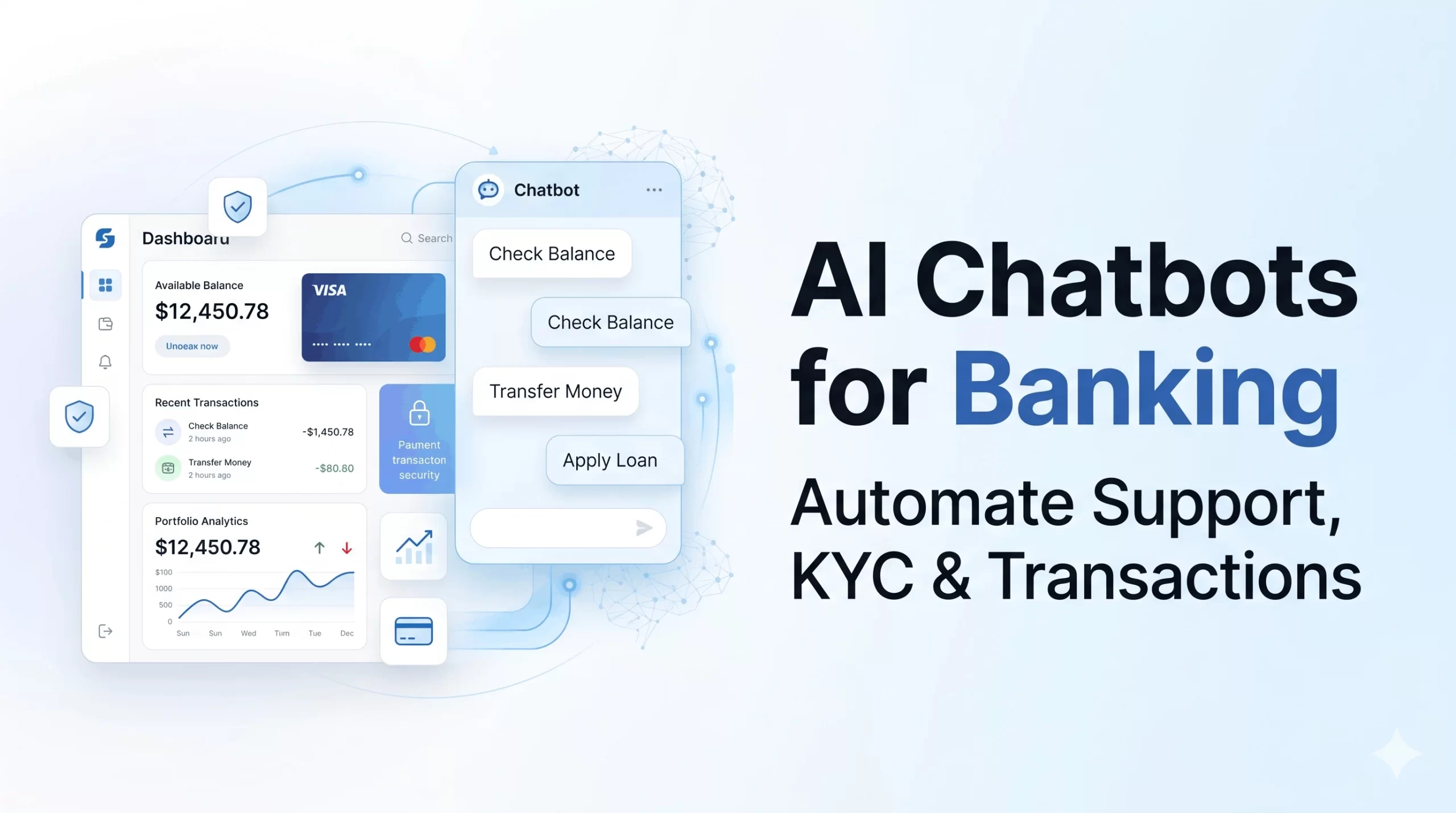
    An AI chatbot for banking industry applications is no longer limited to answering frequently asked questions. It has evolved into a powerful digital interface capable of handling customer interactions, automating workflows, and integrating with core banking systems. It supports everything from account inquiries and loan applications to fraud alerts and financial guidance.


    Understanding AI Chatbots in Banking

    An AI chatbot for banking is an intelligent conversational system that interacts with customers through text or voice. It uses technologies such as natural language processing, machine learning, and contextual understanding to interpret user queries and provide relevant responses.

    Unlike rule-based chat systems, a banking AI chatbot can understand intent, manage multi-step conversations, and perform actions in real time. It can operate across channels such as websites, mobile apps, and messaging platforms, ensuring consistent customer engagement.

    For example, when a customer asks, “What is my account balance and last transaction?”, the chatbot can retrieve this information securely from the banking system and present it instantly. If the customer continues with “Transfer ₹5,000 to my savings account,” the chatbot can guide or execute the transaction based on permissions.

    This ability to combine communication with action defines the role of AI chatbot for financial services.


    Why Banks Are Adopting AI Chatbots

    The adoption of AI chatbots in banking is driven by multiple factors, including operational efficiency, cost optimization, and the need for enhanced customer experience.

    Banks handle a large volume of repetitive queries daily, such as balance checks, transaction history requests, and branch information. Handling these manually requires significant resources. An AI chatbot for banking industry applications can automate these interactions, allowing human agents to focus on complex tasks.

    Another key driver is the demand for 24/7 availability. Customers expect support at any time, especially in a digital banking environment. Chatbots provide continuous service without additional staffing costs.

    Additionally, banks are leveraging conversational AI in banking to improve personalization. By analyzing customer data and interaction history, chatbots can offer tailored recommendations and insights.


    Core Use Cases of AI Chatbots in Banking

    Customer Support and Query Resolution

    One of the most common applications of a banking AI chatbot is handling customer support queries. These include:

    • Account balance inquiries
    • Transaction history
    • Card status and blocking
    • Branch and ATM information

    For example, a customer can ask:

    “Show my last five transactions”

    The chatbot retrieves the data and presents it instantly. This reduces waiting time and improves customer satisfaction.


    Account Management and Transactions

    An advanced AI chatbot for banking can assist with account-related tasks and transactions. It can guide users through processes such as:

    • Fund transfers
    • Bill payments
    • Account updates

    For instance, a user may initiate a conversation:

    “I want to transfer ₹10,000 to my friend”

    The chatbot verifies details, confirms the transaction, and completes it securely. This creates a seamless and efficient experience.


    Loan and Credit Processing

    Loan applications often involve multiple steps and documentation. An AI chatbot for financial services can simplify this process by:

    • Collecting customer details
    • Assessing eligibility
    • Guiding users through application steps

    For example, a chatbot may ask:

    “What type of loan are you looking for?”

    Based on responses, it can suggest suitable options and initiate the application process.


    KYC and Onboarding Automation

    Customer onboarding is a critical process in banking. An AI chatbot for banking industry applications can automate KYC (Know Your Customer) procedures by:

    • Collecting identity details
    • Guiding document uploads
    • Verifying information

    For instance, a new customer can complete onboarding through a chatbot without visiting a branch. This reduces friction and accelerates account creation.


    Fraud Detection and Alerts

    Security is a major concern in banking. AI chatbots in banking can play a role in fraud detection by:

    • Monitoring unusual activity
    • Sending alerts to customers
    • Providing guidance on next steps

    For example, if a suspicious transaction is detected, the chatbot can notify the customer and ask for confirmation.


    Personalized Financial Guidance

    Beyond transactions, AI chatbot for banking systems can provide financial insights and recommendations.

    They can:

    • Analyze spending patterns
    • Suggest budgeting strategies
    • Recommend savings plans

    For example, a chatbot may inform a customer:

    “You spent 20% more on dining this month compared to last month.”

    This helps customers make informed financial decisions.


    Real-World Examples of AI Chatbots in Banking

    Example 1: Digital Banking Assistant

    A customer logs into a banking app and interacts with the chatbot to check account details, transfer funds, and pay bills. The chatbot handles multiple requests within a single conversation, reducing the need for navigation.


    Example 2: Loan Application Chatbot

    A user interested in a personal loan interacts with a chatbot that collects information, checks eligibility, and initiates the application. The chatbot provides updates on application status, keeping the user informed.


    Example 3: Fraud Alert System

    A chatbot detects an unusual transaction and sends an alert to the customer. The customer confirms whether the transaction is legitimate, allowing the bank to take appropriate action.


    Example 4: Customer Support Automation

    A bank receives thousands of support queries daily. By deploying a banking AI chatbot, it automates responses to common questions, reducing response time and operational costs.


    Benefits of AI Chatbots in Banking

    Improved Customer Experience

    Instant responses, personalized interactions, and seamless processes enhance customer satisfaction.


    Cost Efficiency

    Automation reduces the need for large support teams, lowering operational costs.


    Increased Efficiency

    Chatbots handle multiple interactions simultaneously, improving overall efficiency.


    Enhanced Security

    Real-time monitoring and alerts help prevent fraud and protect customer data.


    Data-Driven Insights

    Interactions generate data that can be analyzed to improve services and strategies.


    AI Chatbot vs Traditional Banking Systems

    Traditional banking systems focus on data storage and transaction processing. An AI chatbot for banking acts as an interface that connects customers to these systems.

    For example:

    • Core banking system processes transactions
    • Chatbot enables customer interaction

    Together, they create a more accessible and user-friendly experience.


    The Evolution Toward AI Agents in Financial Services

    The future of banking lies in AI agents for financial services that go beyond chatbots. These agents can manage entire workflows, from onboarding to transaction management.

    They can:

    • Handle complex interactions
    • Coordinate between systems
    • Provide proactive recommendations

    For instance, an AI agent can monitor a customer’s financial activity and suggest investment opportunities based on patterns.
  • AI Chatbot for Real Estate: Use Cases, Benefits & CRM Integration

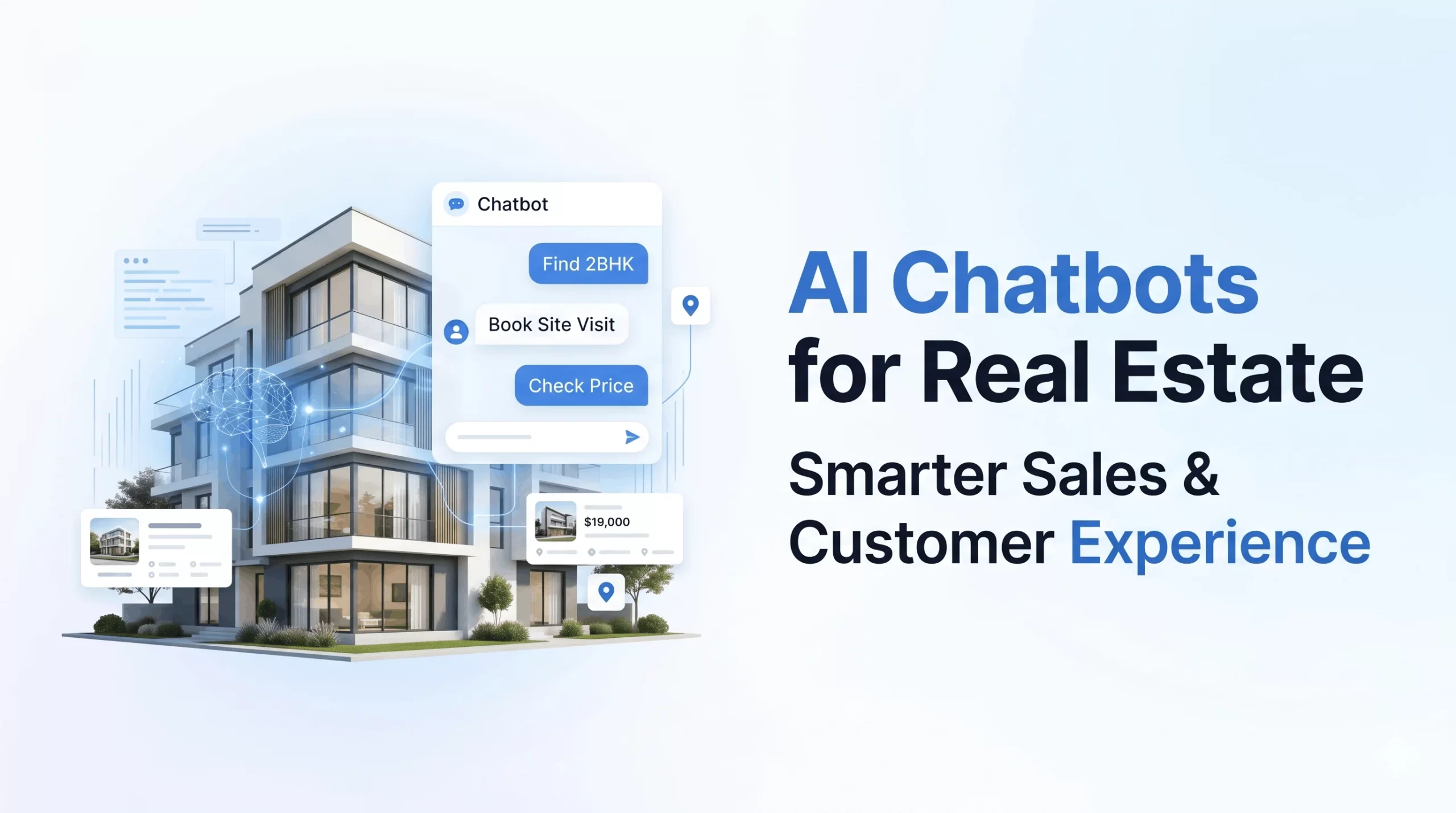
    AI Chatbot for Real Estate: Use Cases, Benefits & CRM Integration

    The real estate industry has always been driven by relationships, timing, and information. However, the way buyers and investors interact with real estate brands has changed significantly in recent years. Property seekers no longer rely only on brokers or physical visits; instead, they explore listings online, compare options, evaluate pricing, and engage with developers across multiple digital channels before making decisions.

    In this evolving landscape, the demand for instant responses, personalized recommendations, and seamless communication has increased. Real estate businesses that rely solely on manual processes often struggle to keep up with these expectations. This gap has led to the rapid adoption of AI chatbot for real estate, real estate conversational AI, and AI agents for property sales.

    An AI chatbot for real estate industry applications is no longer just a tool for answering queries. It has evolved into a complete engagement layer that connects website visitors, WhatsApp users, and CRM systems into a unified experience. It captures leads, qualifies prospects, automates site visits, and supports customers even after the sale is completed.


    Understanding the Role of AI Chatbots in Real Estate

    An AI chatbot for real estate is an intelligent conversational system designed to interact with property buyers, sellers, and investors across digital platforms such as websites, WhatsApp, and mobile applications. It uses natural language processing to understand queries and provide relevant responses in real time.

    Unlike traditional forms and static listing pages, a real estate chatbot engages users in conversations. It asks questions, understands preferences, and guides users through property options. It also integrates with CRM systems to store and retrieve customer data, making interactions more personalized and efficient.

    For example, when a user visits a real estate website and types, “I am looking for a 3BHK under 1 crore in Hyderabad,” the chatbot can:

    • Ask follow-up questions about location preferences
    • Filter available inventory
    • Suggest relevant properties
    • Offer to book a site visit

    This interaction transforms a passive browsing experience into an active, guided journey.


    Why Real Estate Businesses Are Adopting AI Chatbots

    The real estate industry faces several operational and customer experience challenges. These include delayed responses, unqualified leads, inefficient follow-ups, and lack of transparency in post-sales communication.

    An AI chatbot for real estate industry applications addresses these challenges by automating interactions and ensuring consistency across the customer lifecycle.

    One of the primary reasons for adoption is the need for instant engagement. When a user submits an inquiry or visits a website, the likelihood of conversion is highest at that moment. Delayed responses often result in lost opportunities. A real estate AI chatbot ensures that every visitor is engaged immediately.

    Another factor is the complexity of customer requirements. Buyers often have specific preferences related to budget, location, amenities, and timelines. Capturing and understanding these requirements manually can be time-consuming. A chatbot simplifies this process by collecting structured data through conversations.


    Pre-Sales Use Cases of AI Chatbots in Real Estate

    Intelligent Lead Capture and Qualification

    Lead generation is a critical component of real estate marketing, but not all leads are equal. Many inquiries lack clarity or intent, making it difficult for sales teams to prioritize effectively.

    An AI chatbot for real estate lead generation captures leads conversationally and qualifies them based on predefined criteria. It asks questions such as:

    • What is your budget range?
    • Which location are you interested in?
    • What type of property are you looking for?
    • When are you planning to purchase?

    For example, a user might respond:

    “I am looking for a 2BHK in Gachibowli under 80 lakhs within the next 3 months.”

    The chatbot records this information and pushes it to the CRM along with the conversation summary. This enables telemarketing executives to understand the customer’s requirements before making a call.

    This approach improves efficiency and increases the chances of conversion.


    AI-Powered Property Recommendations

    Property search can be overwhelming due to the number of available options. A real estate chatbot simplifies this process by acting as a recommendation engine.

    Based on user inputs, the chatbot filters properties and suggests the most relevant options. It considers factors such as:

    • Budget
    • Location
    • Property type
    • Amenities

    For instance, if a user is looking for a 3BHK near IT hubs, the chatbot can recommend properties that match these criteria and provide details such as pricing, features, and distance from key locations.

    This reduces decision fatigue and improves user experience.


    Automated Site Visit Booking

    Site visits are a crucial step in the real estate sales process. However, coordinating visits manually can lead to delays and missed opportunities.

    An AI chatbot for real estate industry applications automates this process by allowing users to book site visits directly through the conversation.

    The chatbot can:

    • Display available time slots
    • Confirm bookings instantly
    • Assign sales representatives
    • Send reminders

    For example, after showing property options, the chatbot may ask:

    “Would you like to schedule a site visit this weekend?”

    This seamless transition from inquiry to action increases engagement and conversion rates.


    WhatsApp-Based Lead Nurturing

    Many users prefer communicating through messaging platforms. Integrating a real estate AI chatbot with WhatsApp allows businesses to continue conversations beyond the website.

    The chatbot can:

    • Share brochures and images
    • Provide updates on availability
    • Answer follow-up questions
    • Send reminders

    For example, a chatbot may send a message:

    “Only a few units left in your preferred project. Would you like to reserve one?”

    This continuous engagement keeps leads warm and encourages decision-making.


    Post-Sales Use Cases of AI Chatbots in Real Estate

    Project Progress Tracking

    Transparency is a major concern for property buyers, especially in under-construction projects. An AI chatbot for real estate can provide real-time updates on project progress.

    By integrating with CRM and project management systems, the chatbot can share:

    • Construction status
    • Milestone updates
    • Photos and videos

    For example, a customer can ask:

    “What is the current status of my project?”

    The chatbot retrieves the information and responds with details such as:

    “Construction for Tower A is 75% complete. Interior work is in progress.”

    This improves trust and reduces the need for manual follow-ups.


    EMI and Payment Management

    Managing payments is another area where chatbots add value. A real estate chatbot can provide information about:

    • Upcoming EMI dates
    • Outstanding balances
    • Payment links

    For instance, a customer may receive a reminder:

    “Your next EMI of ₹50,000 is due on 10th June. Would you like to make the payment now?”

    This simplifies financial interactions and improves collection efficiency.


    Document Access and Retrieval

    Customers often need access to documents such as agreements, receipts, and invoices. A chatbot can provide instant access to these documents.

    For example, a user can request:

    “Download my booking receipt”

    The chatbot retrieves the document from the CRM and shares it instantly. This reduces dependency on support teams and enhances convenience.


    Customer Support and Issue Resolution

    Post-sales support is critical for maintaining customer satisfaction. An AI chatbot for real estate industry applications can handle common queries related to:

    • Maintenance
    • Amenities
    • Handover timelines

    By providing instant responses, the chatbot improves customer experience and reduces support workload.


    Advanced Use Cases and Innovations

    AI-Powered Objection Handling

    Real estate decisions often involve multiple concerns, including pricing, location, and investment value. A chatbot can address these concerns proactively.

    For example, if a user says:

    “The price seems high”

    The chatbot can respond with:

    “This project offers premium amenities and is located near major IT hubs, which contributes to long-term value.”

    This helps in maintaining engagement and building confidence.


    Investor Insights and ROI Analysis

    For investors, understanding returns is crucial. An AI chatbot for real estate can provide insights such as:

    • Rental yield
    • Expected appreciation
    • Market trends

    For instance, the chatbot may calculate:

    “The estimated rental yield for this property is 5% annually.”

    This information supports informed decision-making.


    Multilingual and Voice Support

    In diverse markets, language can be a barrier. A real estate chatbot can communicate in multiple languages and support voice interactions.

    This expands accessibility and ensures that more users can engage comfortably.


    Integration with CRM Systems

    The effectiveness of an AI chatbot for real estate industry applications depends on its integration with CRM systems.

    This integration enables:

    • Real-time data exchange
    • Personalized interactions
    • Unified customer profiles

    For example, when a returning customer interacts with the chatbot, it can recall previous conversations and preferences, creating a more personalized experience.


    Benefits of AI Chatbots in Real Estate

    Improved Lead Conversion

    By engaging users instantly and guiding them through the buying process, chatbots increase conversion rates.


    Enhanced Customer Experience

    Instant responses, personalized recommendations, and seamless interactions contribute to a better user experience.


    Operational Efficiency

    Automation reduces the workload on sales and support teams, allowing them to focus on high-value tasks.


    Data-Driven Insights

    Chatbots generate valuable data that can be analyzed to improve marketing and sales strategies.

  • What Is an Automotive AI Chatbot? Definition, Examples & Use Cases

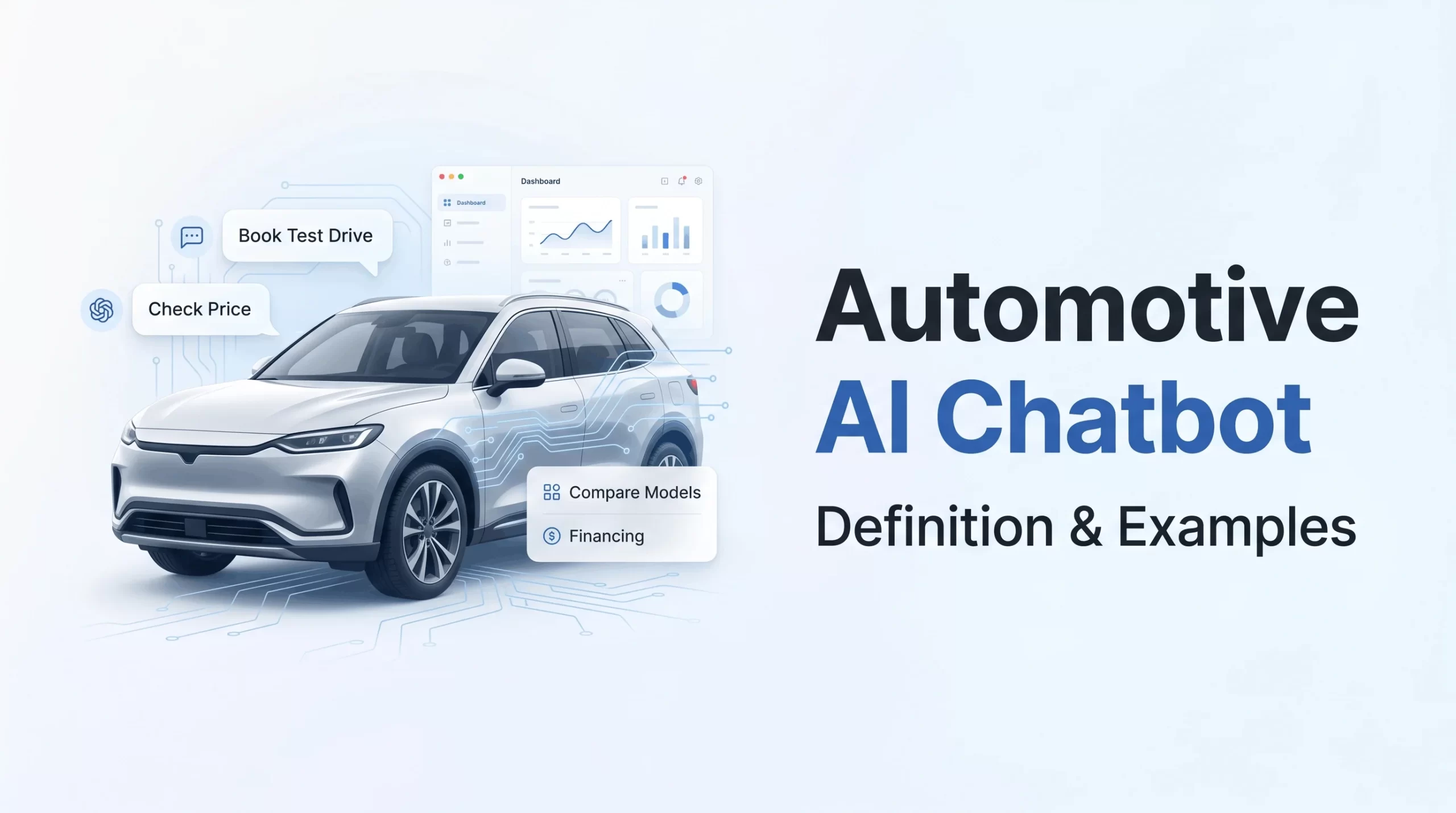
    What Is an Automotive AI Chatbot? Definition, Examples & Use Cases

    The automotive industry has entered a phase where digital experience is no longer an add-on but a defining factor in how customers evaluate and choose brands. Car buyers today interact with multiple touchpoints before making a decision, including websites, marketplaces, social media platforms, and messaging apps. In this environment, businesses are increasingly adopting intelligent systems that can engage, qualify, and convert customers in real time. One such system that is rapidly becoming central to this transformation is the automotive AI chatbot.

    An AI chatbot for automobile industry applications is not just a tool for answering questions. It is an intelligent conversational layer that connects customer intent with business workflows. It acts as a digital sales assistant, support agent, and engagement engine, all operating simultaneously across channels. Understanding what an automotive AI chatbot is, how it works, and how it is used across the car buying journey provides a clear picture of why it is becoming indispensable for dealerships and automotive brands.


    Understanding the Definition of an Automotive AI Chatbot

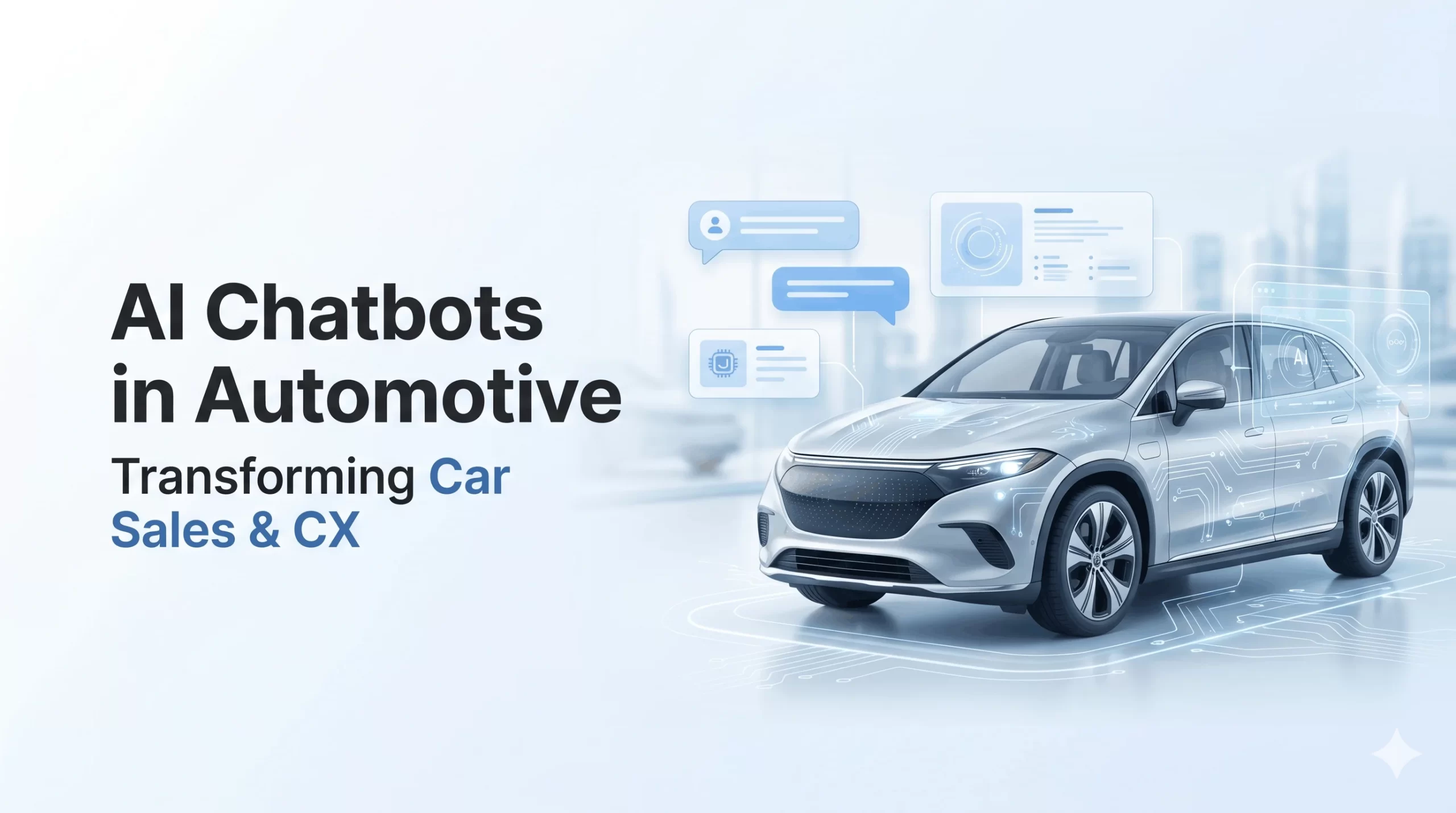
    An automotive AI chatbot is a software application powered by artificial intelligence that interacts with customers through natural language conversations, typically via text or voice. It is specifically designed to address the needs of the automobile industry, including car sales, service support, and customer engagement.

    Unlike traditional chatbots that rely on predefined scripts, an AI chatbot for car dealerships uses technologies such as natural language processing (NLP), machine learning, and contextual understanding. This allows it to interpret user queries, ask relevant follow-up questions, and guide users through complex decision-making processes.

    In simple terms, an automotive AI chatbot acts as a virtual assistant that can:

    • Understand customer queries in natural language
    • Provide accurate and relevant information
    • Execute actions such as booking appointments or test drives
    • Integrate with backend systems like CRM and inventory databases

    For example, when a user asks, “Which SUV is best under 15 lakhs?”, the chatbot does not simply display a static list. It can ask clarifying questions about fuel preference, seating requirements, and brand interest, then recommend suitable models along with pricing, features, and availability.

    This ability to move beyond static responses and into dynamic, guided conversations defines the difference between a basic chatbot and a true AI agent for automotive industry use cases.


    How Automotive AI Chatbots Work

    To understand the value of an automotive chatbot, it is important to look at how it functions behind the scenes. These systems combine multiple technologies and integrations to deliver seamless experiences.

    Natural Language Understanding

    The chatbot first processes user input using natural language processing. It identifies intent, extracts key information, and maps the query to relevant actions.

    For instance, a query like “I want to book a test drive for a Hyundai Creta tomorrow” is broken down into:

    • Intent: Test drive booking
    • Car model: Hyundai Creta
    • Time preference: Tomorrow

    This structured understanding allows the chatbot to respond accurately.


    Context Management

    Modern AI chatbot for automobile industry solutions maintain context throughout the conversation. This means the chatbot remembers previous inputs and uses them to provide more relevant responses.

    For example, if a user has already specified a budget range, the chatbot does not ask for it again. Instead, it builds on that information to refine recommendations.


    Integration with Backend Systems

    An effective automotive AI chatbot is deeply integrated with systems such as:

    • CRM platforms
    • Inventory management systems
    • Appointment scheduling tools
    • Payment gateways

    This integration enables real-time actions. When a user requests availability, the chatbot fetches live data. When a user confirms a booking, the system updates records instantly.


    Continuous Learning and Optimization

    Over time, the chatbot improves by analyzing interactions. It learns from user behavior, identifies common queries, and refines its responses. This continuous improvement ensures that the system becomes more accurate and efficient.


    Key Examples of Automotive AI Chatbots in Action

    Understanding real-world scenarios helps clarify how AI chatbot for car sales systems operate across the customer journey.

    Example 1: Website Lead Engagement

    A visitor lands on a dealership website and starts browsing SUVs. After a few seconds, the chatbot initiates a conversation:

    “Looking for an SUV? I can help you find the best option based on your budget.”

    The user responds with a budget range. The chatbot then:

    • Suggests relevant models
    • Highlights key features
    • Offers a comparison
    • Prompts for test drive booking

    This interaction converts a passive visitor into an engaged lead.


    Example 2: WhatsApp-Based Car Sales Chatbot

    A user clicks on a WhatsApp ad for a car model. The automotive chatbot continues the conversation within WhatsApp.

    It can:

    • Share images and specifications
    • Provide pricing details
    • Answer questions instantly
    • Schedule showroom visits

    This creates a seamless experience without requiring the user to switch platforms.


    Example 3: Test Drive Booking Automation

    A customer expresses interest in a specific car model. The chatbot checks real-time availability and offers booking options.

    “Test drive available tomorrow at 11:00 AM or 4:30 PM. Which slot works for you?”

    Once the user selects a slot, the chatbot confirms the booking and updates the CRM.


    Example 4: Service and Support Chatbot

    Existing customers often need support related to servicing, maintenance, or warranties. An AI chatbot for automobile industry applications can handle these queries efficiently.

    For example:

    • Booking service appointments
    • Providing service cost estimates
    • Sharing service history

    This reduces the load on support teams and improves customer satisfaction.


    Core Use Cases of Automotive AI Chatbots

    Lead Generation and Qualification

    Generating leads is only the first step. Qualifying them effectively is equally important. An AI chatbot for car dealerships can automate this process by asking structured questions.

    For example, the chatbot may ask:

    • “What is your budget range?”
    • “When are you planning to purchase?”
    • “Are you considering financing options?”

    Based on responses, the chatbot categorizes leads and assigns scores. This allows sales teams to focus on high-intent prospects.


    Personalized Vehicle Recommendations

    Car buyers often feel overwhelmed by choices. An automotive AI chatbot simplifies decision-making by providing personalized recommendations.

    Instead of browsing through multiple pages, users receive tailored suggestions based on their preferences.


    Test Drive and Appointment Scheduling

    Scheduling test drives manually can be time-consuming. An AI chatbot for car sales automates this process, ensuring quick and accurate bookings.


    Pricing and EMI Calculations

    Pricing is a critical factor in car buying decisions. A chatbot can provide:

    • On-road price estimates
    • EMI calculations
    • Financing options

    This helps users make informed decisions without leaving the conversation.


    Customer Support and Retention

    After a sale, the chatbot continues to engage customers by providing:

    • Service reminders
    • Warranty information
    • Maintenance tips

    This ongoing engagement strengthens customer relationships.


    Benefits of Automotive AI Chatbots

    Faster Response Times

    Customers expect instant responses. An automotive chatbot ensures that every query is answered immediately, reducing delays and improving engagement.


    Improved Conversion Rates

    By guiding users through the buying journey, the chatbot increases the likelihood of conversion. It eliminates friction and provides timely assistance.


    Operational Efficiency

    Automating repetitive tasks reduces the workload on sales and support teams. This allows businesses to operate more efficiently.


    24/7 Availability

    Unlike human teams, chatbots operate around the clock. This ensures that no opportunity is missed.


    Data-Driven Insights

    Every interaction generates data that can be analyzed to improve strategies and decision-making.


    Automotive AI Chatbot vs Traditional CRM

    A common question in the industry is how AI chatbot for automobile industry solutions differ from traditional CRM systems.

    A CRM system stores and manages customer data, while an automotive chatbot acts as an interface that interacts with customers and feeds data into the CRM.

    For example:

    • CRM records lead details
    • Chatbot captures and qualifies leads in real time

    Together, they create a powerful ecosystem that enhances both engagement and data management.


    The Evolution Toward AI Agents in Automotive

    The industry is moving beyond chatbots toward AI agents for automotive industry applications. These agents are capable of handling end-to-end workflows.

    They can:

    • Manage entire customer journeys
    • Coordinate between systems
    • Trigger actions automatically

    For example, an AI agent can guide a user from initial inquiry to final purchase, including financing and documentation.

  • AI Chatbot for Healthcare: Use Cases, Benefits & Hospital Automation (2026)

    AI Chatbot for Healthcare: Use Cases, Benefits & Hospital Automation (2026)

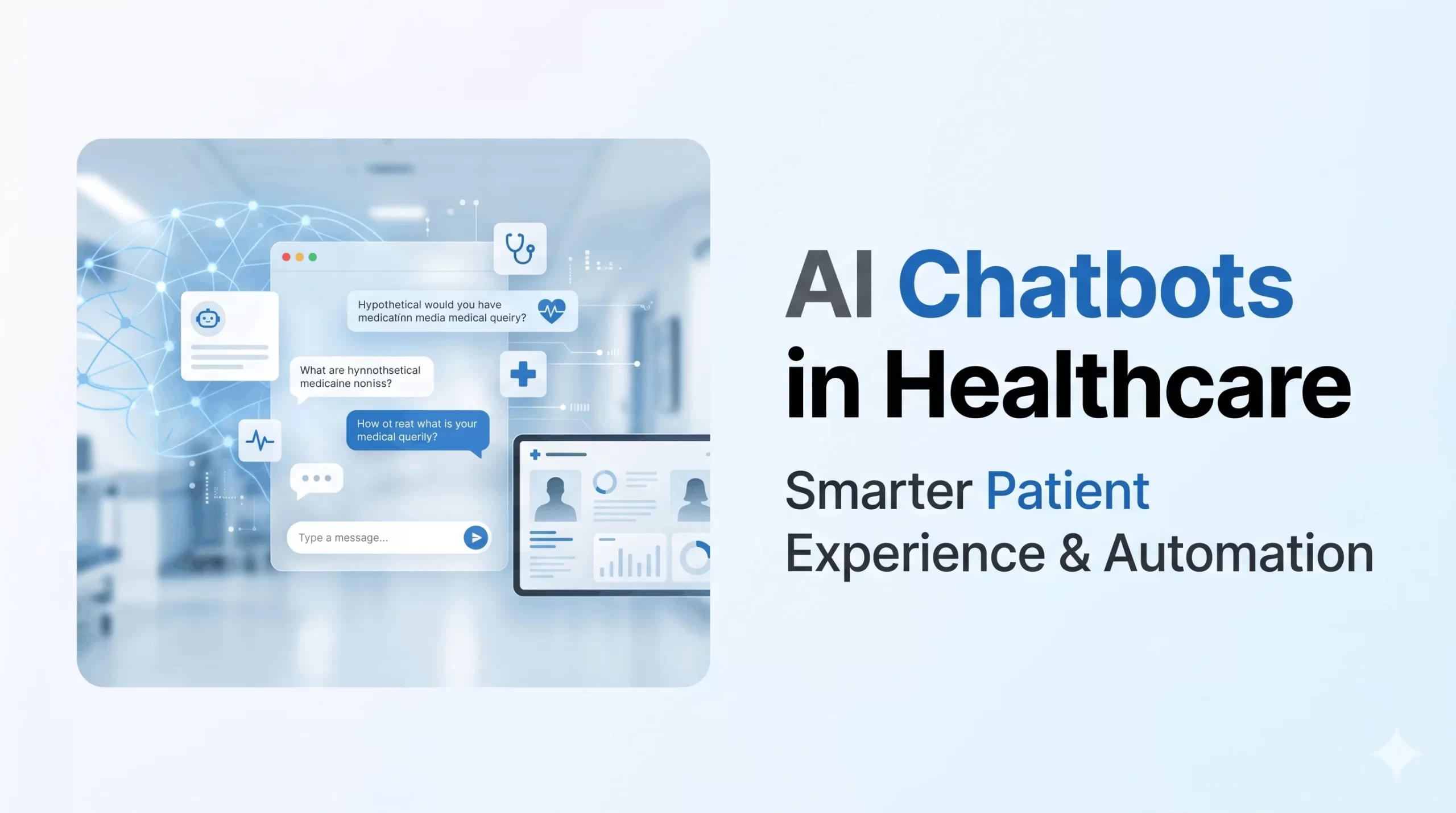
    The healthcare industry is undergoing a structural shift driven by rising patient expectations, operational inefficiencies, and the increasing complexity of care delivery. Hospitals are no longer evaluated solely on clinical outcomes; they are judged on responsiveness, accessibility, transparency, and overall patient experience. In this evolving landscape, the role of AI chatbot for healthcare, healthcare conversational AI, and AI agents for hospitals is expanding from a support tool into a foundational layer of digital healthcare infrastructure.

    Patients today expect the same level of convenience from hospitals that they receive from digital-first industries. They want to discover doctors, check availability, book appointments, access reports, and communicate with providers instantly and seamlessly. However, traditional hospital systems are often fragmented, manual, and dependent on human availability. This gap between expectation and reality creates friction, delays, and lost opportunities.

    An AI chatbot for hospital systems, when integrated deeply with CRM and backend systems, begins to close this gap. It does not merely respond to queries; it orchestrates patient journeys, automates workflows, and enables real-time interactions across the entire care lifecycle.


    Understanding the Role of AI Chatbots in Healthcare

    An AI chatbot in healthcare is an intelligent conversational interface that interacts with patients across channels such as websites, mobile apps, WhatsApp, and voice platforms. Unlike rule-based chatbots that follow predefined scripts, modern healthcare AI chatbots use natural language processing and contextual understanding to manage complex, multi-step interactions.

    These systems are designed to handle a wide range of hospital use cases, including:

    • Patient onboarding and registration
    • Doctor discovery and appointment scheduling
    • Symptom collection and triage
    • Payment processing
    • Medical record access
    • Post-treatment follow-ups

    For example, when a patient visits a hospital website and asks, “Is a cardiologist available tomorrow?”, a traditional system might require form filling or manual callbacks. An advanced AI chatbot for hospitals can immediately:

    • Check real-time doctor availability
    • Suggest suitable time slots
    • Capture patient details
    • Confirm the appointment within the same conversation

    This shift from passive interaction to active workflow execution defines the true value of AI agents for healthcare.


    The Growing Need for AI Chatbots in Hospitals

    Healthcare systems are inherently complex, with multiple departments, stakeholders, and processes involved in delivering care. Patients often experience this complexity as confusion, delays, and lack of coordination.

    Hospitals face several recurring challenges:

    • High volume of repetitive queries
    • Missed or delayed patient interactions
    • Inefficient appointment scheduling
    • Lack of real-time data access
    • Fragmented patient records
    • Limited staff availability

    An AI chatbot for healthcare industry applications addresses these challenges by acting as a unified interface between patients and hospital systems.

    Consider a scenario where a patient wants to book an appointment. Without automation, the process may involve:

    • Calling the hospital
    • Waiting for a response
    • Checking availability manually
    • Confirming the booking

    With a healthcare chatbot, the same process becomes instantaneous and frictionless. The chatbot manages the interaction end-to-end, reducing effort for both patients and hospital staff.


    Core Use Cases of AI Chatbots in Healthcare

    1. Intelligent Appointment Scheduling and Real-Time Availability

    Appointment booking is one of the most common and critical interactions in healthcare. An AI chatbot for hospital appointment booking transforms this process by integrating directly with hospital scheduling systems.

    Patients can:

    • Check doctor availability in real time
    • Compare multiple specialists
    • Select preferred time slots
    • Book appointments instantly

    For example, a patient searching for a dermatologist can interact with the chatbot, which retrieves real-time schedules and offers options such as:

    “Dr. Mehta is available tomorrow at 11:30 AM and 4:00 PM. Would you like to confirm a slot?”

    This eliminates delays and significantly improves booking conversion rates.


    2. Smart Symptom Collection and Pre-Consultation Data Capture

    Before a consultation, doctors often spend valuable time gathering basic information. An AI chatbot for healthcare streamlines this process by collecting structured patient data in advance.

    The chatbot can:

    • Ask symptom-related questions
    • Capture medical history
    • Record allergies and medications
    • Store data in the hospital CRM

    For instance, a patient reporting fever may be asked about duration, severity, and associated symptoms. This information is then made available to the doctor before the consultation begins.

    This approach improves diagnostic efficiency and reduces consultation time.


    3. Doctor Discovery and AI-Powered Matching

    Choosing the right doctor is a key concern for patients. A simple directory listing often leads to confusion. An advanced AI chatbot for hospitals can act as a recommendation engine.

    Based on patient inputs, the chatbot can:

    • Identify relevant specialists
    • Recommend doctors based on expertise
    • Provide availability and ratings

    For example, a patient with knee pain may be guided toward an orthopedic specialist, with the chatbot suggesting specific doctors based on availability and past patient outcomes.

    This creates a more personalized and confidence-driven decision-making process.


    4. Real-Time Payment Collection and Billing Assistance

    Healthcare transactions often involve multiple steps, including consultation fees, diagnostic charges, and insurance processing. An AI chatbot in healthcare can simplify these interactions.

    Capabilities include:

    • Collecting consultation payments during booking
    • Providing cost estimates for procedures
    • Explaining billing breakdowns
    • Integrating with payment gateways

    For example, during appointment booking, the chatbot can prompt:

    “The consultation fee is ₹800. Would you like to proceed with payment?”

    This reduces friction and ensures commitment from patients.


    5. Access to Medical Records and Reports

    Patients frequently need access to their reports, prescriptions, and medical history. Traditional systems require logins, downloads, or physical visits.

    A healthcare AI chatbot can provide instant access by retrieving data from hospital CRM systems.

    Patients can:

    • Request lab reports
    • Download prescriptions
    • View past consultation details

    For example, a patient can simply ask:

    “Show my last blood test report”

    The chatbot retrieves and shares the document instantly, enhancing convenience and transparency.


    6. Digital Prescription and Documentation Access

    Prescriptions are often lost, misplaced, or difficult to interpret. An AI chatbot for healthcare industry solutions enables patients to access prescriptions digitally at any time.

    The chatbot can:

    • Store prescriptions securely
    • Provide downloadable formats
    • Offer simplified explanations

    For instance, a patient can request:

    “Download my prescription from last visit”

    This ensures continuity of care and reduces dependency on physical documents.


    7. Post-Consultation Follow-Ups and Recovery Tracking

    Healthcare does not end with a consultation. Follow-ups are critical for recovery and long-term outcomes.

    An AI chatbot for hospitals can automate follow-up interactions by:

    • Checking patient recovery status
    • Asking condition-specific questions
    • Reminding patients about medications

    For example, after a surgery, the chatbot may ask:

    “Are you experiencing any pain or discomfort today?”

    If the response indicates a problem, the system can alert the doctor or schedule a follow-up consultation.


    8. Emergency Detection and Response Assistance

    In critical situations, timely response is essential. An advanced AI chatbot in healthcare can identify emergency scenarios based on patient inputs.

    Capabilities include:

    • Detecting keywords indicating urgency
    • Providing immediate guidance
    • Sharing emergency contact details
    • Initiating ambulance requests

    For instance, if a patient reports severe chest pain, the chatbot can recommend immediate emergency care and guide the patient accordingly.


    9. Multilingual Patient Interaction

    In diverse regions, language can be a barrier to healthcare access. A healthcare chatbot can support multiple languages, enabling patients to communicate in their preferred language.

    This is particularly valuable in regions like India, where patients may prefer Telugu, Hindi, Tamil, or other regional languages.

    By simplifying communication, hospitals can reach a broader audience and improve patient engagement.


    10. Preventive Healthcare and Patient Engagement

    Preventive care is a growing focus in healthcare systems. An AI chatbot for healthcare can proactively engage patients by:

    • Sending reminders for routine check-ups
    • Suggesting diagnostic tests
    • Providing health tips

    For example, a chatbot can notify a patient:

    “You are due for your annual health check-up. Would you like to book an appointment?”

    This approach encourages early detection and continuous engagement.


    Integration with CRM and Hospital Systems

    The true power of an AI chatbot for hospitals lies in its integration with backend systems such as CRM, EMR, and hospital management software.

    When integrated effectively, the chatbot can:

    • Store and retrieve patient data
    • Maintain conversation history
    • Enable personalized interactions
    • Provide real-time insights to hospital staff

    For example, when a returning patient interacts with the chatbot, it can recognize the patient, recall previous visits, and tailor responses accordingly.

    This creates a seamless and consistent experience across all interactions.


    Enhancing Patient Experience Through Conversational AI

    Patient experience is influenced by multiple factors, including responsiveness, clarity, and convenience. A healthcare AI chatbot enhances these aspects by providing:

    • Instant responses
    • 24/7 availability
    • Personalized interactions
    • Simplified processes

    For instance, a patient seeking information about a procedure can receive clear, structured explanations without waiting for a staff member.

    This level of accessibility improves trust and satisfaction.


    Operational Efficiency and Cost Optimization

    Hospitals often operate under resource constraints. Managing large volumes of patient interactions manually can be inefficient and costly.

    An AI chatbot for healthcare industry applications reduces operational burden by:

    • Automating repetitive tasks
    • Handling multiple conversations simultaneously
    • Reducing dependency on large support teams

    For example, instead of hiring additional staff to manage appointment bookings, a chatbot can handle the workload efficiently.

    This allows hospitals to allocate resources more effectively.


    Data-Driven Insights and Decision Making

    Every interaction handled by a healthcare chatbot generates valuable data. This data can be analyzed to identify trends and improve decision-making.

    Hospitals can gain insights into:

    • Common patient queries
    • Popular departments and services
    • Peak interaction times
    • Patient behavior patterns

    For example, if a large number of patients are inquiring about a specific treatment, hospitals can adjust their marketing and resource allocation accordingly.


    The Evolution Toward AI Agents in Healthcare

    The next phase in healthcare technology is the emergence of AI agents for healthcare, which go beyond traditional chatbots.

    These agents are capable of:

    • Managing entire patient journeys
    • Coordinating between departments
    • Automating complex workflows
    • Delivering proactive care

    For instance, an AI agent can guide a patient from initial inquiry to consultation, diagnostics, treatment, and follow-up, all within a unified system.

    This represents a shift from reactive support to proactive healthcare management.


    Real-World Scenario: End-to-End Patient Journey

    Consider a patient experiencing persistent headaches.

    The journey with an AI chatbot for healthcare may unfold as follows:

    • The patient initiates a conversation on the hospital website
    • The chatbot collects symptoms and medical history
    • It recommends a neurologist and shows available slots
    • The patient books an appointment and completes payment
    • Before the consultation, the doctor receives a summary of the patient’s condition
    • After the consultation, the patient receives a digital prescription
    • The chatbot follows up to track recovery and remind about medication

    This seamless journey demonstrates how AI chatbots for hospitals can transform patient experiences and operational workflows.


    Strategic Importance for Healthcare Providers

    For hospitals, adopting an AI chatbot for healthcare industry solutions is not just about technology; it is about staying competitive in a rapidly evolving market.

    Patients increasingly prefer hospitals that offer:

    • Digital convenience
    • Instant communication
    • Transparent processes

    By implementing conversational AI, hospitals can align with these expectations and deliver superior experiences.

  • Why the Automobile Industry Is Rapidly Adopting AI Chatbots (And You Should Too)

    Why the Automobile Industry Is Rapidly Adopting AI Chatbots (And You Should Too)

    The automotive industry is not just evolving—it is being fundamentally reshaped by how customers discover, evaluate, and purchase vehicles. What was once a dealership-driven, in-person sales journey has now become a highly digital, always-on, and expectation-heavy experience. Today’s car buyer does not wait for business hours, does not tolerate delayed responses, and certainly does not follow a linear purchase path.

    In this new landscape, AI chatbot for automobile industry use cases are no longer experimental—they are becoming operational essentials. Automotive businesses, from large OEMs to local dealerships, are rapidly adopting automotive chatbots, conversational AI agents, and intelligent virtual assistants to handle customer interactions at scale.

    This shift is not driven by hype. It is driven by measurable impact—higher lead conversion rates, faster response times, improved customer satisfaction, and more efficient sales operations.


    The Shift in Automotive Customer Behavior

    The modern automotive buyer behaves very differently compared to buyers even five years ago. Before stepping into a showroom, most customers have already:

    • Compared multiple brands and models
    • Watched reviews and walkthrough videos
    • Checked pricing, variants, and financing options
    • Explored dealership ratings and service feedback

    This means that when a customer finally reaches out—whether through a website, WhatsApp, or social media—they expect instant, accurate, and personalized responses.

    However, traditional dealership setups struggle to meet these expectations. Sales teams are limited by working hours, manual processes, and inconsistent follow-ups. This is where AI chatbot for car sales systems start to play a transformative role.

    An automotive chatbot does not sleep, does not miss a lead, and does not forget to follow up. It ensures that every customer interaction is acknowledged and handled immediately, regardless of time or channel.


    What Is an Automotive Chatbot?

    An automotive chatbot is an AI-powered conversational system designed specifically for the automobile industry. It interacts with customers across digital channels such as:

    • Websites
    • WhatsApp
    • Facebook Messenger
    • Mobile apps

    Unlike basic chat widgets, modern AI agents for automotive industry are capable of:

    • Understanding customer intent
    • Asking contextual questions
    • Recommending vehicles based on preferences
    • Booking test drives
    • Providing pricing and EMI details
    • Integrating with CRM systems

    For example, when a user visits a dealership website and asks, “Which SUV is best under 15 lakhs?”, a traditional chatbot might fail or provide generic links. An advanced automotive AI chatbot can:

    • Ask follow-up questions (fuel type, seating preference, brand interest)
    • Suggest relevant models
    • Provide specifications
    • Offer to book a test drive instantly

    This creates a seamless, guided buying experience.


    Why the Automobile Industry Is Rapidly Adopting AI Chatbots

    1. The Need for Instant Lead Response

    Speed has become one of the most critical factors in automotive sales. Studies consistently show that the probability of converting a lead drops drastically if there is a delay in response.

    In a typical dealership scenario, leads come from multiple sources:

    • Website forms
    • Third-party listing platforms
    • Social media campaigns
    • Walk-in inquiries

    Managing these leads manually often leads to delays, missed opportunities, and poor customer experiences.

    An AI chatbot for automobile industry ensures that:

    • Every inquiry is answered instantly
    • Customers receive relevant information without waiting
    • Leads are captured and qualified in real time

    For instance, if a customer submits an inquiry at 11:30 PM, the chatbot can immediately respond, collect details, and even schedule a callback or test drive for the next day.


    2. Increasing Complexity in Car Buying Decisions

    Car buying is no longer a simple decision based on brand preference. Customers now consider multiple factors:

    • Budget range
    • Fuel type (petrol, diesel, electric)
    • Features (sunroof, ADAS, infotainment systems)
    • Maintenance costs
    • Financing options

    Handling such multi-layered queries manually requires highly trained sales staff and significant time.

    An AI chatbot for car dealerships simplifies this by acting as a guided assistant. It can break down the decision process into conversational steps.

    Example:

    A customer starts with:
    “I want a family car.”

    The chatbot responds by narrowing down preferences:

    • “How many seats are you looking for?”
    • “What is your budget range?”
    • “Do you prefer petrol, diesel, or electric?”

    Based on the responses, it recommends suitable models and continues the conversation naturally. This reduces confusion and accelerates decision-making.


    3. High Volume of Repetitive Queries

    Automotive businesses receive a large number of repetitive questions daily:

    • “What is the price of this car?”
    • “Is this model available in automatic?”
    • “Can I book a test drive?”
    • “What is the mileage?”

    Handling these queries manually consumes valuable time that sales teams could otherwise spend on high-intent customers.

    An automotive chatbot automates these repetitive interactions with high accuracy and consistency.

    For example, a chatbot integrated with inventory data can instantly answer:

    • Variant availability
    • On-road pricing
    • Waiting periods

    This not only improves efficiency but also ensures that customers receive consistent information every time.


    4. Rise of Omnichannel Communication

    Customers no longer interact with automotive brands through a single channel. A typical journey may include:

    • Discovering a car on Instagram
    • Clicking through to the website
    • Asking questions on WhatsApp
    • Visiting the showroom

    Managing conversations across these channels manually leads to fragmented experiences.

    Conversational AI agents for automotive unify these interactions by providing a consistent experience across all touchpoints.

    For instance, if a customer starts a conversation on the website and later continues on WhatsApp, the AI agent can retain context and continue the conversation seamlessly.

    This level of continuity significantly enhances customer experience and builds trust.


    5. Improved Lead Qualification

    Not all leads are equal. Some customers are just exploring options, while others are ready to buy.

    Manual qualification often depends on the availability and expertise of sales representatives. This can lead to inefficiencies and missed high-value opportunities.

    An AI chatbot for car sales can qualify leads automatically by:

    • Asking structured questions
    • Identifying intent
    • Scoring leads based on responses

    Example:

    A chatbot asks:

    • “When are you planning to purchase a car?”
    • “Have you shortlisted any models?”
    • “Would you like to explore financing options?”

    Based on the answers, it categorizes leads into:

    • Hot (ready to buy)
    • Warm (considering options)
    • Cold (early research stage)

    This allows sales teams to focus their efforts on high-intent prospects.


    6. Automation of Test Drive Bookings

    Test drives are a critical step in the automotive sales funnel. However, coordinating them manually can be inefficient.

    An AI chatbot for automobile industry can automate the entire process:

    • Check available slots
    • Suggest time options
    • Capture customer details
    • Confirm bookings instantly

    For example, a user browsing a car model page can be prompted:

    “Would you like to schedule a test drive this weekend?”

    With just a few responses, the booking is confirmed—without any human intervention.

    This reduces friction and increases the likelihood of conversion.


    7. Personalized Customer Experience at Scale

    Personalization has become a key differentiator in modern sales. Customers expect recommendations tailored to their preferences.

    However, delivering personalization manually at scale is nearly impossible.

    AI agents for automotive industry analyze user behavior and inputs to deliver highly personalized interactions.

    Example:

    A returning visitor who previously explored SUVs may see:

    • SUV recommendations
    • Relevant offers
    • Personalized follow-up messages

    The chatbot can even reference past interactions:

    “Last time you were looking at mid-size SUVs. Would you like to explore updated offers?”

    This creates a more engaging and relevant experience.


    8. Integration with CRM and Sales Systems

    Modern automotive chatbots are not standalone tools. They integrate deeply with CRM platforms such as Salesforce, HubSpot, and Zoho CRM.

    This integration enables:

    • Automatic lead capture
    • Real-time data syncing
    • Unified customer profiles
    • Better tracking of interactions

    For example, when a chatbot captures a lead, the data is instantly pushed to the CRM, where sales teams can view:

    • Conversation history
    • Customer preferences
    • Lead score

    This ensures that follow-ups are more informed and effective.


    9. Cost Efficiency and Scalability

    Hiring and training large sales and support teams is expensive and time-consuming. Even then, human teams have limitations in handling high volumes of inquiries simultaneously.

    An AI chatbot for automobile industry offers a scalable solution:

    • Handles thousands of conversations simultaneously
    • Reduces dependency on large teams
    • Operates 24/7 without additional cost

    For growing dealerships and automotive brands, this scalability is a major advantage.


    10. Data-Driven Insights and Continuous Improvement

    Every interaction handled by an automotive AI chatbot generates valuable data.

    This data can be used to understand:

    • Common customer queries
    • Popular models and variants
    • Drop-off points in the sales funnel
    • Customer preferences and trends

    For example, if a large number of users are asking about electric vehicles, dealerships can adjust their marketing strategies accordingly.

    Over time, the chatbot itself improves through learning and optimization, making interactions more accurate and effective.


    Real-World Example: From Inquiry to Conversion

    Consider a user visiting a dealership website late at night.

    They type:
    “I’m looking for a compact SUV under 12 lakhs.”

    The AI chatbot for car sales responds instantly:

    • Asks about fuel preference
    • Suggests 2–3 suitable models
    • Shares key features and pricing
    • Offers to calculate EMI
    • Prompts for test drive booking

    Within minutes, the user has:

    • Explored options
    • Shortlisted a model
    • Booked a test drive

    All of this happens without human intervention.

    The next day, the sales team receives a qualified, high-intent lead with complete context, making the follow-up far more effective.


    The Transition from Chatbots to AI Agents

    While traditional chatbots focus on answering queries, the industry is now moving towards AI agents for automotive that can handle end-to-end workflows.

    These AI agents are capable of:

    • Multi-step conversations
    • Decision-making based on context
    • Triggering actions (bookings, notifications, CRM updates)
    • Managing entire customer journeys

    This shift represents a move from reactive support to proactive engagement.

    For automotive businesses, adopting AI agents means not just responding to customers, but actively guiding them through the buying journey.

  • Top 10 Automotive Chatbot Use Cases Every Dealership Must Know

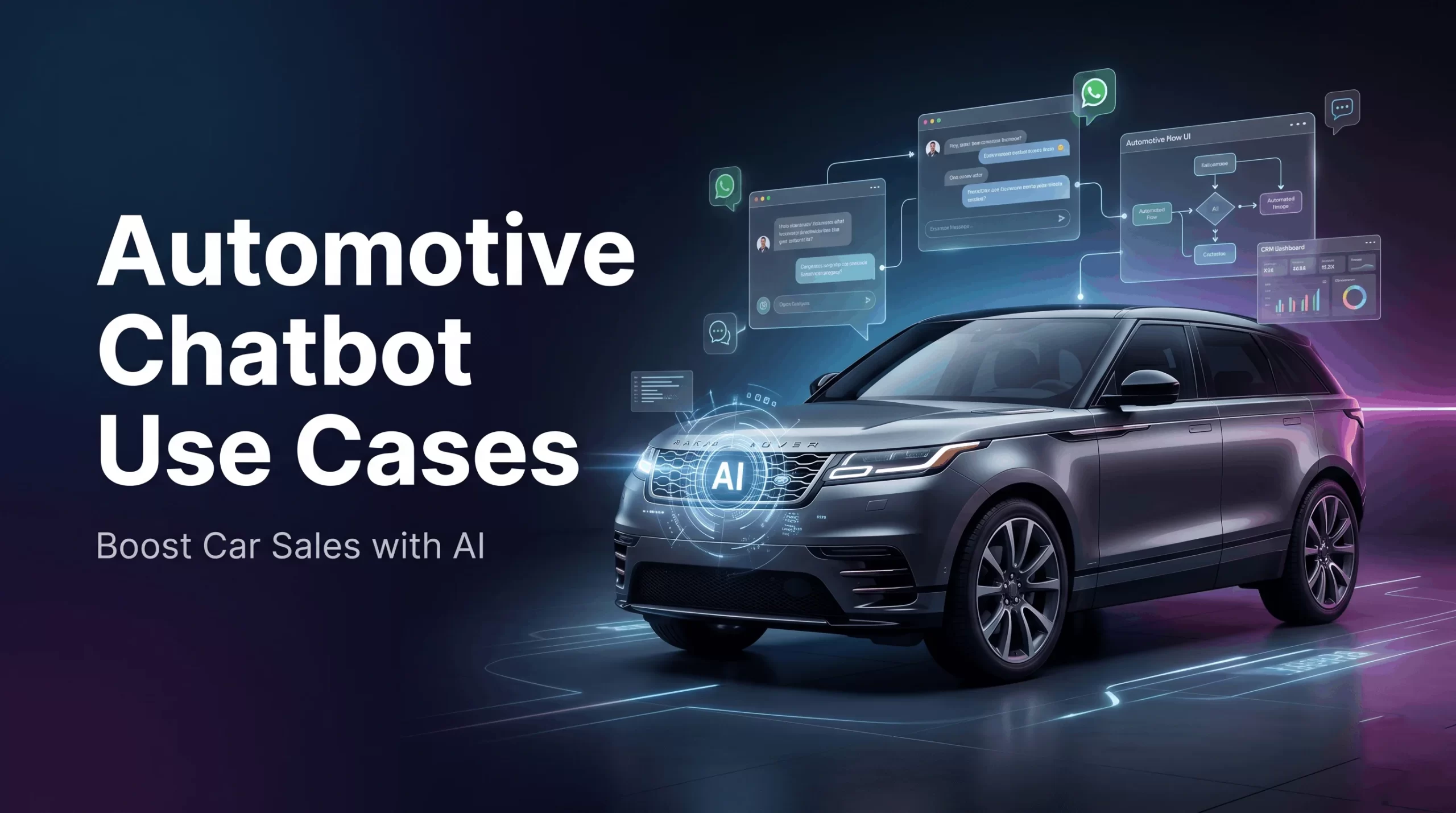
    Top 10 Automotive Chatbot Use Cases Every Dealership Must Know

    The automotive industry has entered a phase where speed, personalization, and availability are no longer competitive advantages—they are baseline expectations. Today’s car buyers don’t wait for showroom visits or business hours. They browse, compare, ask questions, and make decisions across websites, WhatsApp, and social platforms, often within minutes.

    This shift has created a massive gap between customer expectations and dealership response capabilities. Traditional processes—manual follow-ups, delayed responses, and fragmented communication—simply cannot keep up.

    This is exactly where an automotive chatbot or, more precisely, an AI chatbot for the automobile industry, is transforming how dealerships operate. More advanced implementations—often referred to as AI agents for automotive—go beyond simple question-answering and actively participate in sales, support, and engagement workflows.

    For platforms like Livserv.ai, this is not just about automation. It’s about enabling dealerships to create always-on, intelligent, revenue-generating conversations that move prospects from curiosity to conversion.

    This article explores the top 10 automotive chatbot use cases that every dealership must understand and implement to stay competitive in 2026 and beyond.


    1. AI-Powered Lead Qualification for Car Sales

    One of the biggest inefficiencies in dealerships is handling unqualified or low-intent leads. Sales teams often spend hours calling prospects who are either casually browsing or not ready to purchase.

    An automotive chatbot changes this dynamic by acting as the first layer of intelligent filtering.

    Instead of collecting just basic contact details, the chatbot engages users in a structured conversation:

    • What type of car are you looking for?
    • Budget range?
    • Preferred fuel type?
    • Timeline to purchase?

    Based on responses, the system can classify leads into:

    • Hot (ready to buy soon)
    • Warm (research phase)
    • Cold (early exploration)

    Example:
    A visitor lands on a dealership website at 11:30 PM and starts browsing SUVs. The chatbot initiates a conversation and identifies that the user is planning to buy within 30 days with a budget of ₹12–15 lakhs. Instead of waiting until the next day, the chatbot instantly marks this as a high-intent lead and schedules a callback or test drive.

    This use case alone can significantly improve:

    • Sales team efficiency
    • Conversion rates
    • Response speed

    For dealerships implementing an AI chatbot for car sales, this becomes the foundation of a more predictable pipeline.


    2. 24/7 Lead Capture Across Website and WhatsApp

    Car buyers don’t follow business hours. A large percentage of automotive queries happen during evenings, late nights, and weekends.

    Without an automated system, these leads are either:

    • Lost
    • Delayed
    • Poorly handled

    An AI chatbot for the automobile industry ensures that every visitor is engaged instantly, regardless of when they arrive.

    The chatbot can:

    • Greet users
    • Capture contact details
    • Understand intent
    • Offer relevant next steps

    Example:
    A user clicks on a Facebook ad at midnight and lands on your website. Instead of seeing a static form, they interact with a chatbot that asks what model they are interested in and offers to share pricing details instantly via WhatsApp.

    This creates a seamless experience and ensures that:

    • No lead is missed
    • Engagement starts immediately
    • The user stays within your ecosystem

    For dealerships using AI agents for automotive, this goes a step further, where conversations continue across channels like WhatsApp, SMS, and email without disruption.


    3. Automated Test Drive Booking

    Test drives are one of the most critical conversion points in the automotive sales funnel. However, booking them often involves:

    • Back-and-forth calls
    • Manual scheduling
    • Coordination delays

    An automotive chatbot simplifies this entire process by enabling instant booking.

    The chatbot can:

    • Show available time slots
    • Capture preferred location
    • Confirm booking instantly
    • Send reminders

    Example:
    A customer browsing a sedan model clicks on “Book Test Drive.” Instead of filling out a form and waiting for a callback, the chatbot asks for preferred date, time, and location, and confirms the booking within seconds.

    This reduces friction and increases the likelihood of:

    • Higher test drive bookings
    • Faster conversions
    • Better customer experience

    When powered by advanced AI chatbot for car sales systems, these bookings can also sync with CRM and dealership calendars automatically.


    4. Personalized Car Recommendations Based on User Preferences

    Modern buyers expect personalization similar to what they experience on platforms like e-commerce or streaming services.

    An AI chatbot for the automobile industry can act as a digital sales advisor by recommending vehicles based on user input.

    Instead of overwhelming users with multiple options, the chatbot narrows down choices using:

    • Budget
    • Usage (city, highway, family)
    • Fuel preference
    • Brand interest

    Example:
    A user says they need a car for daily city commute with occasional long drives and a budget under ₹10 lakhs. The chatbot suggests 2–3 models that match these criteria and explains why they are suitable.

    This approach:

    • Reduces decision fatigue
    • Builds trust
    • Increases engagement time

    For dealerships, this means guiding customers more effectively without requiring a human sales rep at every step.


    5. Instant Price, EMI, and Financing Assistance

    Pricing transparency plays a huge role in automotive decision-making. Customers often leave websites because they cannot easily find:

    • On-road prices
    • EMI breakdowns
    • Financing options

    An automotive chatbot can provide this information instantly.

    The chatbot can:

    • Share model-wise pricing
    • Calculate EMI based on down payment and tenure
    • Offer finance partner details

    Example:
    A user asks, “What is the EMI for this SUV?” The chatbot asks for a few inputs like down payment and tenure, then instantly provides a monthly EMI estimate along with financing options.

    This eliminates friction and keeps the user engaged within the dealership’s ecosystem.

    For an AI chatbot for car sales, this feature directly impacts conversion by addressing one of the biggest buyer concerns—affordability.


    6. Handling FAQs and Reducing Support Load

    Dealerships receive a high volume of repetitive queries:

    • Mileage
    • Features
    • Service intervals
    • Warranty details

    Handling these manually consumes valuable time and resources.

    An AI chatbot for the automobile industry can instantly respond to these frequently asked questions with high accuracy.

    Example:
    A user asks about the mileage of a particular car model. Instead of waiting for a response, the chatbot instantly provides accurate information along with additional context such as driving conditions.

    This leads to:

    • Reduced support workload
    • Faster response times
    • Improved customer satisfaction

    When implemented correctly, this use case can significantly reduce dependency on human support teams for basic queries.


    7. Automated Follow-Ups and Lead Nurturing

    A large percentage of automotive leads do not convert immediately. They require:

    • Multiple touchpoints
    • Reminders
    • Information sharing

    An AI agent for automotive can automate this entire nurturing process.

    The system can:

    • Send follow-up messages
    • Share brochures and offers
    • Remind users about test drives
    • Re-engage inactive leads

    Example:
    A user showed interest in a hatchback but did not book a test drive. After two days, the chatbot sends a WhatsApp message with a limited-time offer and a quick booking link.

    This ensures continuous engagement without manual effort.

    For dealerships, this translates to:

    • Higher conversion rates
    • Better lead utilization
    • Consistent communication

    8. Service Booking and After-Sales Engagement

    The relationship with the customer doesn’t end after the sale. In fact, after-sales service is a major revenue stream for dealerships.

    An automotive chatbot can handle:

    • Service bookings
    • Maintenance reminders
    • Complaint registration

    Example:
    A customer receives a WhatsApp reminder that their vehicle is due for servicing. They click on the link and the chatbot helps them book a service appointment within seconds.

    This improves:

    • Service retention
    • Customer satisfaction
    • Operational efficiency

    An AI chatbot for the automobile industry ensures that after-sales engagement becomes proactive rather than reactive.


    9. Omnichannel Engagement Across Platforms

    Customers interact with dealerships across multiple channels:

    • Website
    • WhatsApp
    • Facebook
    • Instagram

    Managing these channels separately leads to fragmented communication.

    An AI chatbot for car sales can unify these interactions into a single conversational flow.

    Example:
    A user starts a conversation on Instagram, continues on WhatsApp, and later visits the website. The chatbot remembers previous interactions and continues the conversation seamlessly.

    This creates a consistent experience and ensures that:

    • Context is not lost
    • Conversations are continuous
    • Engagement is personalized

    For dealerships adopting AI agents for automotive, this omnichannel capability becomes a critical differentiator.


    10. Recovering Lost Leads and Re-Engaging Visitors

    Not every visitor converts on the first visit. Many leave without taking any action.

    An automotive chatbot can identify and re-engage these users.

    The system can:

    • Trigger exit-intent messages
    • Offer incentives
    • Capture contact details before users leave

    Example:
    A user is about to exit the website after browsing multiple car models. The chatbot offers a limited-time discount or invites them to book a test drive with a small incentive.

    Additionally, for users who have already interacted, the chatbot can send follow-up messages to bring them back.

    This use case helps:

    • Recover lost opportunities
    • Increase conversion rates
    • Maximize marketing ROI

    The Shift from Chatbots to AI Agents in Automotive

    While traditional chatbots focus on answering queries, modern AI agents for automotive are designed to:

    • Understand intent
    • Take actions
    • Manage end-to-end workflows

    Platforms like Livserv.ai are enabling dealerships to move beyond static automation into intelligent, adaptive conversational systems that actively drive sales and engagement.

    These systems are not just tools—they function as:

    • Digital sales assistants
    • Customer support executives
    • Engagement engines

    Why These Use Cases Matter for Dealership Growth

    Each of these automotive chatbot use cases addresses a specific gap in the dealership funnel:

    • Lead capture
    • Qualification
    • Engagement
    • Conversion
    • Retention

    When combined, they create a fully connected, automated, and intelligent customer journey.

    Dealerships that adopt these capabilities are able to:

    • Respond faster
    • Engage better
    • Convert more
    • Operate efficiently

    Final Thoughts

    The automotive industry is rapidly evolving, and customer expectations are rising just as quickly. Dealerships that rely solely on traditional processes will find it increasingly difficult to compete.

    Implementing an automotive chatbot, especially one powered by advanced AI chatbot for automobile industry capabilities, is no longer optional. It is a strategic move toward building a more responsive, scalable, and customer-centric business.

    From lead qualification to after-sales engagement, the use cases discussed above highlight how conversational AI is reshaping the entire automotive customer journey.

    As AI agents for automotive continue to evolve, the dealerships that adopt them early will not only improve efficiency but also gain a significant edge in delivering seamless, personalized, and high-converting customer experiences.