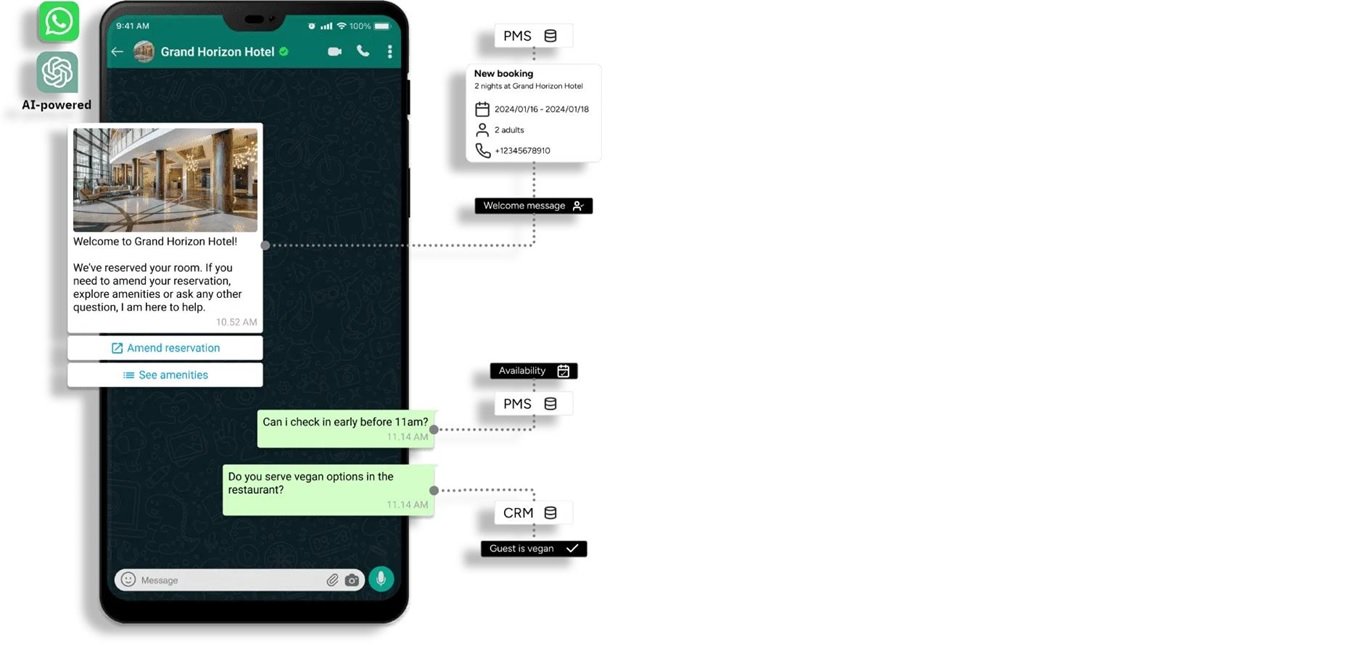
The real estate industry has always been driven by relationships, timing, and information. However, the way buyers and investors interact with real estate brands has changed significantly in recent years. Property seekers no longer rely only on brokers or physical visits; instead, they explore listings online, compare options, evaluate pricing, and engage with developers across multiple digital channels before making decisions.
In this evolving landscape, the demand for instant responses, personalized recommendations, and seamless communication has increased. Real estate businesses that rely solely on manual processes often struggle to keep up with these expectations. This gap has led to the rapid adoption of AI chatbot for real estate, real estate conversational AI, and AI agents for property sales.
An AI chatbot for real estate industry applications is no longer just a tool for answering queries. It has evolved into a complete engagement layer that connects website visitors, WhatsApp users, and CRM systems into a unified experience. It captures leads, qualifies prospects, automates site visits, and supports customers even after the sale is completed.
Understanding the Role of AI Chatbots in Real Estate
An AI chatbot for real estate is an intelligent conversational system designed to interact with property buyers, sellers, and investors across digital platforms such as websites, WhatsApp, and mobile applications. It uses natural language processing to understand queries and provide relevant responses in real time.
Unlike traditional forms and static listing pages, a real estate chatbot engages users in conversations. It asks questions, understands preferences, and guides users through property options. It also integrates with CRM systems to store and retrieve customer data, making interactions more personalized and efficient.
For example, when a user visits a real estate website and types, “I am looking for a 3BHK under 1 crore in Hyderabad,” the chatbot can:
- Ask follow-up questions about location preferences
- Filter available inventory
- Suggest relevant properties
- Offer to book a site visit
This interaction transforms a passive browsing experience into an active, guided journey.
Why Real Estate Businesses Are Adopting AI Chatbots
The real estate industry faces several operational and customer experience challenges. These include delayed responses, unqualified leads, inefficient follow-ups, and lack of transparency in post-sales communication.
An AI chatbot for real estate industry applications addresses these challenges by automating interactions and ensuring consistency across the customer lifecycle.
One of the primary reasons for adoption is the need for instant engagement. When a user submits an inquiry or visits a website, the likelihood of conversion is highest at that moment. Delayed responses often result in lost opportunities. A real estate AI chatbot ensures that every visitor is engaged immediately.
Another factor is the complexity of customer requirements. Buyers often have specific preferences related to budget, location, amenities, and timelines. Capturing and understanding these requirements manually can be time-consuming. A chatbot simplifies this process by collecting structured data through conversations.
Pre-Sales Use Cases of AI Chatbots in Real Estate
Intelligent Lead Capture and Qualification
Lead generation is a critical component of real estate marketing, but not all leads are equal. Many inquiries lack clarity or intent, making it difficult for sales teams to prioritize effectively.
An AI chatbot for real estate lead generation captures leads conversationally and qualifies them based on predefined criteria. It asks questions such as:
- What is your budget range?
- Which location are you interested in?
- What type of property are you looking for?
- When are you planning to purchase?
For example, a user might respond:
“I am looking for a 2BHK in Gachibowli under 80 lakhs within the next 3 months.”
The chatbot records this information and pushes it to the CRM along with the conversation summary. This enables telemarketing executives to understand the customer’s requirements before making a call.
This approach improves efficiency and increases the chances of conversion.
AI-Powered Property Recommendations
Property search can be overwhelming due to the number of available options. A real estate chatbot simplifies this process by acting as a recommendation engine.
Based on user inputs, the chatbot filters properties and suggests the most relevant options. It considers factors such as:
- Budget
- Location
- Property type
- Amenities
For instance, if a user is looking for a 3BHK near IT hubs, the chatbot can recommend properties that match these criteria and provide details such as pricing, features, and distance from key locations.
This reduces decision fatigue and improves user experience.
Automated Site Visit Booking
Site visits are a crucial step in the real estate sales process. However, coordinating visits manually can lead to delays and missed opportunities.
An AI chatbot for real estate industry applications automates this process by allowing users to book site visits directly through the conversation.
The chatbot can:
- Display available time slots
- Confirm bookings instantly
- Assign sales representatives
- Send reminders
For example, after showing property options, the chatbot may ask:
“Would you like to schedule a site visit this weekend?”
This seamless transition from inquiry to action increases engagement and conversion rates.
WhatsApp-Based Lead Nurturing
Many users prefer communicating through messaging platforms. Integrating a real estate AI chatbot with WhatsApp allows businesses to continue conversations beyond the website.
The chatbot can:
- Share brochures and images
- Provide updates on availability
- Answer follow-up questions
- Send reminders
For example, a chatbot may send a message:
“Only a few units left in your preferred project. Would you like to reserve one?”
This continuous engagement keeps leads warm and encourages decision-making.
Post-Sales Use Cases of AI Chatbots in Real Estate
Project Progress Tracking
Transparency is a major concern for property buyers, especially in under-construction projects. An AI chatbot for real estate can provide real-time updates on project progress.
By integrating with CRM and project management systems, the chatbot can share:
- Construction status
- Milestone updates
- Photos and videos
For example, a customer can ask:
“What is the current status of my project?”
The chatbot retrieves the information and responds with details such as:
“Construction for Tower A is 75% complete. Interior work is in progress.”
This improves trust and reduces the need for manual follow-ups.
EMI and Payment Management
Managing payments is another area where chatbots add value. A real estate chatbot can provide information about:
- Upcoming EMI dates
- Outstanding balances
- Payment links
For instance, a customer may receive a reminder:
“Your next EMI of ₹50,000 is due on 10th June. Would you like to make the payment now?”
This simplifies financial interactions and improves collection efficiency.
Document Access and Retrieval
Customers often need access to documents such as agreements, receipts, and invoices. A chatbot can provide instant access to these documents.
For example, a user can request:
“Download my booking receipt”
The chatbot retrieves the document from the CRM and shares it instantly. This reduces dependency on support teams and enhances convenience.
Customer Support and Issue Resolution
Post-sales support is critical for maintaining customer satisfaction. An AI chatbot for real estate industry applications can handle common queries related to:
- Maintenance
- Amenities
- Handover timelines
By providing instant responses, the chatbot improves customer experience and reduces support workload.
Advanced Use Cases and Innovations
AI-Powered Objection Handling
Real estate decisions often involve multiple concerns, including pricing, location, and investment value. A chatbot can address these concerns proactively.
For example, if a user says:
“The price seems high”
The chatbot can respond with:
“This project offers premium amenities and is located near major IT hubs, which contributes to long-term value.”
This helps in maintaining engagement and building confidence.
Investor Insights and ROI Analysis
For investors, understanding returns is crucial. An AI chatbot for real estate can provide insights such as:
- Rental yield
- Expected appreciation
- Market trends
For instance, the chatbot may calculate:
“The estimated rental yield for this property is 5% annually.”
This information supports informed decision-making.
Multilingual and Voice Support
In diverse markets, language can be a barrier. A real estate chatbot can communicate in multiple languages and support voice interactions.
This expands accessibility and ensures that more users can engage comfortably.
Integration with CRM Systems
The effectiveness of an AI chatbot for real estate industry applications depends on its integration with CRM systems.
This integration enables:
- Real-time data exchange
- Personalized interactions
- Unified customer profiles
For example, when a returning customer interacts with the chatbot, it can recall previous conversations and preferences, creating a more personalized experience.
Benefits of AI Chatbots in Real Estate
Improved Lead Conversion
By engaging users instantly and guiding them through the buying process, chatbots increase conversion rates.
Enhanced Customer Experience
Instant responses, personalized recommendations, and seamless interactions contribute to a better user experience.
Operational Efficiency
Automation reduces the workload on sales and support teams, allowing them to focus on high-value tasks.
Data-Driven Insights
Chatbots generate valuable data that can be analyzed to improve marketing and sales strategies.