Day: March 26, 2026

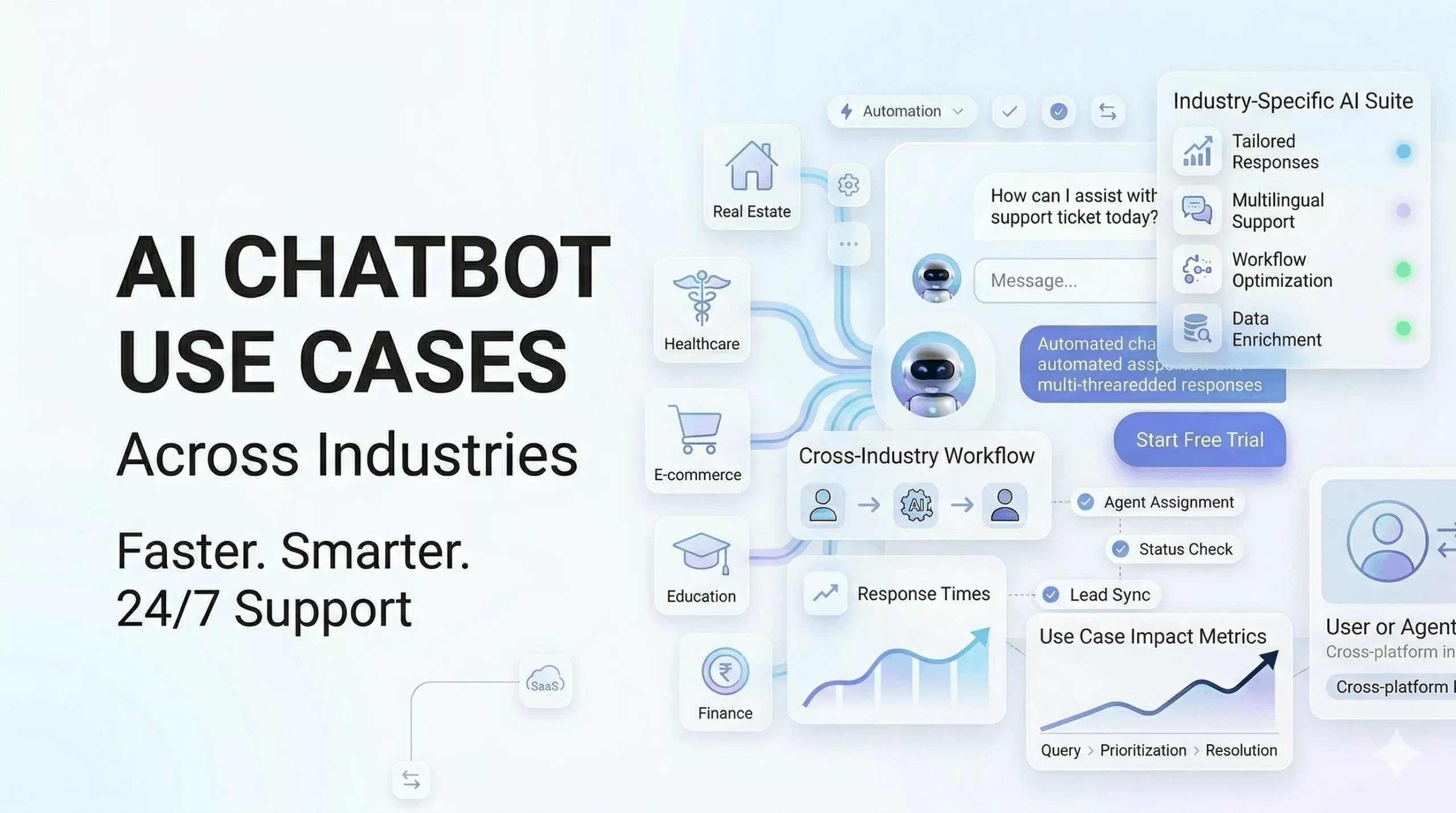
  • AI Chatbot Use Cases Across Industries (2026 Guide for Businesses)

    AI Chatbot Use Cases Across Industries (2026 Guide for Businesses)

    AI Chatbot Use Cases Across Industries (2026 Guide for Businesses)

    AI chatbots are rapidly becoming a core business tool across industries.

    Businesses today face a common challenge: handling more customers with limited resources.

    AI chatbots solve this by automating conversations, capturing leads, and improving customer experience at scale.

    This guide explains real, industry-specific AI chatbot use cases with clear examples and practical insights.


    What are AI Chatbot Use Cases?

    AI chatbot use cases are real-world applications where chatbots automate conversations, handle customer queries, and perform business tasks across different industries.

    Simple definition: AI chatbots are used to replace repetitive human interactions with automated, intelligent conversations.

    Key takeaway: Chatbots are used wherever businesses interact with customers.


    What is an AI Chatbot?

    An AI chatbot is a software system that uses artificial intelligence to understand user queries and respond automatically in natural language.

    In one line: It acts like a digital assistant that communicates with users and completes tasks.


    Why AI Chatbots Are Important for Businesses

    • Automation: Reduces manual workload
    • Scalability: Handles unlimited conversations
    • Speed: Responds instantly
    • Customer Expectations: Users expect 24/7 support

    Insight: Faster response time directly increases lead conversion and customer satisfaction.


    AI Chatbot Use Cases by Industry

    Real Estate

    Primary goal: Capture and convert leads faster.

    • Lead Capture: Collect visitor details instantly
    • Property Inquiries: Answer listing questions
    • Site Visit Scheduling: Automate bookings
    • Follow-Ups: Nurture leads automatically

    Key insight: Real estate chatbots reduce response time from hours to seconds.


    Healthcare

    Primary goal: Improve patient experience and reduce workload.

    • Patient Queries: Answer common questions
    • Appointment Booking: Schedule visits
    • Health Information: Provide basic guidance
    • Support Automation: Reduce front-desk load

    Key insight: AI chatbots improve accessibility to healthcare information.


    Education

    Primary goal: Increase student engagement and admissions.

    • Student Inquiries: Answer course-related questions
    • Admission Guidance: Automate application steps
    • Course Information: Provide instant details
    • Lead Nurturing: Follow up with prospects

    Key insight: Chatbots reduce drop-offs in the admission funnel.


    E-commerce

    Primary goal: Increase sales and improve customer experience.

    • Product Recommendations: Suggest relevant items
    • Order Tracking: Provide real-time updates
    • Customer Support: Handle queries instantly
    • Upselling & Cross-selling: Increase cart value

    Key insight: Chatbots directly impact revenue through guided selling.


    Banking & Finance

    Primary goal: Improve efficiency and security.

    • Customer Queries: Handle account-related questions
    • Account Information: Provide updates
    • Loan Assistance: Guide application process
    • Fraud Alerts: Notify suspicious activity

    Key insight: AI chatbots improve response speed while maintaining compliance.


    Travel & Hospitality

    Primary goal: Enhance customer experience.

    • Booking Assistance: Help with reservations
    • Travel Queries: Answer customer questions
    • Itinerary Support: Provide trip details
    • Recommendations: Suggest destinations

    Key insight: Chatbots improve customer engagement before and during travel.


    SaaS & Tech Companies

    Primary goal: Generate and convert leads.

    • Lead Qualification: Identify high-intent users
    • Demo Booking: Schedule product demos
    • Customer Onboarding: Guide new users
    • Support Automation: Resolve issues quickly

    Key insight: Chatbots shorten the sales cycle significantly.


    Common AI Chatbot Use Cases Across All Industries

    • Lead Generation: Capture and qualify leads automatically
    • Customer Support: Provide instant assistance
    • Appointment Scheduling: Automate bookings
    • Sales Automation: Guide users through purchase
    • Feedback Collection: Gather insights

    Summary: These are universal chatbot applications across industries.


    Benefits of AI Chatbots Across Industries

    • Instant Responses: No waiting time
    • Lower Costs: Reduce support expenses
    • Better Experience: Personalized interactions
    • Scalability: Handle unlimited users
    • Consistency: Uniform communication

    Key statement: AI chatbots improve both operational efficiency and customer experience.


    Examples of AI Chatbot Workflows

    Lead Generation Workflow

    1. User visits website
    2. Chatbot initiates conversation
    3. Qualifies the user
    4. Captures contact details
    5. Routes to sales team

    Customer Support Workflow

    1. User asks a question
    2. Chatbot provides instant answer
    3. Escalates if needed

    Appointment Booking Workflow

    1. User requests appointment
    2. Chatbot shows available slots
    3. User selects time
    4. Confirmation is sent

    Example: Platforms like Livserv.ai enable businesses to build these workflows for lead generation, customer engagement, and automation.


    How to Choose the Right Chatbot for Your Industry

    • Use Case: Lead generation, support, or sales
    • Business Size: SMB or enterprise
    • Integration Needs: CRM and tools
    • Ease of Use: Quick deployment

    Decision tip: Choose a chatbot that directly solves your primary business problem.


    Why Businesses Are Adopting AI Chatbots Rapidly

    • Rising customer expectations
    • Demand for automation
    • Need to reduce costs
    • Growth of conversational AI

    Trend insight: AI chatbots are becoming a standard part of digital business strategy.


    FAQs: AI Chatbot Use Cases

    What are AI chatbot use cases?

    AI chatbot use cases are applications where chatbots automate customer interactions and business processes.

    Which industries benefit most from chatbots?

    Real estate, healthcare, e-commerce, and SaaS benefit the most.

    How are chatbots used in real estate?

    They capture leads, answer property queries, and schedule site visits.

    How are chatbots used in healthcare?

    They handle patient queries and automate appointment booking.

    Are chatbots cost-effective?

    Yes. They reduce operational costs and improve efficiency.

    Can chatbots handle multiple channels?

    Yes. They work across website, WhatsApp, and social platforms.


    Conclusion: AI Chatbots Are Transforming Every Industry

    AI chatbot use cases are expanding rapidly across industries.

    They help businesses:

    • Automate operations
    • Improve customer experience
    • Increase conversions

    Final takeaway: Businesses that adopt AI chatbots early gain a significant competitive advantage.

    Platforms like Livserv.ai enable companies to deploy AI chatbots for lead generation, customer engagement, and automation across industries.
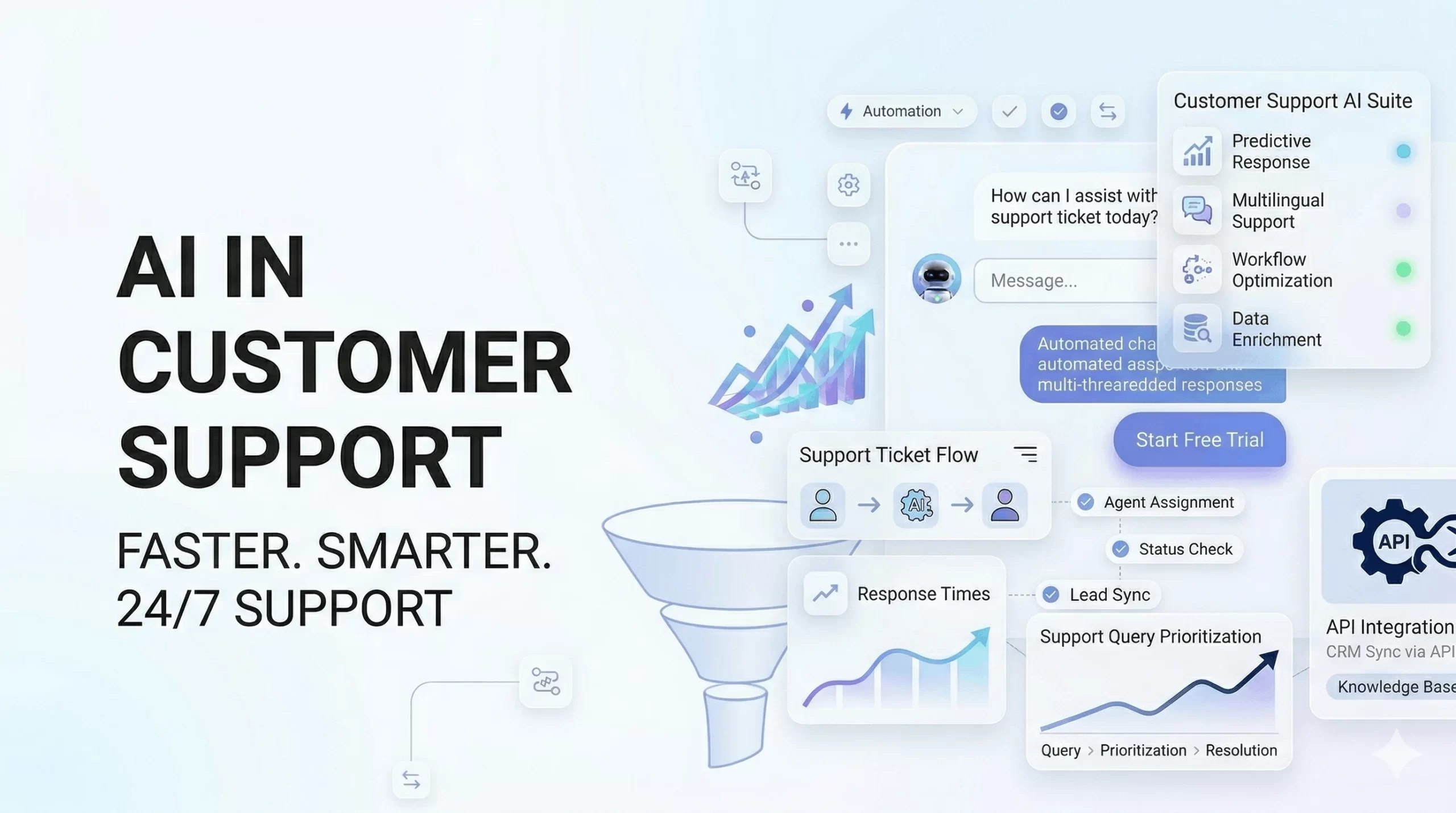
  • How AI is Transforming Customer Support in 2026 (Complete Guide)

    How AI is Transforming Customer Support in 2026 (Complete Guide)

    How AI is Transforming Customer Support in 2026 (Complete Guide)

    Customer support is no longer just a service function—it’s a competitive advantage.

    Today’s customers expect instant replies, 24/7 availability, and personalized experiences. Businesses that fail to deliver lose customers quickly.

    AI in customer support is solving this gap.

    This guide explains exactly how AI is transforming support, with clear examples, benefits, and practical insights.


    What is AI in Customer Support?

    AI in customer support is the use of artificial intelligence to automate, manage, and improve customer interactions through chatbots, automation, and data analysis.

    Simple definition: AI enables businesses to respond instantly, handle more queries, and deliver better support without increasing human effort.

    Key takeaway: AI turns customer support from reactive to proactive.


    Traditional Customer Support vs AI-Powered Support

    AspectTraditional SupportAI-Powered Support
    AvailabilityLimited to working hours24/7 availability
    Response TimeMinutes to hoursInstant responses
    ScalabilityLimited by team sizeHandles unlimited queries
    CostHigh operational costLower cost per interaction
    ConsistencyVaries by agentStandardized responses
    PersonalizationManual effortAI-driven personalization

    Insight: AI support systems outperform traditional models in speed, scale, and efficiency.


    Key Ways AI is Transforming Customer Support

    1. Instant Responses (24/7 Support)

    AI eliminates waiting time by providing immediate replies.

    Impact: Faster responses directly increase customer satisfaction and retention.

    2. Automation of Repetitive Queries

    AI handles common questions such as:

    • Order status
    • Account issues
    • Basic troubleshooting

    Impact: Reduces workload on human agents by up to 60–70%.

    3. Intelligent Routing and Escalation

    AI identifies complex queries and routes them to the right agent.

    Impact: Faster resolution and improved efficiency.

    4. Personalized Customer Interactions

    AI uses past behavior and data to tailor responses.

    Impact: Higher engagement and better customer experience.

    5. Multichannel Support

    AI operates across multiple platforms:

    • Website
    • WhatsApp
    • Mobile apps
    • Social media

    Impact: Customers get consistent support everywhere.

    6. Data-Driven Insights

    AI analyzes conversations to identify trends.

    • Common issues
    • Customer sentiment
    • Performance gaps

    Impact: Continuous improvement in support strategy.


    Benefits of AI in Customer Support

    • Faster Resolution: Queries solved instantly
    • Lower Costs: Reduced dependency on large teams
    • Higher Satisfaction: Quick and accurate responses
    • Scalability: Handle unlimited conversations
    • Consistency: Uniform customer experience

    Key stat insight: Businesses using AI support systems often see faster response times and improved customer satisfaction scores.


    Real-World Use Cases

    E-commerce

    • Order tracking
    • Returns and refunds
    • Product recommendations

    Healthcare

    • Appointment booking
    • Patient queries

    Real Estate

    • Instant lead responses
    • Property inquiries

    SaaS

    • Customer onboarding
    • Technical support automation

    Observation: AI support is now used across almost every customer-facing industry.


    Role of AI Chatbots in Customer Support

    AI chatbots are the core technology behind automated customer support.

    They enable businesses to:

    • Handle high volumes of queries
    • Provide instant responses
    • Automate workflows
    • Improve engagement

    Key insight: Chatbots are not just support tools—they are digital frontline agents.

    Platforms like Livserv.ai allow businesses to deploy AI chatbots for automating customer engagement and support across website and WhatsApp.


    Challenges and Limitations

    • Initial Setup: Requires planning and configuration
    • Training Needs: Continuous optimization required
    • Complex Queries: Some cases still need human support
    • Data Dependency: Performance depends on quality data

    Reality check: AI is powerful, but it works best when combined with human support.


    Future of AI in Customer Support

    The future of customer support is AI-driven and human-assisted.

    • More human-like conversations
    • Predictive support (before issues arise)
    • Voice + chat integration
    • Hyper-personalization

    Trend insight: AI will evolve from reactive support to proactive customer experience management.


    How to Implement AI in Customer Support

    Step-by-Step Framework

    1. Identify Use Cases: Start with repetitive queries
    2. Select the Right Tool: Choose based on your goals
    3. Deploy Chatbot: Integrate across channels
    4. Train & Optimize: Improve responses continuously
    5. Measure Performance: Track KPIs and refine

    Practical tip: Start small, then scale based on results.

    Solutions like Livserv.ai help businesses quickly deploy AI-powered customer support systems with minimal setup.


    FAQs: AI in Customer Support

    What is AI in customer support?

    AI in customer support uses artificial intelligence to automate and improve customer interactions through chatbots and automation.

    How does AI improve customer support?

    AI improves speed, accuracy, and scalability by automating responses and analyzing customer data.

    Can AI replace human support agents?

    No. AI handles repetitive tasks, while humans manage complex issues.

    Is AI customer support expensive?

    It reduces long-term costs by automating high-volume interactions.

    Which industries benefit most?

    E-commerce, healthcare, SaaS, and real estate benefit significantly.

    How quickly can AI be implemented?

    Most AI chatbot solutions can be deployed within days.


    Conclusion: AI is Redefining Customer Support

    AI in customer support is no longer optional—it is a strategic necessity.

    Businesses that adopt AI can:

    • Respond instantly
    • Reduce costs
    • Improve customer experience
    • Scale efficiently

    Final takeaway: The future belongs to businesses that combine AI efficiency with human empathy.

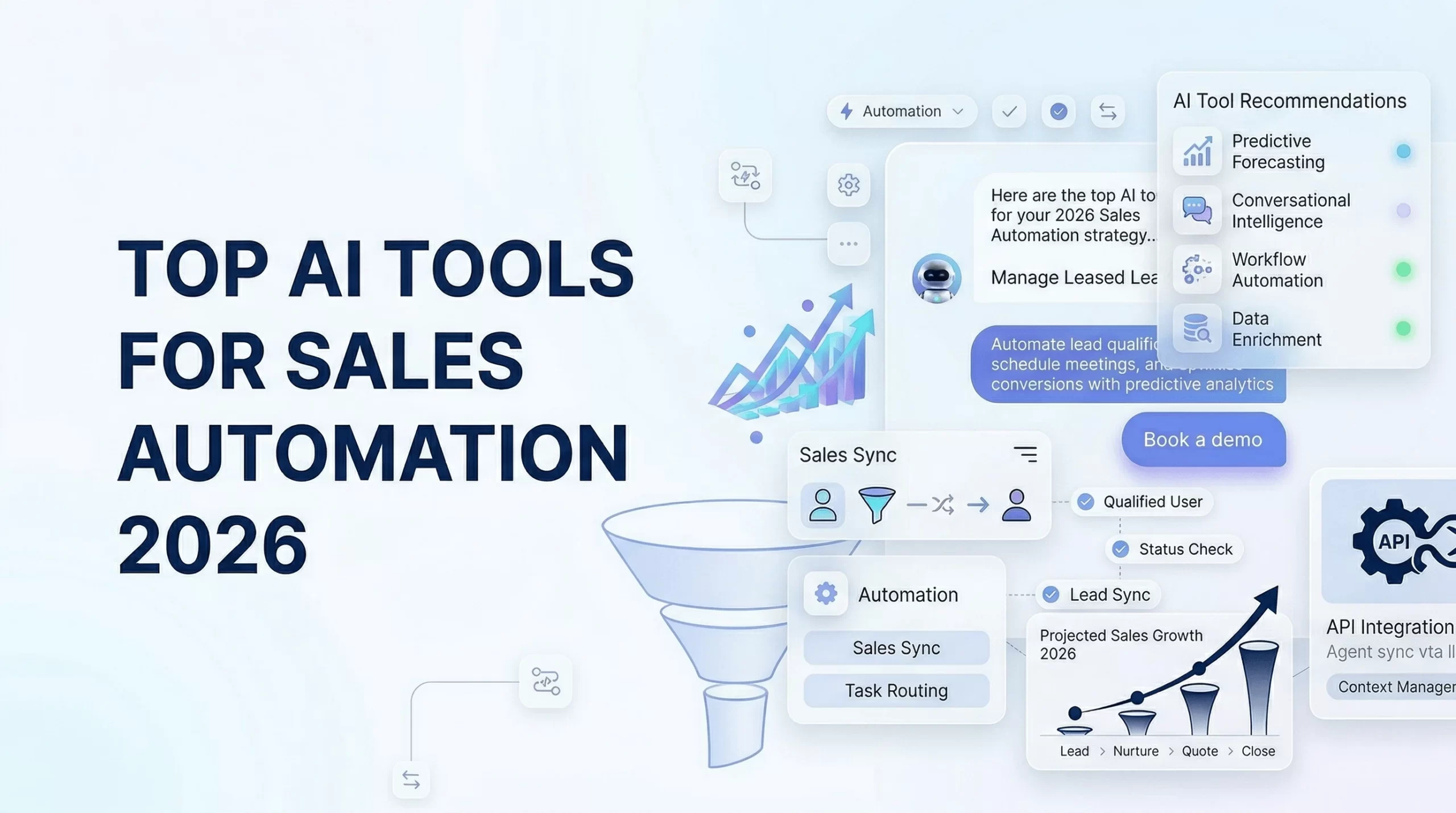
  • Top AI Tools for Sales Automation in 2026 (Complete Comparison Guide)

    Top AI Tools for Sales Automation in 2026 (Complete Comparison Guide)

    Top AI Tools for Sales Automation in 2026 (Complete Comparison Guide)

    Sales teams are under more pressure than ever.

    Leads are coming in from multiple channels, but slow responses, manual follow-ups, and inefficient processes are causing missed opportunities.

    This is where AI tools for sales automation are transforming the game.

    In this guide, you’ll learn:

    • What sales automation means
    • How AI improves sales processes
    • The best AI sales tools in 2026
    • How to choose the right platform

    What is Sales Automation?

    Sales automation is the use of software to automate repetitive sales tasks like lead capture, follow-ups, and data entry.

    It helps sales teams focus on closing deals instead of doing manual work.

    Why it matters: Faster response times and better efficiency directly improve conversions.


    What are AI Tools for Sales Automation?

    AI tools for sales automation use artificial intelligence to manage, optimize, and automate sales processes such as lead qualification, customer engagement, and follow-ups.

    Difference from traditional tools:

    • Traditional tools follow rules
    • AI tools learn, adapt, and improve over time

    In simple terms: AI tools act like smart sales assistants.


    Key Benefits of AI Sales Tools

    • Faster Response Times: Engage leads instantly
    • Better Lead Qualification: Focus on high-intent prospects
    • Increased Conversions: Personalized engagement
    • Reduced Manual Work: Automate repetitive tasks
    • 24/7 Availability: Never miss a lead

    Key insight: Businesses using AI sales tools can increase lead conversion rates significantly.


    Top AI Tools for Sales Automation in 2026

    1. Livserv.ai

    An AI-driven platform for lead generation, customer engagement, and sales automation.

    Key Features:

    • AI chatbot for website leads
    • WhatsApp automation
    • Lead qualification workflows
    • CRM integration

    Best for: Businesses focused on lead generation and automated sales funnels

    Pros:

    • Easy to deploy
    • Strong lead conversion focus
    • Cost-effective

    Cons:

    • Less enterprise-heavy compared to large CRMs

    2. HubSpot

    A popular all-in-one CRM with strong automation features.

    Key Features:

    • Email automation
    • Pipeline management
    • Lead scoring

    Best for: Growing businesses

    Pros:

    • All-in-one platform
    • Strong integrations

    Cons:

    • Expensive at scale

    3. Salesforce

    An enterprise-level CRM with advanced AI capabilities.

    Key Features:

    • AI-powered insights
    • Advanced analytics
    • Custom workflows

    Best for: Large enterprises

    Pros:

    • Highly customizable
    • Powerful analytics

    Cons:

    • Complex setup
    • High cost

    4. Drift

    A conversational marketing platform focused on sales.

    Key Features:

    • Chat-based lead capture
    • Meeting scheduling
    • Real-time engagement

    Best for: B2B sales teams

    Pros:

    • High conversion focus
    • Easy to use

    Cons:

    • Limited AI depth

    5. Intercom

    A messaging platform with automation capabilities.

    Key Features:

    • Chat automation
    • Customer messaging
    • Integration ecosystem

    Best for: SaaS companies

    Pros:

    • Great UI
    • Flexible automation

    Cons:

    • Pricing can scale quickly

    6. Zoho CRM

    An affordable CRM with AI capabilities.

    Key Features:

    • Lead management
    • AI assistant
    • Workflow automation

    Best for: SMBs

    Pros:

    • Budget-friendly
    • Feature-rich

    Cons:

    • UI can feel complex

    7. Freshsales

    A CRM with built-in AI for sales automation.

    Key Features:

    • Lead scoring
    • Email tracking
    • Automation workflows

    Best for: Mid-sized teams

    Pros:

    • Good automation features
    • Easy integration

    Cons:

    • Limited customization

    Comparison Table: AI Tools for Sales Automation

    ToolBest ForKey FeaturesPricing LevelEase of Use
    Livserv.aiLead generation & automationAI chatbot, WhatsApp, CRMLow–MediumHigh
    HubSpotAll-in-one CRMEmail automation, CRMMedium–HighHigh
    SalesforceEnterprise CRMAI insights, analyticsHighMedium
    DriftSales conversationsChat, schedulingMedium–HighHigh
    IntercomCustomer engagementMessaging, automationHighHigh
    Zoho CRMSMBsLead management, AILow–MediumMedium
    FreshsalesMid-sized teamsLead scoring, workflowsMediumMedium

    Why Choose Livserv.ai for Sales Automation

    Many tools focus on CRM or support. But modern businesses need faster lead conversion.

    Livserv.ai stands out because:

    • Lead Generation Focus: Designed to capture and convert leads
    • AI Chatbot Automation: Engage users instantly
    • WhatsApp Automation: High-conversion channel
    • Ease of Use: Simple setup
    • Fast Deployment: Quick time-to-value

    Key insight: If your goal is to convert leads quickly, conversational AI platforms can outperform traditional tools.


    How to Choose the Right AI Sales Tool

    1. Business Size

    • Small → Simple tools
    • Enterprise → Advanced platforms

    2. Sales Complexity

    • Simple funnel → Chatbot tools
    • Complex pipeline → CRM systems

    3. Budget

    • Low → Zoho CRM
    • Medium → Livserv.ai
    • High → Salesforce

    4. Integration Needs

    • Check CRM compatibility
    • Ensure channel support (WhatsApp, web)

    FAQs: AI Tools for Sales Automation

    1. What is the best AI tool for sales automation?

    The best tool depends on your needs. Livserv.ai is strong for lead generation, while Salesforce is ideal for enterprises.

    2. Are AI sales tools worth it?

    Yes. They improve efficiency, reduce manual work, and increase conversions.

    3. Can AI replace sales teams?

    No. AI supports sales teams by automating repetitive tasks.

    4. Which tool is best for lead generation?

    Tools like Livserv.ai and Drift are focused on lead capture and conversion.

    5. Are AI tools expensive?

    They range from affordable to enterprise pricing, depending on features.

    6. How fast can I implement AI sales tools?

    Most tools can be deployed within days.

    7. Do AI tools integrate with CRM?

    Yes. Most platforms offer CRM integrations.


    Conclusion: AI is Redefining Sales Automation

    AI tools for sales automation are no longer optional—they are essential.

    They help businesses:

    • Respond faster
    • Capture more leads
    • Convert better

    Final takeaway: Choose a tool that aligns with your sales process and business goals.