Day: March 27, 2026

  • 10 Common Chatbot Mistakes Businesses Make (And How to Avoid Them)

    10 Common Chatbot Mistakes Businesses Make (And How to Avoid Them)

    10 Common Chatbot Mistakes Businesses Make (And How to Avoid Them)

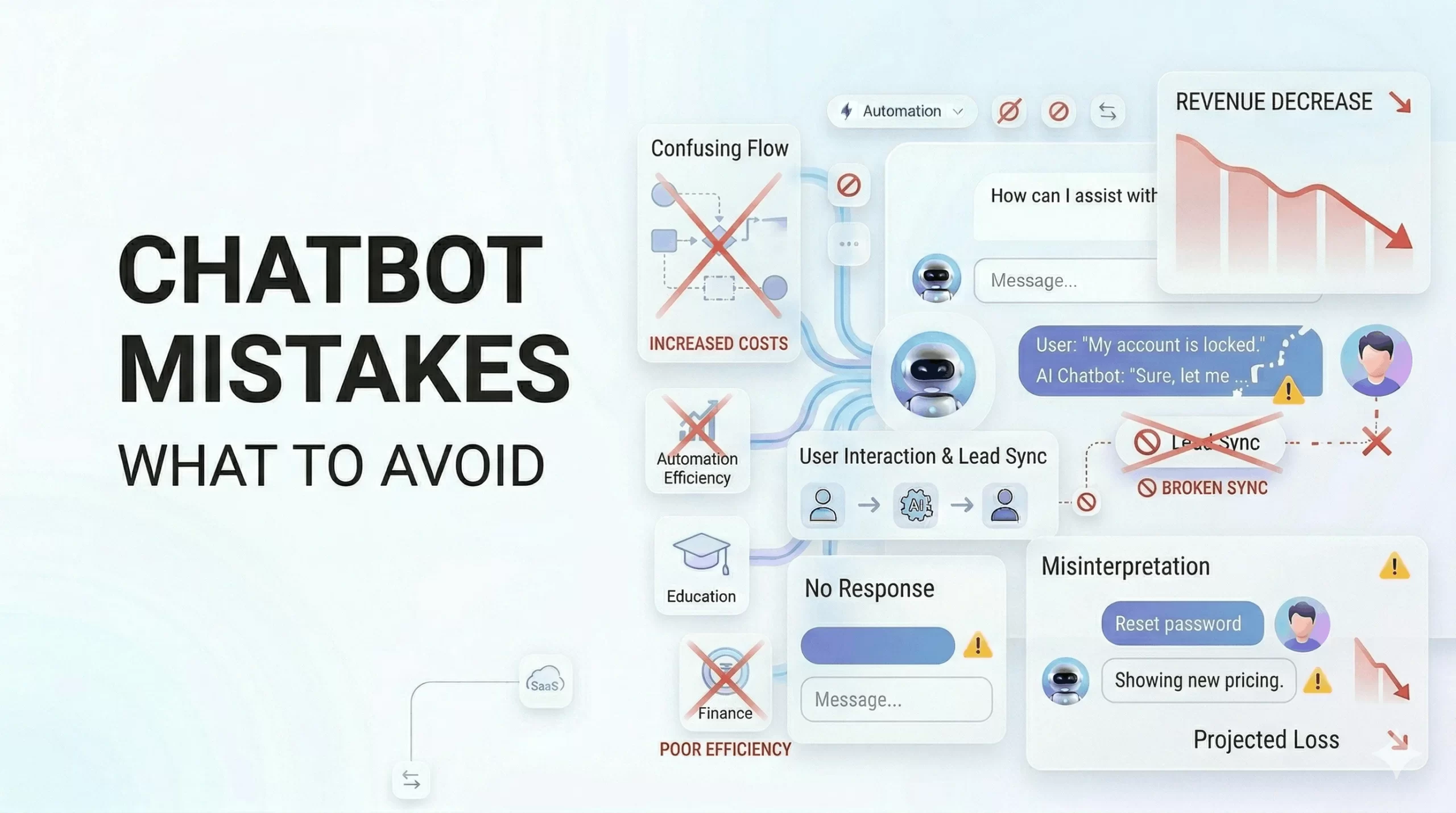
    Many chatbot implementations fail—not because of technology, but because of poor strategy.

    Businesses invest in chatbots expecting instant results, but often end up with low engagement, poor conversions, and frustrated users.

    This guide explains the most common chatbot mistakes and how to avoid them to achieve better results.


    Why Many Chatbot Implementations Fail

    Most chatbot failures are caused by strategy and execution issues, not the technology itself.

    • Lack of planning: No clear use case or goal
    • Unrealistic expectations: Expecting instant ROI without optimization
    • Poor execution: Weak conversation design and setup

    Key insight: A chatbot is only as effective as the strategy behind it.


    Common Chatbot Mistakes

    1. Lack of Clear Objectives

    Problem: Businesses deploy chatbots without defining goals.

    • No clarity on whether the chatbot is for lead generation, support, or sales
    • No measurable success metrics

    Impact: Poor performance and unclear ROI.

    Fix: Define a clear primary goal before implementation.


    2. Overcomplicating the Chatbot

    Problem: Too many flows and complex interactions.

    • Confusing user journeys
    • Too many options presented at once

    Impact: Users drop off quickly.

    Fix: Keep flows simple and focused.


    3. Poor Conversation Design

    Problem: Chatbots sound robotic and unnatural.

    • Generic responses
    • No personalization

    Impact: Low engagement and trust.

    Fix: Use natural language and personalize interactions.


    4. Ignoring User Intent

    Problem: Chatbot does not understand what users want.

    • Irrelevant responses
    • Poor query handling

    Impact: Frustrated users and lost leads.

    Fix: Design flows based on real user queries and intent.


    5. No Integration with CRM or Systems

    Problem: Chatbot operates in isolation.

    • No data sync with CRM
    • No follow-up automation

    Impact: Missed opportunities and inefficiency.

    Fix: Integrate chatbot with CRM and tools.


    6. Not Optimizing for Lead Conversion

    Problem: Chatbot captures leads but does not convert them.

    • No qualification process
    • No follow-up strategy

    Impact: Low ROI.

    Fix: Design chatbot flows for conversion, not just interaction.


    7. Lack of Continuous Improvement

    Problem: Chatbot is not optimized after launch.

    • No tracking or analytics
    • No updates based on performance

    Impact: Stagnant or declining performance.

    Fix: Continuously analyze and improve chatbot flows.


    8. Over-reliance on Automation

    Problem: No human fallback option.

    • Users stuck with chatbot
    • Complex queries unresolved

    Impact: Poor customer experience.

    Fix: Provide seamless handoff to human agents.


    9. Slow or Poor Implementation

    Problem: Delayed deployment and weak setup.

    • Missed opportunities
    • Inefficient workflows

    Impact: Reduced business impact.

    Fix: Focus on fast and effective deployment.


    10. Choosing the Wrong Chatbot Platform

    Problem: Platform does not match business needs.

    • Too complex or too basic
    • Lack of required features

    Impact: Poor performance and wasted investment.

    Fix: Choose a platform aligned with your goals.


    Impact of These Mistakes on Business

    • Lost Leads: Missed opportunities
    • Poor Customer Experience: Frustrated users
    • Low ROI: Ineffective investment

    Key statement: Poor chatbot strategy leads to wasted potential and revenue loss.


    How to Avoid These Chatbot Mistakes

    • Define Clear Goals: Focus on one primary use case
    • Keep It Simple: Avoid overcomplication
    • Focus on User Experience: Design intuitive conversations
    • Integrate Systems: Connect CRM and tools
    • Optimize Continuously: Use data to improve performance

    Actionable insight: Start small, then scale based on results.


    Best Practices for Successful Chatbot Implementation

    • Clear Use Cases: Lead generation, support, or sales
    • Structured Flows: Logical conversation paths
    • Analytics Tracking: Measure performance
    • Continuous Improvement: Optimize regularly

    Key takeaway: Success comes from strategy, not just technology.


    How Livserv.ai Helps Avoid These Mistakes

    Livserv.ai is designed to address common chatbot challenges:

    • Ease of Use: Simple setup and management
    • Lead Generation Focus: Built for conversions
    • Automation Workflows: Streamlined processes
    • Integration Capabilities: Works with existing systems

    Positioning: It helps businesses avoid common implementation mistakes and achieve better results.


    FAQs: Chatbot Mistakes

    What are common chatbot mistakes?

    Common mistakes include lack of clear goals, poor design, and no optimization.

    Why do chatbots fail?

    They fail due to poor strategy, not technology.

    How can chatbot performance be improved?

    By optimizing flows, understanding user intent, and using analytics.

    Are chatbots hard to implement?

    No, but they require proper planning and execution.

    Can chatbots improve lead generation?

    Yes, when designed for conversion-focused workflows.

    Do chatbots need continuous updates?

    Yes, ongoing optimization is essential for success.


    Conclusion

    Chatbot success depends on strategy, execution, and continuous improvement.

    By avoiding common mistakes, businesses can:

    • Increase conversions
    • Improve customer experience
    • Maximize ROI

    Final takeaway: A well-designed chatbot is a powerful business asset.

    Platforms like Livserv.ai help businesses implement AI chatbots effectively for lead generation, customer engagement, and automation.
  • ROI of AI Chatbots: Data, Examples & Business Impact (2026 Guide)

    ROI of AI Chatbots: Data, Examples & Business Impact (2026 Guide)

    ROI of AI Chatbots: Data, Examples & Business Impact (2026 Guide)

    Businesses are investing heavily in AI—but one question remains: Is it worth it?

    For decision-makers, the biggest concern is not adoption. It’s return on investment (ROI).

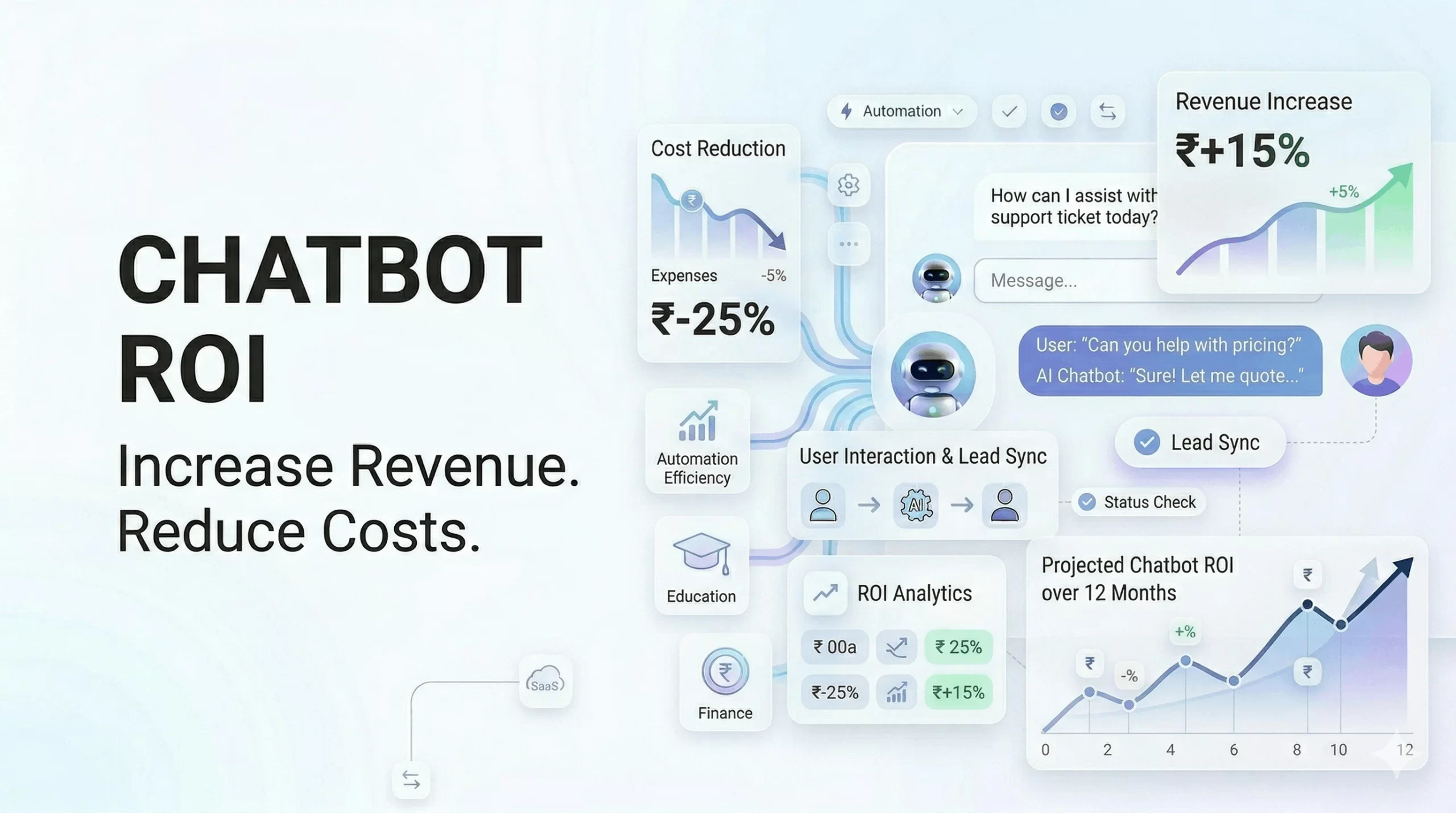
    This guide breaks down the ROI of AI chatbots using real examples, data, and simple calculations.

    You’ll learn exactly how chatbots increase revenue, reduce costs, and deliver measurable business value.


    What is ROI of AI Chatbots?

    The ROI of AI chatbots measures the financial return a business gets from investing in chatbot technology.

    Formula:

    ROI = (Gain from Investment – Cost of Investment) / Cost of Investment

    Simple explanation: ROI shows whether your chatbot is generating more value than it costs.

    Key takeaway: A high-performing chatbot increases revenue while reducing operational costs.


    Why ROI Matters for Businesses

    • Budget Decisions: Justifies investment in AI tools
    • Performance Tracking: Measures business impact
    • Cost Optimization: Identifies savings opportunities

    Insight: ROI is the most important metric for evaluating AI adoption success.


    Key Areas Where AI Chatbots Deliver ROI

    1. Lead Generation ROI

    • Capture leads instantly from website visitors
    • Qualify users automatically
    • Reduce missed opportunities

    Impact: Businesses often see a 2x–3x increase in lead capture rates.


    2. Customer Support Cost Savings

    • Automate repetitive queries
    • Reduce support team workload
    • Lower hiring and training costs

    Impact: Chatbots can reduce support costs by 30–60%.


    3. Sales Conversion Improvement

    • Engage users in real-time
    • Provide product/service guidance
    • Follow up automatically

    Impact: Faster responses can increase conversions by 20–40%.


    4. Operational Efficiency Gains

    • Automate workflows
    • Reduce manual tasks
    • Improve team productivity

    Impact: Teams save significant time, allowing focus on high-value work.


    5. Customer Retention Impact

    • Provide instant support
    • Improve customer experience
    • Increase engagement

    Impact: Better support leads to higher retention and lifetime value.


    Real Data & Statistics

    • 30–60% reduction in customer support costs
    • 2x faster response times compared to manual support
    • 20–40% increase in lead conversion rates
    • 24/7 availability leads to higher engagement

    Insight: AI chatbots deliver both cost savings and revenue growth.


    Real-World ROI Examples

    Real Estate Example

    Before: Leads responded manually within hours

    After: Instant chatbot responses

    • Lead response time reduced from hours to seconds
    • Lead conversion increased by ~30%

    Result: Higher deal closure rates


    Healthcare Example

    Before: Front desk handled all queries

    After: Chatbot automated patient interactions

    • Reduced workload by ~40%
    • Improved patient response time

    Result: Lower operational costs


    E-commerce Example

    Before: Limited support and delayed responses

    After: Chatbot for product recommendations and support

    • Increased sales conversions by ~25%
    • Higher average order value through upselling

    Result: Increased revenue


    ROI Calculation Example

    Scenario:

    • Monthly website visitors: 10,000
    • Lead conversion rate (before): 2%
    • Lead conversion rate (after chatbot): 4%
    • Average deal value: ₹10,000

    Calculation:

    • Before: 200 leads → ₹20,00,000 revenue
    • After: 400 leads → ₹40,00,000 revenue

    Revenue Gain: ₹20,00,000

    If chatbot cost = ₹2,00,000

    ROI = (20,00,000 – 2,00,000) / 2,00,000 = 9x return

    Key takeaway: Even small improvements in conversion can generate massive ROI.


    AI Chatbots vs Traditional Support Costs

    FactorTraditional SupportAI Chatbots
    Manpower CostHighLow
    ScalabilityLimitedUnlimited
    Response TimeSlowInstant
    AvailabilityWorking hours only24/7
    EfficiencyVariableConsistent

    Insight: Chatbots significantly outperform traditional support in cost and efficiency.


    Factors That Affect Chatbot ROI

    • Business Size: Larger traffic = higher ROI potential
    • Use Case: Lead generation delivers highest ROI
    • Implementation Quality: Better flows = better results
    • Integration: CRM and tools improve efficiency

    Key insight: ROI depends on how effectively the chatbot is implemented.


    How to Maximize ROI from AI Chatbots

    • Focus on High-Impact Use Cases: Lead capture, support
    • Optimize Conversation Flows: Improve engagement
    • Integrate with CRM: Enable better tracking
    • Continuously Improve: Analyze and refine performance

    Tip: Start with one use case, then scale.


    Why Livserv.ai Delivers Strong ROI

    Livserv.ai is designed to maximize ROI through:

    • Lead Generation Focus: Capture and qualify leads effectively
    • WhatsApp Automation: Engage users on high-conversion channels
    • Sales Automation: Improve conversion rates
    • Ease of Use: Faster deployment, quicker ROI

    Positioning: It helps businesses increase conversions while reducing operational costs.


    FAQs: ROI of AI Chatbots

    What is the ROI of AI chatbots?

    It measures the financial return gained from chatbot investment compared to its cost.

    Are AI chatbots worth the investment?

    Yes. They reduce costs and increase revenue, making them highly valuable.

    How quickly can ROI be achieved?

    Many businesses see ROI within a few months of deployment.

    Do chatbots reduce costs?

    Yes. They reduce support and operational costs significantly.

    Can chatbots increase sales?

    Yes. Faster engagement improves conversion rates.

    What industries see the highest ROI?

    Real estate, e-commerce, SaaS, and customer support-heavy industries.


    Conclusion: AI Chatbots Deliver Measurable Business ROI

    The ROI of AI chatbots is clear: higher revenue, lower costs, and better efficiency.

    Businesses using chatbots can:

    • Increase lead conversions
    • Reduce operational expenses
    • Improve customer experience

    Final takeaway: AI chatbots are not just a technology investment—they are a revenue and efficiency driver.

    Platforms like Livserv.ai help businesses achieve strong ROI through lead generation, customer engagement, and automation.